
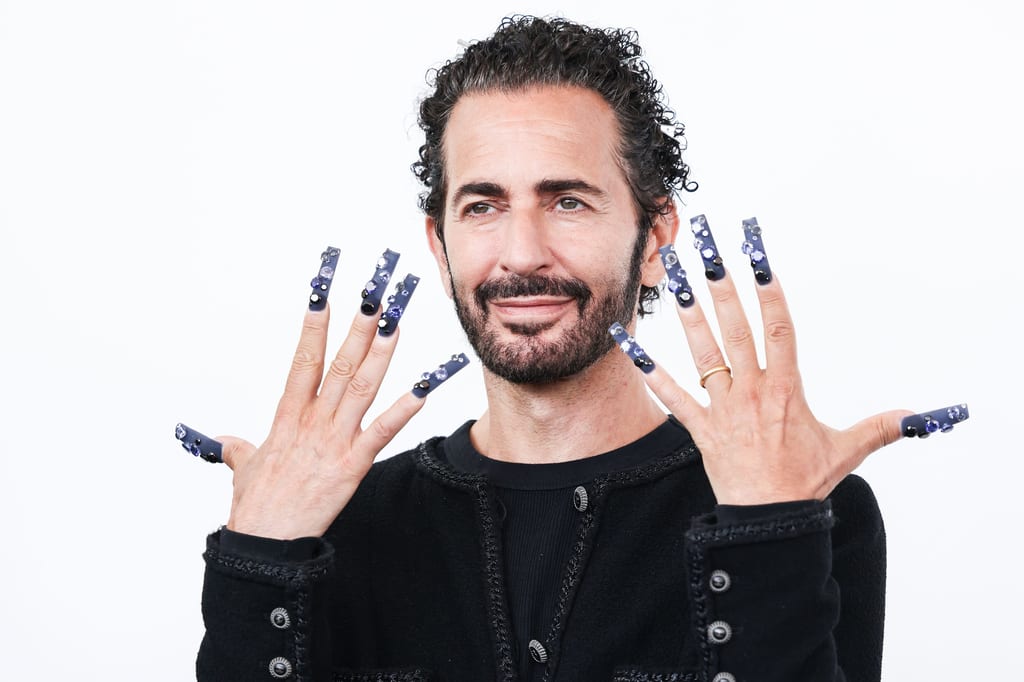
There’s always been something slightly rebellious about Marc Jacobs.
On paper, his career is a blueprint for success, having served as creative director of Louis Vuitton, founded a global namesake brand, and remained a constant presence on the fashion calendar. But when you read between the lines, that version of Jacobs only tells half the story.
From the beginning, Jacobs showed a willingness to think outside the box. His now-infamous 1992 “grunge” collection for Perry Ellis (all flannel shirts, slip dresses, and heavy boots) was so controversial that it got him fired. The critics rejected it, and the industry resisted, but most importantly, culture embraced it.
That collection is now widely credited with bringing grunge into high fashion, becoming a defining moment that proved Jacobs was more interested in reflecting real life than following traditional taste. Honestly, it set the tone for his career.
When Jacobs arrived at Louis Vuitton in 1997, the house had never produced ready-to-wear garments. But through this introduction, Jacobs transformed the brand into a cultural powerhouse. His collaborations with Stephen Sprouse, including graffiti-covered monogram bags, disrupted the idea of luxury. Later, his work with Takashi Murakami injected colour into the brand’s DNA, creating pieces that became synonymous with early 2000s fashion.
That same approach defined his own label. Over the years, Marc Jacobs' shows have become known for their emotional pull. From stark minimalism to theatrical spectacle, his own brand pushed exaggerated proportions and sculptural silhouettes to new extremes.
He’s also consistently tapped into cultural shifts before they materialise. His natural embrace of Y2K aesthetics before their mainstream revival felt ahead of their time, while his ability to predict trends and understand how people want to express themselves became core principles of his approach.
Additionally, Jacobs has played a quiet but significant role in shaping the fashion industry itself, with him giving early opportunities to talents like Virgil Abloh and Phoebe Philo during their times at Louis Vuitton. Moves like this have seen his influence run through new generations of designers.
On his birthday, it feels right to celebrate Marc Jacobs’ achievements and perspective. He proved that luxury could be playful and that imperfection could be beautiful. But, most importantly, he showed that fashion, at its best, is about emotion.
More on Culted
See: Vivienne Westwood never forgotten, an icon
See: Slawn is changing the game, one beautiful piece at a time