
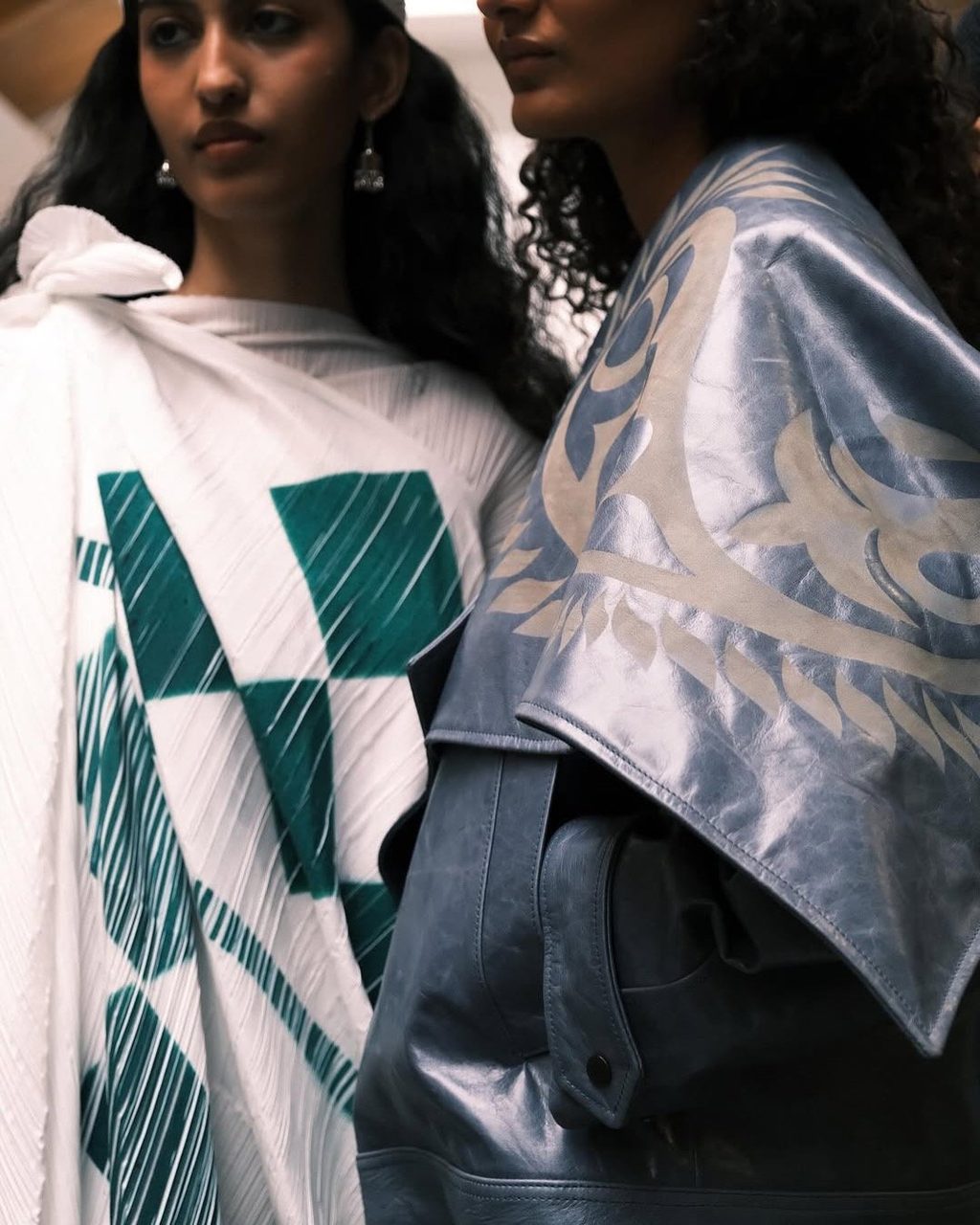
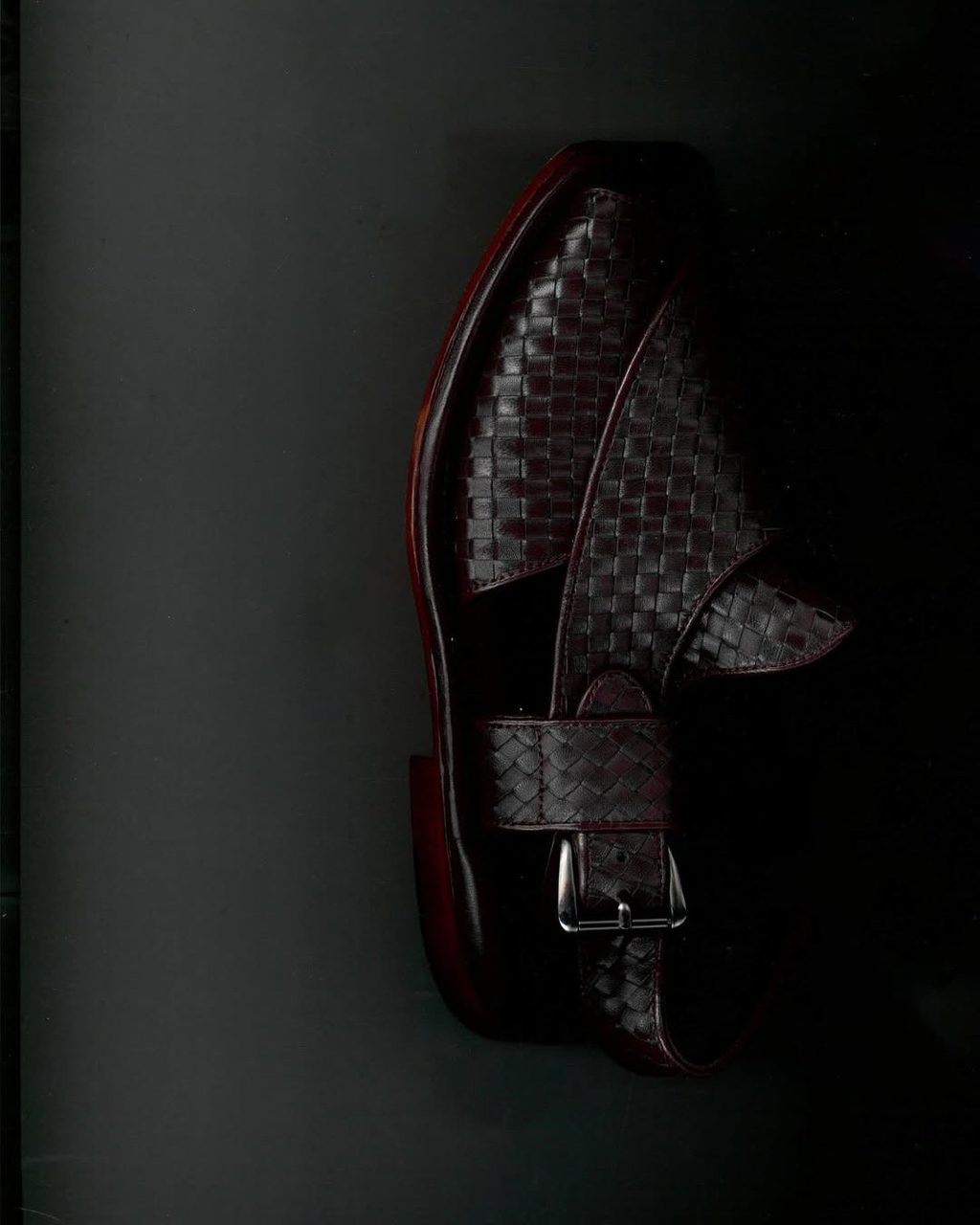
Following Central Saint Martin’s 2025 BA Graduate show, we linked up with Haseeb Hassan, the designer that’s using his heritage to spark much needed conversations around tradition, identity, diaspora. As second runner-up to the L’Oreal Prize, Hassan’s already been turning heads across the fashion industry with his designs, that play on the friction of his dual upbringing between London and Pakistan. Characterised by sharp tailoring and traditionally masculine silhouettes, Hassan’s grad collection blended influences of the East and West, spotlighting pieces from his cult like various different styles of Peshawari chapal. We caught up with Haseeb Hassan to find out the message behind his designs, why fashion's so important right now, and what's on the cards for the future.
What's the message behind your graduate collection?
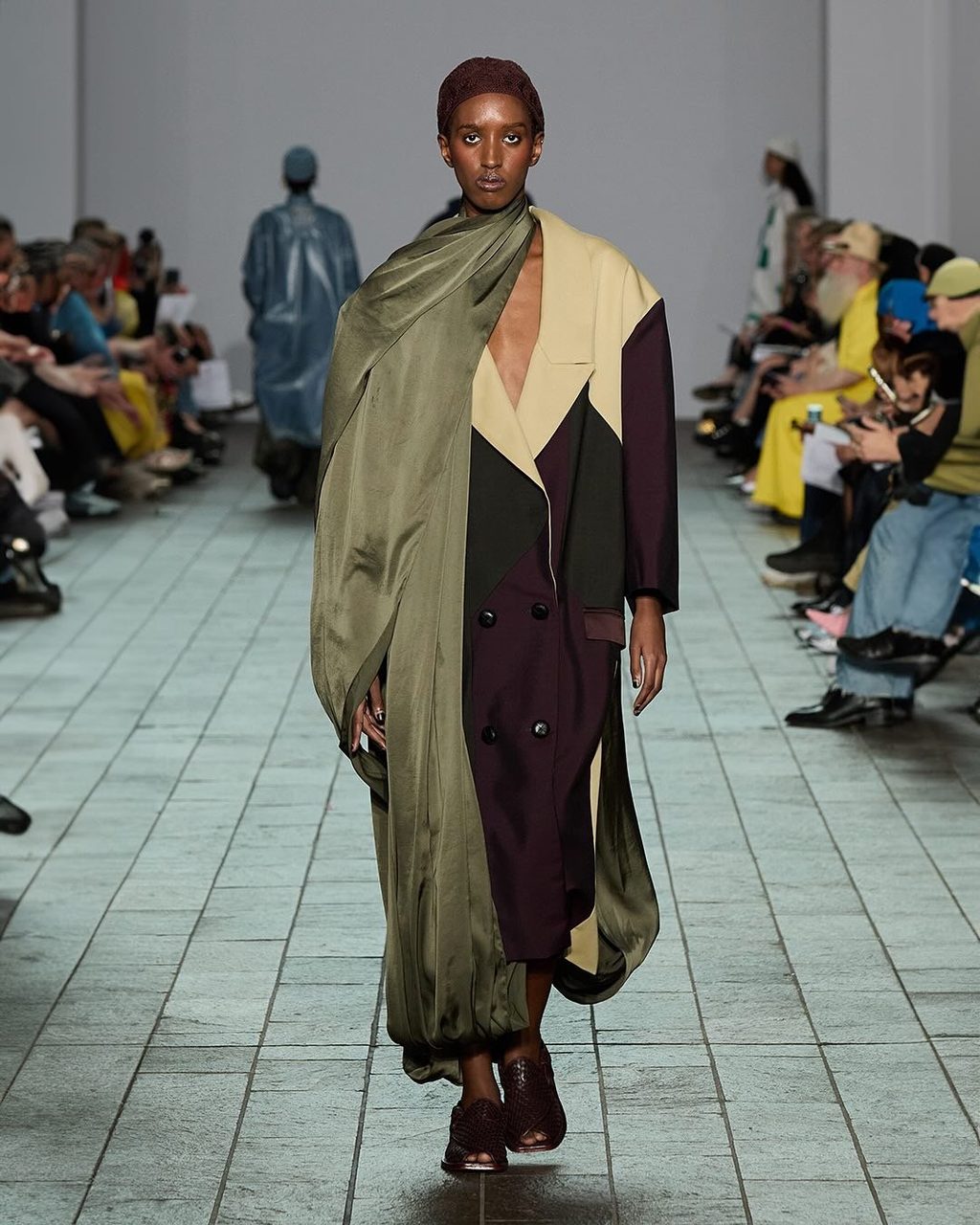
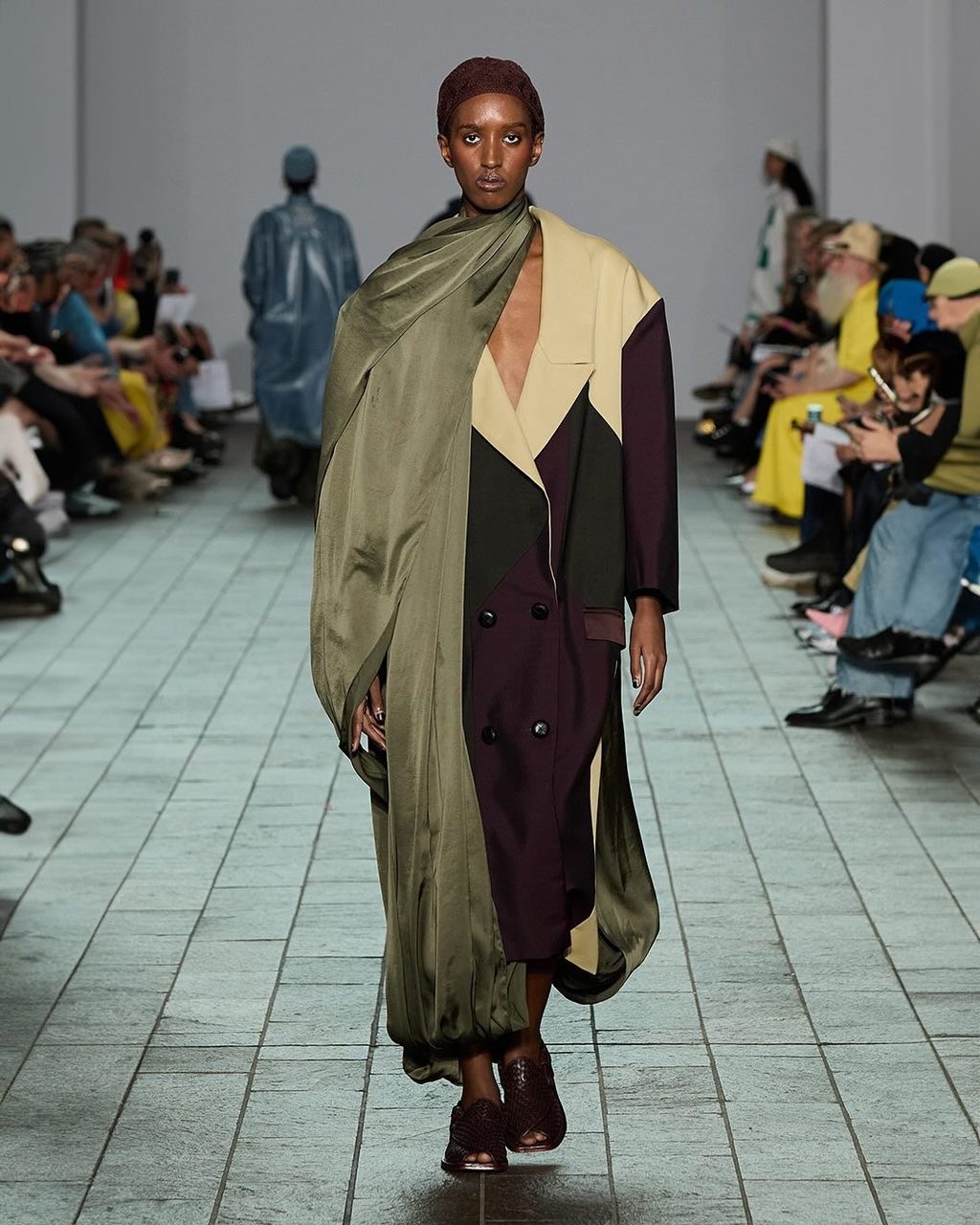
"My collection is inspired by the clashing nature of my dual upbringing and my two homes London and Pakistan where I was born. It explores the experience of diaspora, identity, and belonging. It weaves the chaos and beauty of those surroundings into a patchwork of identities. Patchwork, both literal and metaphorical, becomes a means of storytelling piecing together the fragmented experience of diaspora, stitching history into the present.
"Constructed from repurposed menswear shirting fabrics, it disrupts notions of formality and structure, dismantling rigid dress codes to create something fluid, personal, and subversive. Leather, a material that speaks to both resilience and rebellion, is laser-engraved with traditional Pakistani motifs, bridging heritage and technology. The use of reclaimed textiles reflects a sustainability rooted in heritage echoing the South Asian practice of repurposing fabrics, where nothing is wasted, and every thread carries a past life.
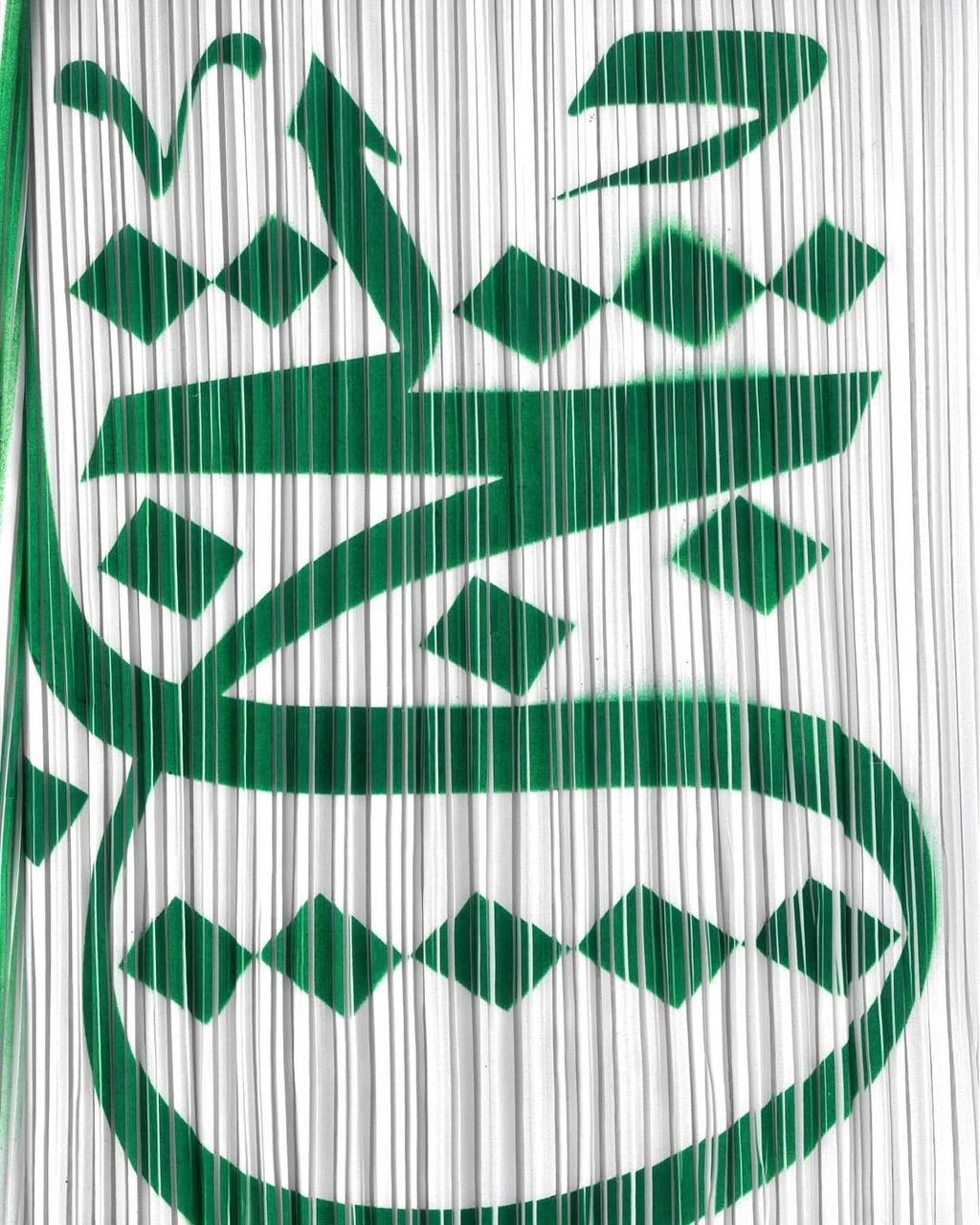
"Through the mix eastern and western cutting techniques, bold clashes and quiet harmonies, this collection captures the tension of in-between spaces, where roots and reinvention coexist, where the weight of history meets the freedom of now. Each piece is a rebellion against conformity, a celebration of hybridity, and a love letter to the art of finding oneself in fragments. This is not just a collection it is a journey, a question, and an embrace of the power found in the collision of cultures."
Heritage - specifically your roots as a British Pakistani designer - plays a huge role in your designs. For your grad collection, did you adopt any traditionally Pakistani design practices in your process?
"Yeah, I was really drawn to traditional Pakistani pattern cutting techniques during the process they’re often quite simplified, but in such a clever and functional way. Growing up, I’d see these methods used in everyday clothing back home, and it felt natural to bring that into my own work. I started to really appreciate the beauty in their practicality the way a garment could be cut so economically but still hold shape and presence. I used those principles throughout the collection, sometimes combining them with more Western tailoring to create a kind of dialogue between the two. It wasn’t about replicating tradition exactly, but more about reinterpreting it through my own lens as a British Pakistani designer. It felt grounding, like a quiet nod to where I come from."
What would you say is the most inspiring thing about your culture?
"For me, the most inspiring thing about my culture is its depth and duality. There’s such a rich sense of tradition, history, and craftsmanship things like textile work, storytelling, music that are passed down so naturally, often without even realising it. At the same time, there’s this incredible adaptability and resilience, especially within the diaspora. I find a lot of beauty in how people carry their heritage while constantly reshaping it to fit their present there’s something powerful in that balance. It’s not fixed, it’s always evolving, and that makes it such a rich source of inspiration."
During a time where war and corruption around the world feels so prevalent, why do you feel fashion is still important?
"I think in times like these when there’s so much conflict, corruption, and noise fashion becomes more than just clothes. It becomes a way to express resistance, identity, and care. For a lot of us, especially those from minority backgrounds, it’s one of the few spaces where we can tell our stories on our own terms. That’s why it feels even more crucial now to create space for voices that have been overlooked or silenced. Fashion has the power to make people stop, look, and feel something. It can challenge perceptions, spark conversations, and offer comfort or connection in subtle but powerful ways. So, for me, it’s not about fashion being frivolous it’s about using it as a tool to say something meaningful when the world feels overwhelming."
As a new designer emerging into the fashion scene, what’s one thing about this industry that you would like to change?
"One thing I’d really like to see change is unpaid internships. It’s something I’ve experienced firsthand, and it’s honestly one of the biggest barriers for young designers especially those from working-class or underrepresented backgrounds. Expecting people to work for free, often in expensive cities, just isn’t realistic. It ends up pushing out so much talent before they even get a proper chance, and it keeps the industry way more elite than it already is. If fashion really wants to be diverse and inclusive, it has to start with access, and that means paying people for their time and work."
Can you describe what or where you want to be in five years using one word?
"Balanced."
Lastly, is there anything else you want people to know about you or you work?
"Just that everything I create comes from a personal place. I’m not trying to follow trends or fit into a certain mould. My work is about memory, identity, and the in-between spaces I’ve grown up in. I want people to feel that when they see it. It’s not about being loud it’s about being honest. And if someone connects with it, even in a small way, then that means the most to me."
More on Culted
See: We stepped into the sartorial world of Christian Louboutin at Paris Fashion Week