
If you spend a lot of time on social media or are fluent in the brain rot vernacular, you might have come across fans fervently commenting the phrase, ‘We made the right person famous,’ on videos of celebrities—SZA and Taylor Swift are popular recipients—doing something morally admirable, like tipping service workers or speaking up for a cause. It’s as though we feel that we’re the ones to thank for a celebrity’s fame, and as such, enjoy being validated that we made the right decision in doing so. “It reflects our attachment to celebrities. So often fans are disappointed when a beloved artist or celebrity is revealed to have done something horrible that it feels like a victory when they are morally good in addition to making good art,” Dr Mary Beth Willard, A Professor of Philosophy at Weber University, tells Culted.
Historically, this kind of dominion over public figures was generally reserved for elected country leaders. Politicians are put in place by us to serve us (theoretically, at least), so if they don’t live up to our expectations, we’re within our rights to revoke their power. Granted, we don’t technically elect celebrities, but we do decide when and how much money to invest into them, and whether or not to spend our time and social platforms promoting them, granting us a similar sense of perceived sway over their behaviour and beliefs.
So it’s no surprise that these days, we seem to think we have jurisdiction over celebrities' political leanings (or at least feel like they’re obliged to share our own). The internet is awash with fandoms arguing that their favourites are democrats, are in support of a particularly contentious social cause, or are against another. It’s as though the glimpse they offer us into their lives deceives us into believing they’re our friends, and therefore, must think like our friends. And it’s an expectation that carries soft power: just as many fans turned against Carrie Underwood when she performed at Trump’s inauguration, as lauded NFL player Jalen Hurts for speaking out against him.
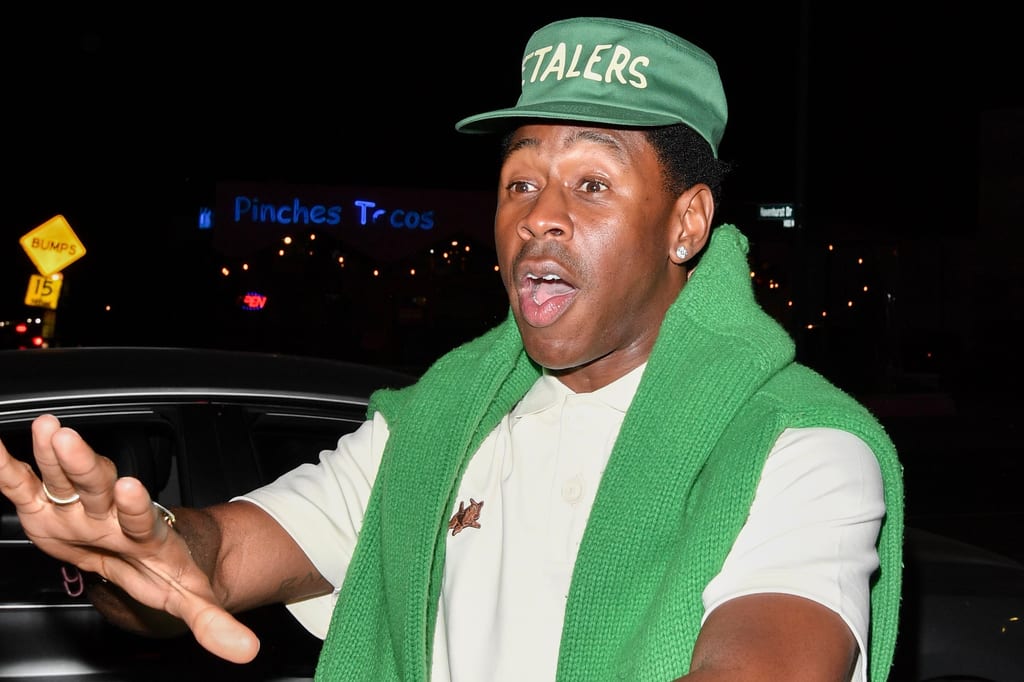
But in a world where celebrity culture is as intimate as it is, it’s understandable that we feel like we know our favourite artists (or internet personalities), and by extension, like they know us. “Some of the sense of ownership I believe stems from the seeming ease with which fans can interact with celebrities/artists on social media. It feels real and immediate to see and comment on a celebrity's life using the same app that one might use to see and comment on real-life friends. It creates the appearance of a kind of intimacy,” explains Willard. Technology is still in its infancy, and it’s as though our brains haven’t caught up to the fact that just because we know about the minutiae of someone’s life, doesn’t mean we’re close personal friends. As Tyler the Creator bluntly put it in an interview on Mavericks last year, “mind your f**kin business. Go the f**k outside and listen to the damn art or the music. Because of the internet, people don’t know personal boundaries anymore, and it’s normalized…[but] it’s like ‘we don’t know each other.’”
It’s a misguided (albeit understandable) sense of familiarity that gets dangerous when it seeps from the screen into IRL interactions. We all remember that period when fans were hurling things at musicians at concerts, while more recently, Chappell Roan took to Instagram stories to chastise fans for harassing her in public, “I do not agree with the notion that I owe a mutual exchange of energy, time, or attention to people I do not know…I’m a random bitch, you’re a random bitch.” Fans were outraged at her ingratitude, as if fame was some kind of Faustian bargain for fortune and admiration.
But wanting someone you feel a kinship with and have invested time and money into to have what you deem “the right” beliefs is human nature. It’s also totally fair to withdraw your support of them—financial or otherwise— if they do something reprehensible, just as you would if your tastes happen to change or their latest album just didn’t hit. It's when our sense of entitlement enters online bullying territory or makes famous people feel unsafe that things get thorny.
But when it comes to Gen Z, Willard reckons the tides are turning (if for depressing reasons). “They report that they're less likely to feel betrayed when an artist or celebrity does something wrong because they were wary of committing too much care to them in the first place. They've grown up expecting that their favourites will disappoint them, and they're far more ready to switch loyalties.” But we’d be remiss not to note that as celebrities begin to use deepfake versions of themselves to interact with fans, these parasocial relationships, and by extension our sense of ownership, will only intensify.
It’s also likely that our moral panic about celebrity ethics distracts us from real-life social change. Although cancelling someone might feel like a productive or cathartic expression of rage, our energy would likely be better spent elsewhere, whether that be community organising or at the voting booth. We'd also be wise to swerve constantly grappling with disappointment when it comes to people we don’t know. Basically, as Willard councils, “it's good to keep some critical distance. Touch grass if needed.”
Images via Getty
More on Culted
See: Is your Gorpcore killing you?
See: How Gaelic Athletic Association gear became the ultimate drip