
The luxury slowdown is real. Last year, the global luxury market lost about 50 million customers. But one sector seems immune to the crash. In 2024, the jewellery market grew by 2%. And the trend has continued into this year: according to data from Citigroup, in May, the luxury jewellery spend surged 10.1% compared to May 2024.
So why are jewellery sales popping off, while people tighten the purse strings on high fashion?
The most obvious reason is that, atm, jewellery feels like a more reliable investment. Expensive jewellery is generally high quality, while high fashion can be subject to cheaper materials and poor craftsmanship. Meanwhile, jewellery—if chosen carefully—is often timeless, while fashion pieces fall victim to rapid trend cycles. The value of jewellery also often increases over time, making it a smart investment. This can be the case for fashion, especially when it comes to more historic collections, but it’s hard to predict that mushrooming value when a line is released. Inflation also plays a role: while the price of handbags has inflated from 30% to 40% since the pandemic (a price increase that doesn’t necessarily reflect quality), for the most part, jewellery prices have remained steady.
There’s also a recession and cost of living crisis gripping the US and America. When times are uncertain, people are more likely to spend money on something of sentimental value that will stand the test of time, rather than to hop on a fleeting trend. Jewellery is often used to mark significant moments in life, like weddings or graduation presents, and will often be worn forever, so feels like a deeper investment that will stand the test of time. (An engagement ring, for instance, is worn forever. A wedding dress is worn once.)
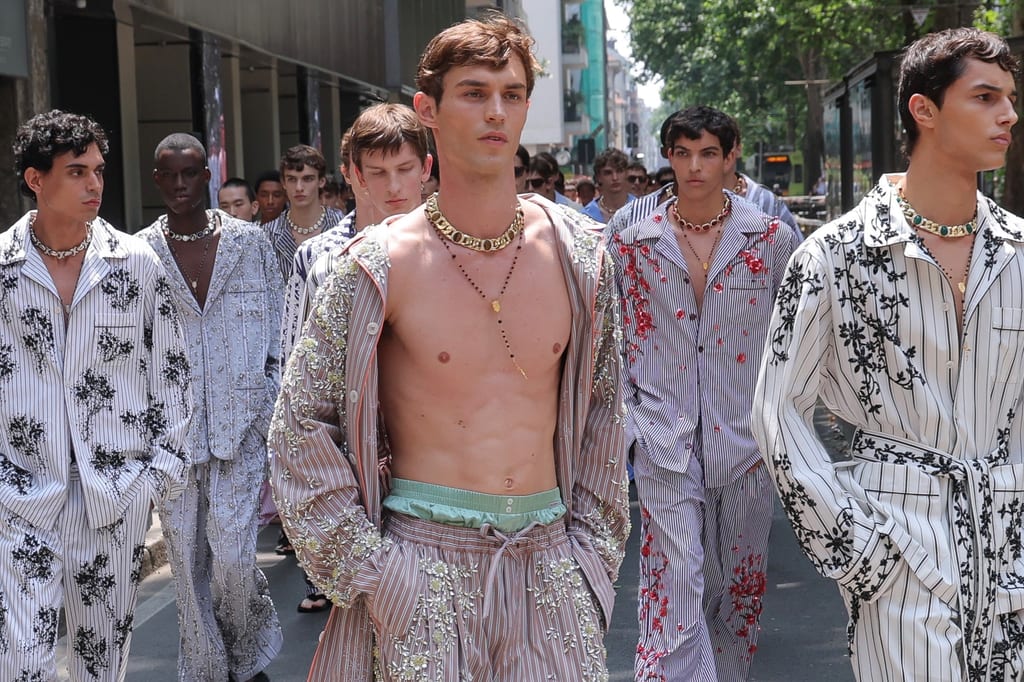
The jewellery market is also reaping the benefits of a growing demographic, with the men’s jewellery market being one of the fastest-growing segments in the accessories industry. In the US, it's projected to grow from $5.45 billion in 2024 to $10.75 billion by 2032. So it tracks that the SS26 menswear shows saw Louis Vuitton, Willy Chavarria, and Dolce & Gabbana sending ice down the runway.
There are also ethical factors at play: the treatment of garment workers is a concern to many consumers, as is the environment. A lot of fashion pieces are made of unsustainable materials and go out of fashion quickly, leaving environmentally damaging textiles piling up in landfills. Leather, in particular, was one of the clothing goods that was seen as high value and high quality (and therefore a worthy investment), but with environmental repercussions and concerns about the treatment of animals being top of mind for many buyers, leather is less attractive, particularly as vegan alternatives are now on offer. Indeed, the leather supply chain turnover fell 8.6% in 2024. Granted, the ethics surrounding blood diamonds are also very real, but are less heavily discussed in the media, while the development of lab grown diamonds offers jewellery consumers an ethical alternative.
Experts have also put the rising popularity of jewellery down to a desire for self-expression. As a backlash to the rise of quiet luxury and stealth wealth minimalism, they argue, consumers are eager to express themselves via jewellery products with character, including novelty pieces. (These gained particular traction during COVID, when earrings and necklaces were one of the few wearable pieces visible over video call.) Boutique jewellery artisans building personal relationships with customers also gives the industry an added edge. “Jewellery is so personal. When you have a very distinct aesthetic, you really connect with your customers long term, potentially for life. This is a really personal relationship that smaller brands can capitalise on,” luxury correspondent Stern Carbone told BOF.
Ofc, there’s still time for the luxury slowdown to come for the jewellery market. Jewellery isn’t exempt from Trump’s tariffs, and brands have already had to raise their prices to account for them. But as jewellery brands work more slowly and aren't subject to impossibly demanding fashion week schedules, the tariffs may not have as dramatic an impact. Time will tell.
Featured image via Getty ©
More on Culted