
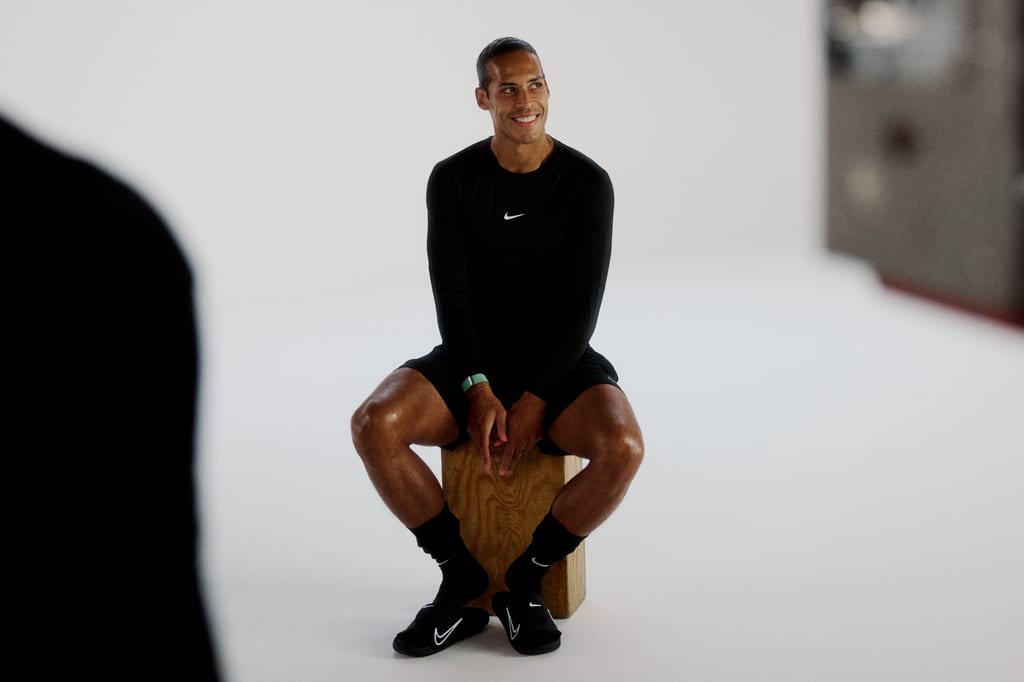
Virgil van Dijk's journey to the top of football was never an overnight one.
From starting out at Groningen and taking a major step forward at Celtic, to establishing himself in the Premier League with Southampton, his career has been built steadily, one level at a time. Then came a big-money move Liverpool, where Van Dijk developed into one of the defining defenders of his generation, collecting the Premier League, Champions League, FA Cup and League Cup along the way, while becoming captain of both club and country.
But longevity at the highest level requires more than what happens across 90 minutes. Now 35, Van Dijk has spent more than a decade competing at the top of the game, learning how to manage his body, adapt his preparation and increasingly treat recovery as seriously as training itself. That became vital following the major knee injury that kept him out for much of the 2020/21 season, an experience that changed the way he approaches the work between games.
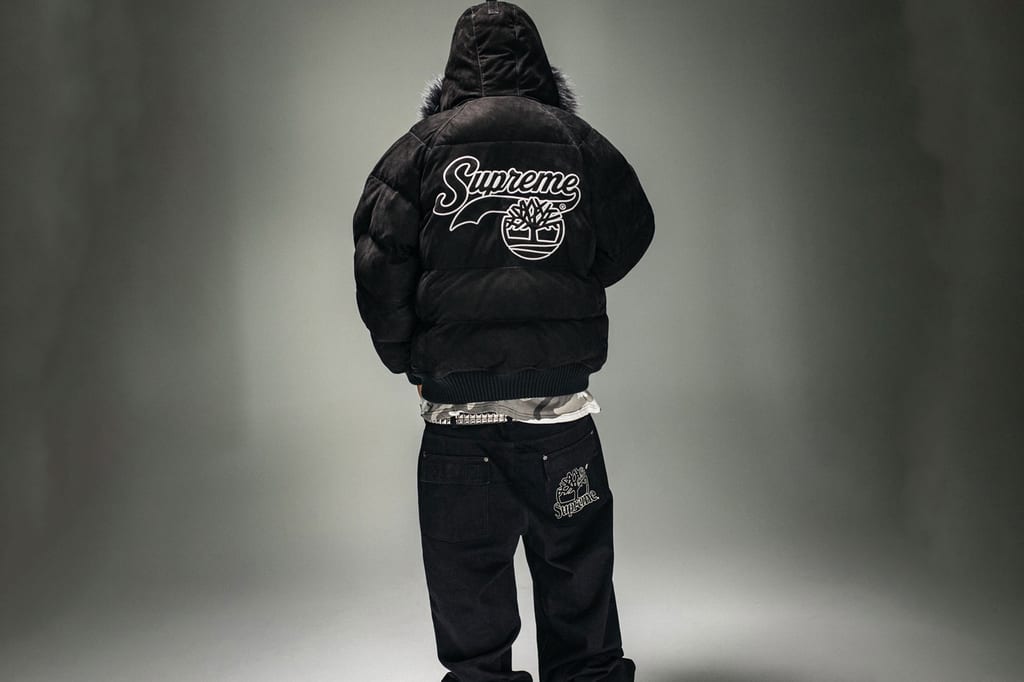
Away from football, there’s another side to Van Dijk that has become increasingly visible. Fashion has grown into a genuine interest, with the defender using clothing as another form of expression and developing an appreciation not only for what he wears, but the design and work behind it. As he puts it himself, the best pieces can feel “like a piece of art.”
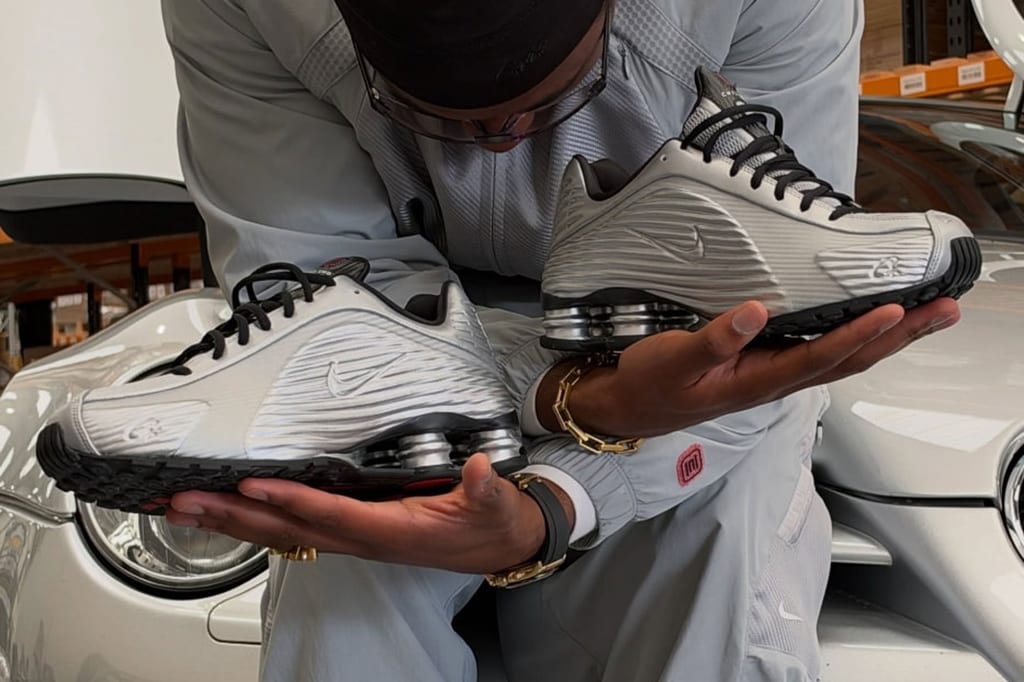
That intersection of performance, design and technology makes his relationship with Nike and Hyperice a natural one. Already an athlete for both brands and, by his own admission, a self-confessed “gadget man,” Van Dijk is now helping introduce the latest product to emerge from their ongoing partnership: the Nike Air Zoom Hyperslide.
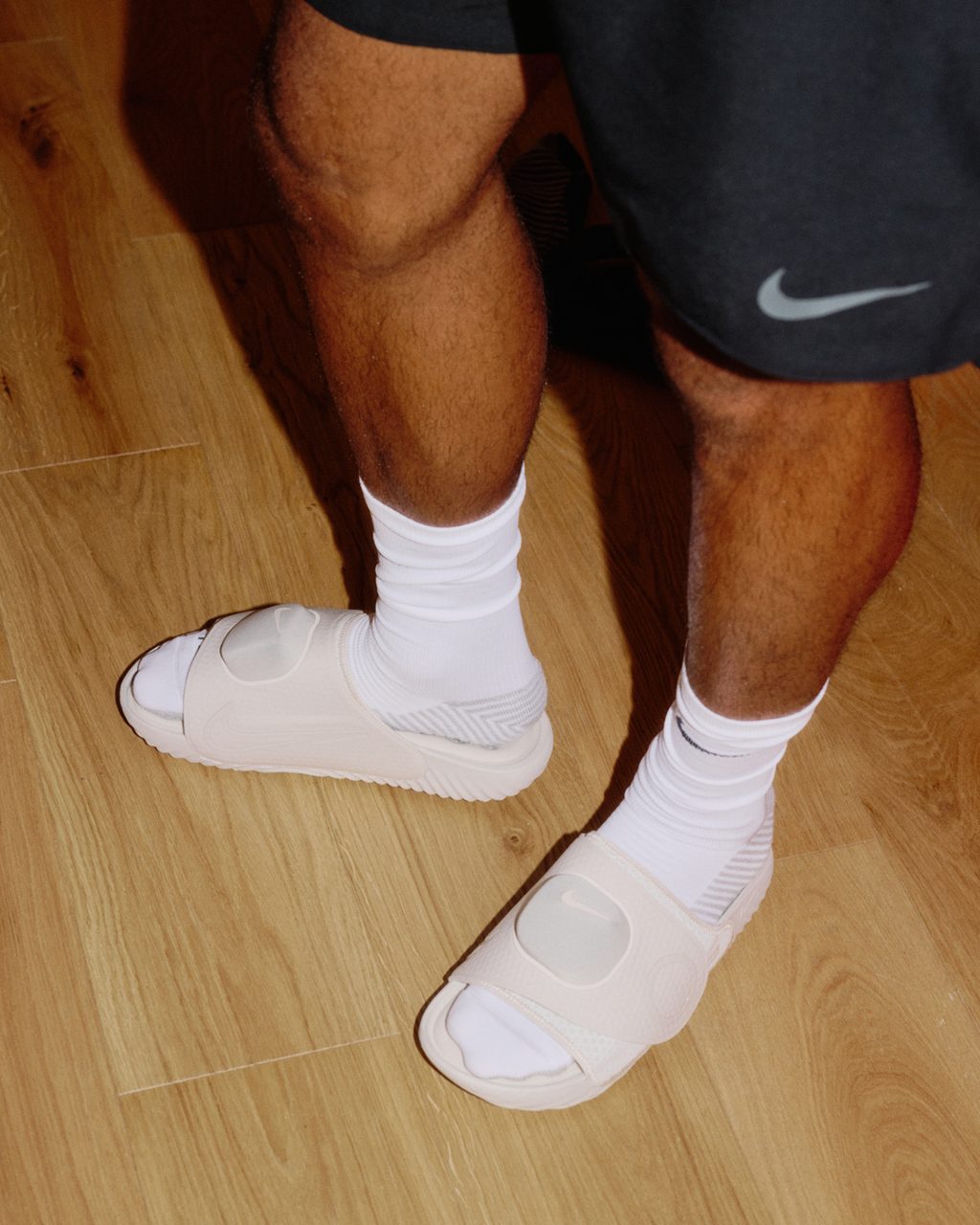
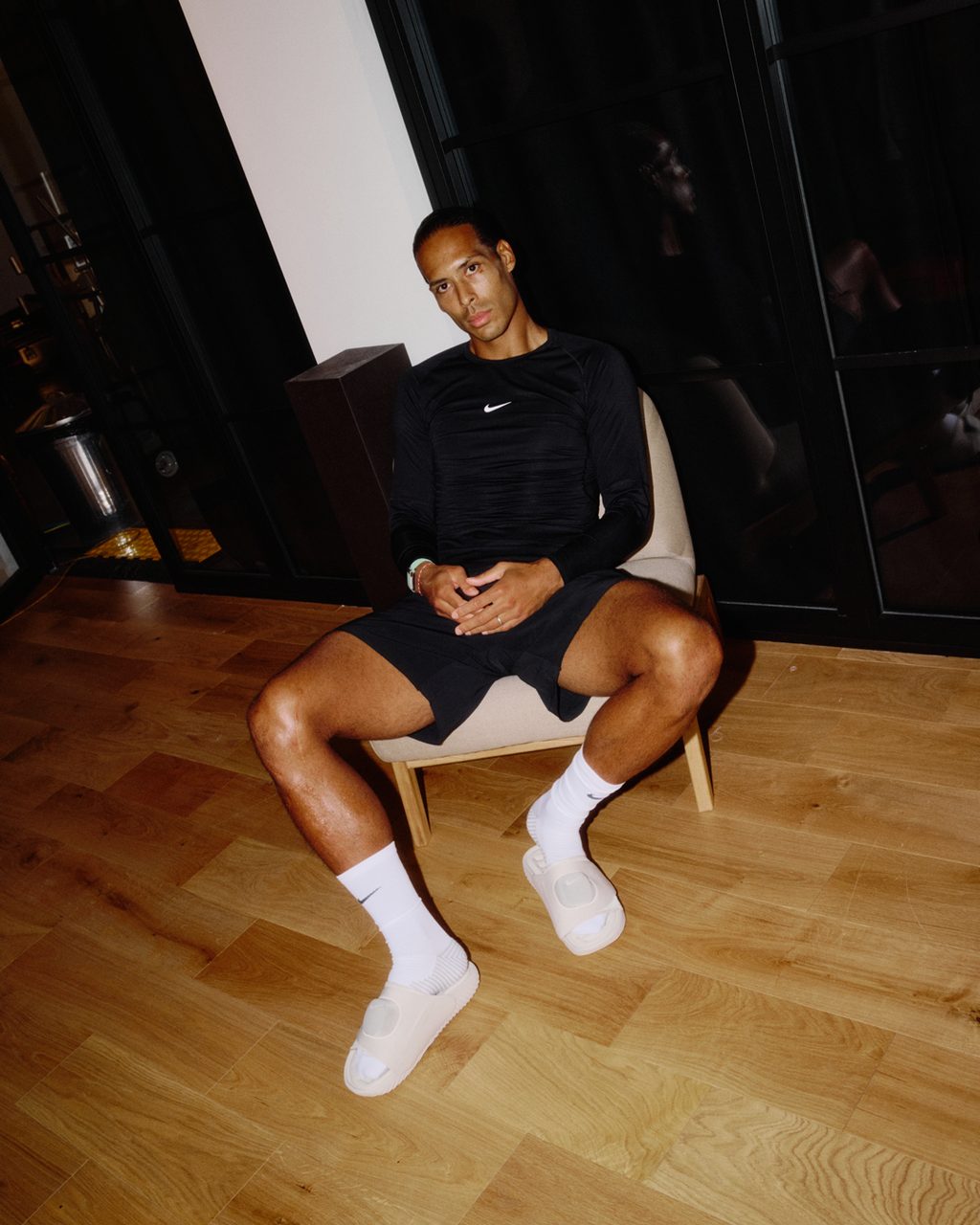
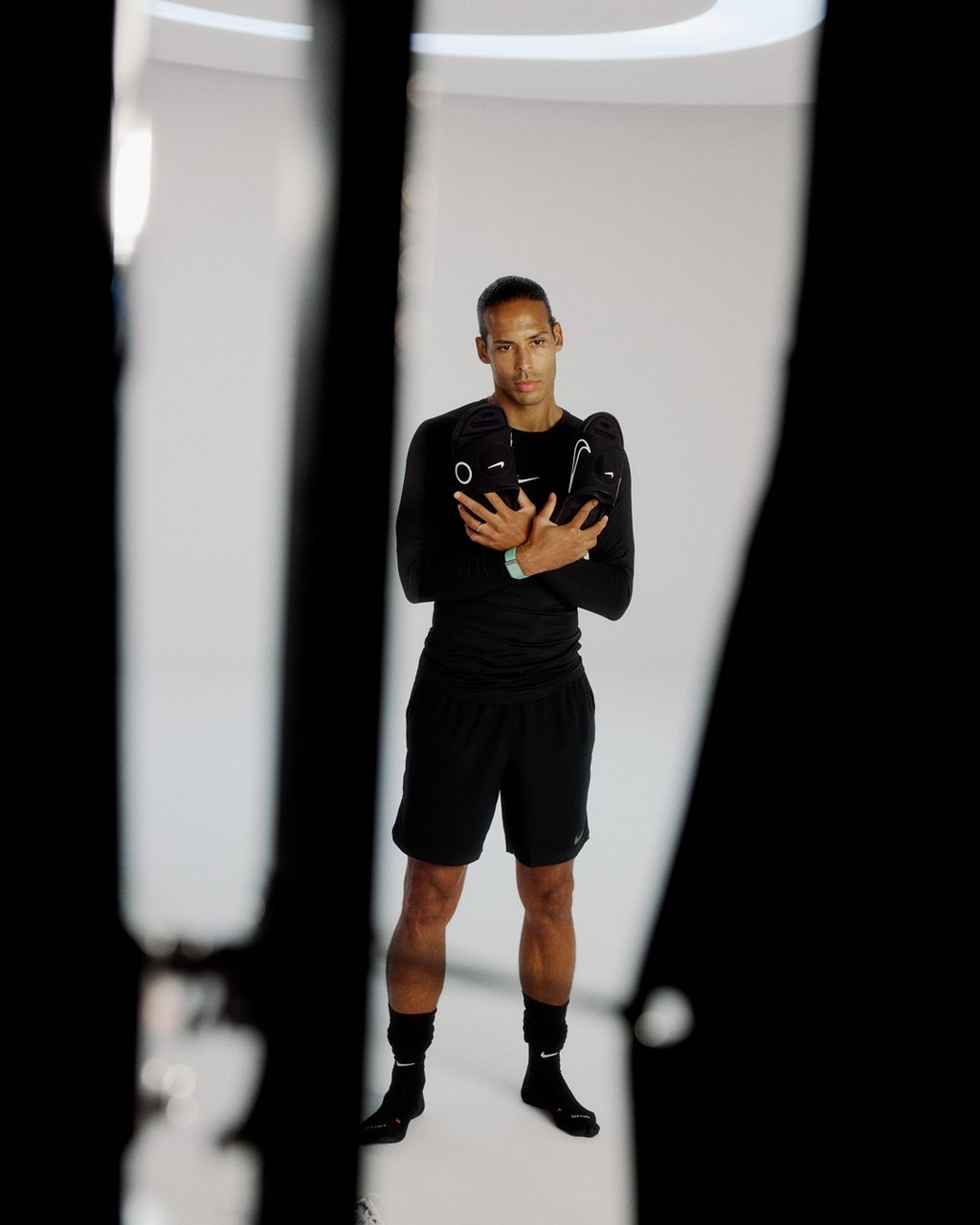
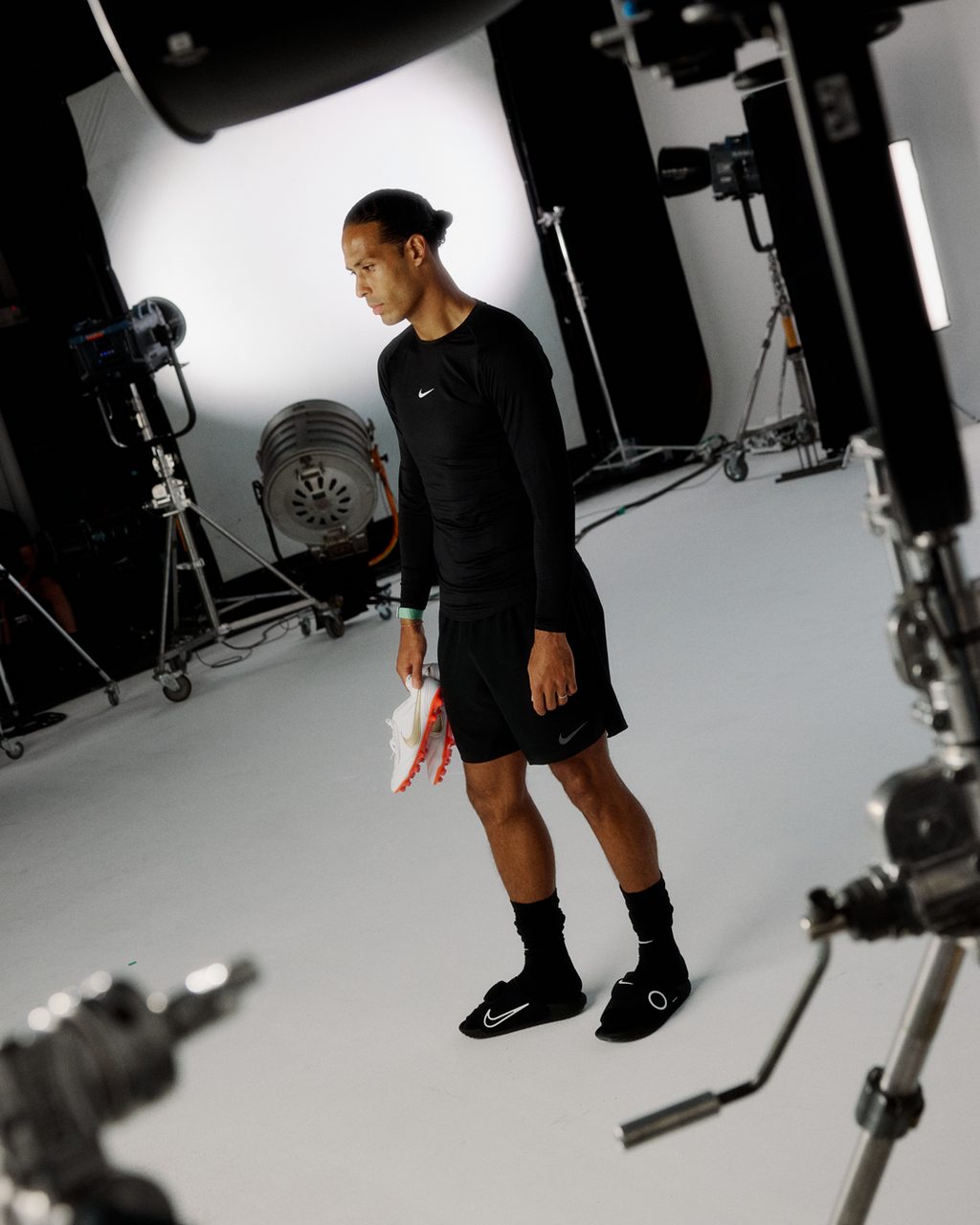
Designed to make recovery something athletes can integrate more easily into everyday life, the Hyperslide takes the familiarity of a post-training slide and turns it into a piece of recovery technology. A full-length Air Zoom sole provides cushioning underfoot, while a removable magnetic Hyperice pod built into the adjustable strap delivers three levels of heat and vibration across the top of the foot in 15-minute cycles.
For Van Dijk, who already incorporates everything from sauna sessions and cold plunges to stretching, meditation and recovery technology into his routine, it’s another tool designed to help find those small margins between one performance and the next.
“It’s the combination that stands out,” he says. “The Hyperice heat and vibration help my feet recover as quickly as possible, while the Nike Air Zoom cushioning makes it feel incredibly comfortable.”
With the Air Zoom Hyperslide marking the second innovation to come from Nike and Hyperice’s partnership, following the Hyperboot, we sat down with Van Dijk to talk about how his approach to recovery has evolved, becoming obsessed with the technology behind performance, the lessons that have shaped his career, his growing relationship with fashion and what continues to motivate him at the very top of the game.
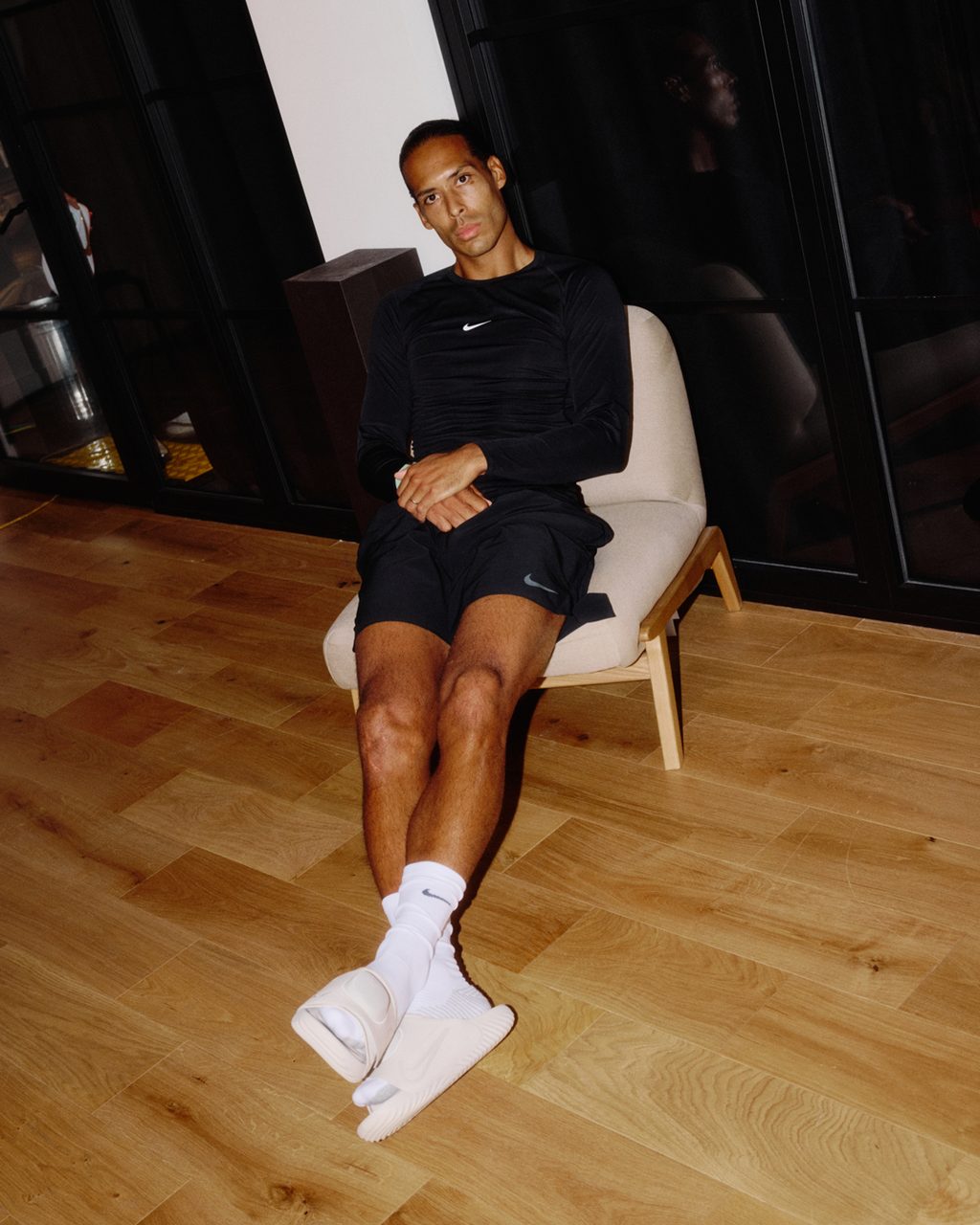
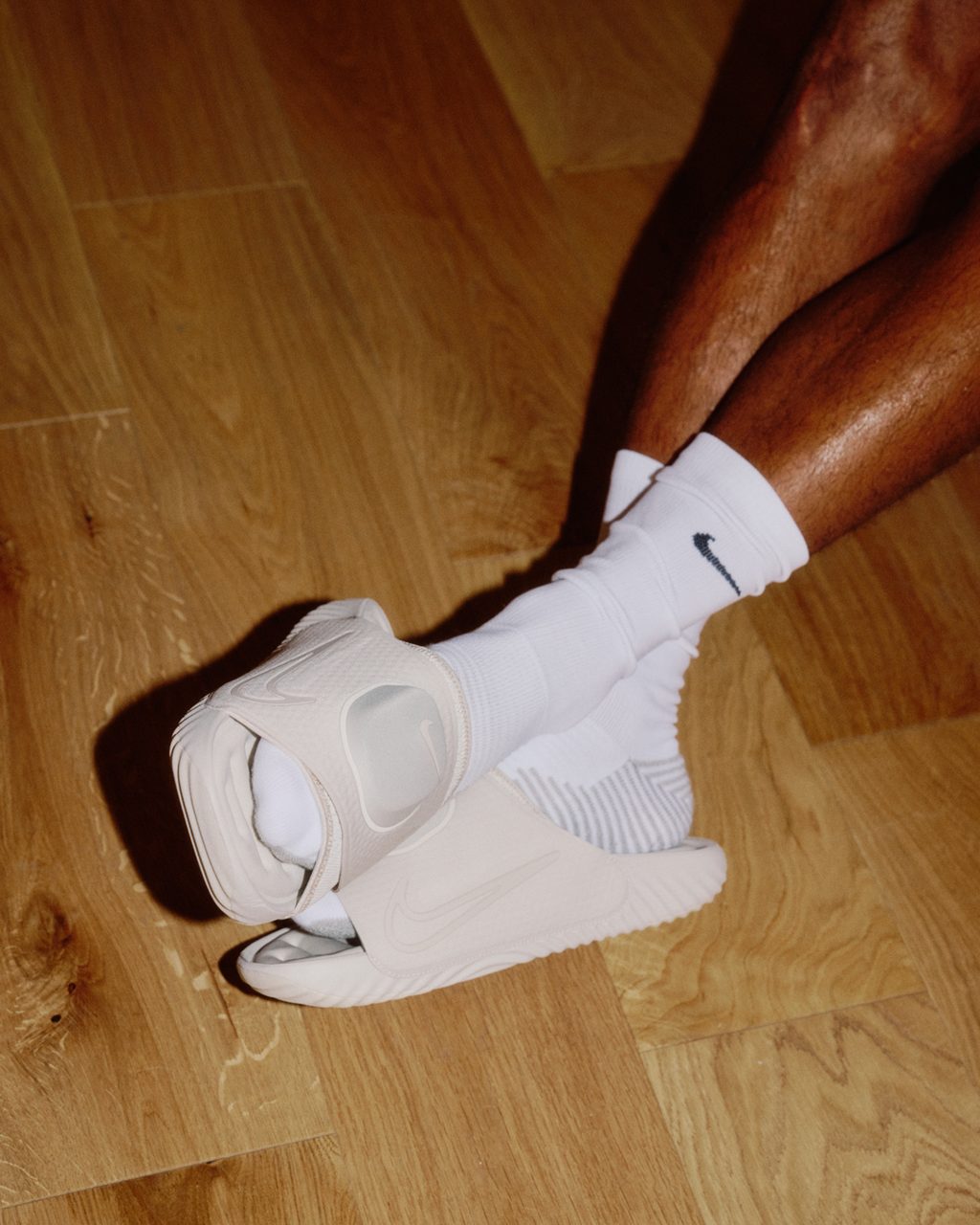
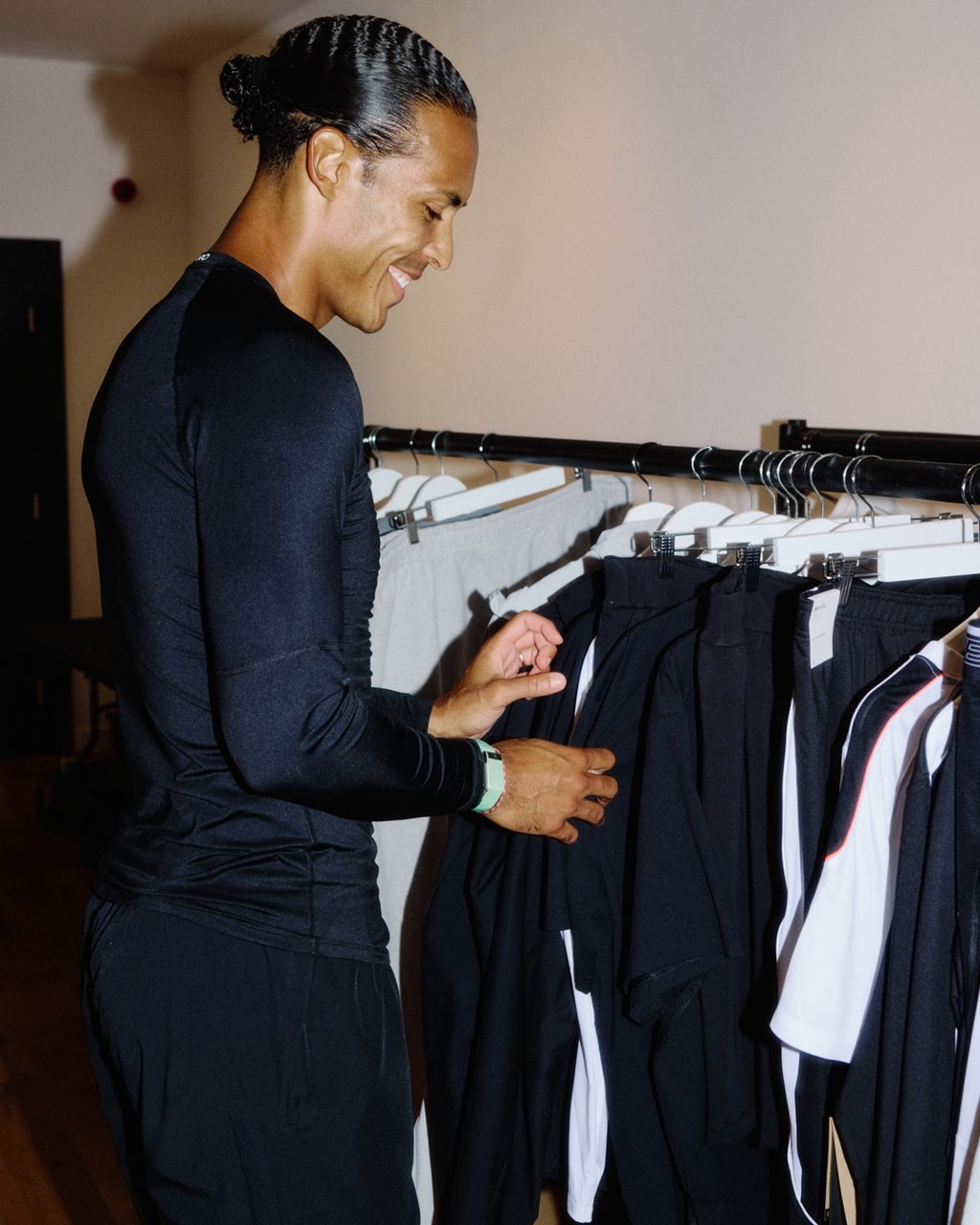
Culted: Recovery is obviously a huge part of being able to perform at the highest level, especially for the length of time that you have. What does your recovery routine actually look like on a normal day, from when you wake up to the moment you go to sleep?
Virgil van Dijk: At the start of the season, we only have one game a week, so it’s a little bit different to when we have three games a week. But I think it starts, first and foremost, with making sure you have good sleep. You can’t put a price on that. That’s the main thing you have to look after, together with nutrition.
Other things are also important, in my opinion, and obviously being with Hyperice has played a big part in that for me personally. Whether it’s the Normatec that I use or the guns that are used when I get treatment. Now I’ve got the Hyperice slides too, and they’ve been a great addition over the last couple of weeks.
Pre-season is all about getting fit and getting back to your level as soon as possible. In my case, I had four weeks off, and when you come back you can sometimes have small niggles and pains. I’ve got the tools with Hyperice to help me come back fresher and quicker and get ready for the next session or the next game.
That’s definitely a big part of my recovery. Sauna is a big part of it too, as well as stretching and meditation. I do everything in my power to be ready for the next session or the next game. I think I have that responsibility as well. Because it works, it makes it easier to keep doing it.
Football moves so quickly. It wasn’t actually that long ago that you had a really tough injury, and since then you’ve come back fit and firing. How has your recovery and preparation changed to help prevent something like that from happening again?
It’s 100% changed. I’m definitely more aware of getting ready for training and what the right things are for me to do in order to be ready for training and, eventually, ready for games.
Certain things have to happen during the week. If you play Sunday to Sunday, for example, in the middle of the week you’ll have a higher-intensity session and a harder gym session in order to stay on top of things. In my case, that’s my knee and my hips, and making sure I’m as fresh as I can be.
You learn. For me, that’s a big part of life in general, but especially in my profession. I’m not perfect, no one is, but I’m always striving to be as close to perfect as possible in order to perform in games. Recovery is obviously a massive part of that.
How much attention do you pay to the technology behind the products you use? Are you genuinely interested in the mechanics behind them?
I’m very intrigued. I’m a gadget man. Even with the Hyperboot and the Hyperice slides coming out, there’s constant innovation going on, and I think you can only benefit from it.
Even if it’s one or two percent, anything that can help you recover or get ready for training is important. Even during my rehab, there were so many different pieces of equipment you could use to recover from a hard session, whether that was cooling, heat or both.
It really suits me. That’s obviously one of the big reasons I’m part of the family, because it’s very genuine for me to use. I was using the equipment before, but now I’m using it even more, being in touch and knowing what’s coming. Like I said, I’m a gadget man, so I love having all this equipment that can help me perform better.
I once spent a day at St George’s Park doing a “day in the life” of a professional footballer and went through the hot-and-cold recovery process. Is that something you use yourself?
Everyone has their own thing. Contrast therapy is something a lot of players do at Liverpool as well. I’m a big fan of the extremes. I like an extreme-heat sauna and then taking a plunge and recovering from that.
Everyone is different and everyone has their own things they can do in order to be ready. For me, the routines I’ve got help me.
The longer your career goes on, the more you learn about yourself, not just on the pitch but off it too. How important has learning to listen to your body become, rather than simply trying to play through a niggle?
I think that’s the most important thing. You have to listen to your body. Obviously, I’ve got the tools, and Hyperice is a big part of that, but WHOOP has been a big part of that as well. Every small piece of information you can get is helpful.
I said it in my first answer, but sleep is the best recovery, in my opinion. When you’ve had a short sleep or a bad sleep, you can get that information back and then you have to listen to your body and how you feel and adapt to that.
That goes into training sessions too. How do you feel before a training session? You have to think about the bigger picture, which is the game coming up in two or three days. What do you need to do in order to be ready for that game? Maybe you have to take it a little easier in certain ways.
It’s about adapting and definitely listening to your body. I feel like I’ve been pretty good at that for quite a long time. I think that’s also shown in my availability, the amount of games I’ve played and the consistency. It’s difficult, but it’s one of the most important things.
From the outside, people might presume signing for Liverpool from Southampton was the major turning point in your career. But when did you personally start believing you could compete and win at the very highest level? Was it at the beginning, at Celtic, Southampton, or later?
I’d say one thing I’m very proud of is that I’ve never looked too far ahead.
When I was playing in Holland, I was at Groningen and my goal was to make my first-team debut. When I did that, the next goal was to become a regular starter. When I did that, it became about making the next step, which eventually took me to Celtic.
At Celtic, I made massive steps. I hadn’t previously been at a club that was challenging for titles or playing in Europe. During those Celtic years, it was about getting used to the physicality, getting used to winning and getting used to the pressure.
After my second season, I looked ahead and my goal was to go into the Premier League and become an established starter there.
Every time, it was step by step. I think that made me who I am and helped me get to where I am today. Everyone is different and everyone has their own way of doing things. Everyone’s pathway and route to the top is different. Mine was good for me.
You’ve become one of the most recognisable defenders of your generation and one of the greatest defenders to play in the Premier League. How has your understanding of the position changed throughout your career? Have different coaches opened your eyes to different ways of playing football?
Football is constantly evolving, and I think that’s a good thing. It confirms that you can never stop learning.
Different coaches have different ideas, different philosophies and ask different things from you. When I was playing at Celtic, the coach there wanted different things from me compared to when I went to Liverpool and worked under Jürgen.
You have to try to bring all of those best things together in order to become the most complete player you can be. Personally, I really enjoy that.
Under Jürgen, the football we played and the intensity we had was great. There was a lot of risk involved, but there was also a lot of hard work and running. It was successful, so that obviously helped massively.
Under Arne, we’ve played much more around possession and having the ball, and that has also been successful. Now we have a new manager with different ideas as well.
It’s important that you’re open and willing to learn, because you have to be willing to learn and adapt. I feel like I’m pretty good at that, and I enjoy it. You can never stop learning in anything you do, in any profession.
Do fashion options on the way into training and away from the pitch important amongst you and your teammates?
We definitely have players who are doing well in that sense and look after themselves. Everyone has their own taste and what they like to do, and I think that’s a good thing.
To be able to express yourself through how you dress and what you like is only a good thing. You see it happening a lot now. Everyone has a platform and can express themselves to the outside world, but also inspire others.
I think it’s great for the next generation, or someone who wants to get into fashion, to see how certain footballers are dressing. For myself, I’ve really enjoyed learning about that side of life and fashion. I’ve been very lucky to work with someone who is really good at it, and it’s been a good journey. I really enjoy it.
Again, it’s about continuing to evolve and learn and seeing what’s out there. What I also like is appreciating all the hard work that goes into it. There’s so much happening behind the scenes. For us to wear a piece that has had so much thought put into it, it can be like a piece of art, and I appreciate that.
Finally, what’s motivating you right now? Is it the same as it’s always been, or is there anything new giving you that extra fire?
I think it’s pretty easy. Every time I’m on that pitch, playing in front of 60,000 fans, being the captain of Liverpool and being the captain of Holland, that’s something I never, ever dreamed about because it felt too far away.
To be able to do that now, to be an inspiration to the next generation and eventually leave that legacy behind is incredible. That inspires me constantly. The pressure I’m under and the responsibility I’ve been given, I enjoy it. Obviously, it’s not always easy, but whenever there’s a difficult moment, I try to put myself back into that mindset. I’m really, really privileged and blessed. It’s an amazing time in life for me and for my family