
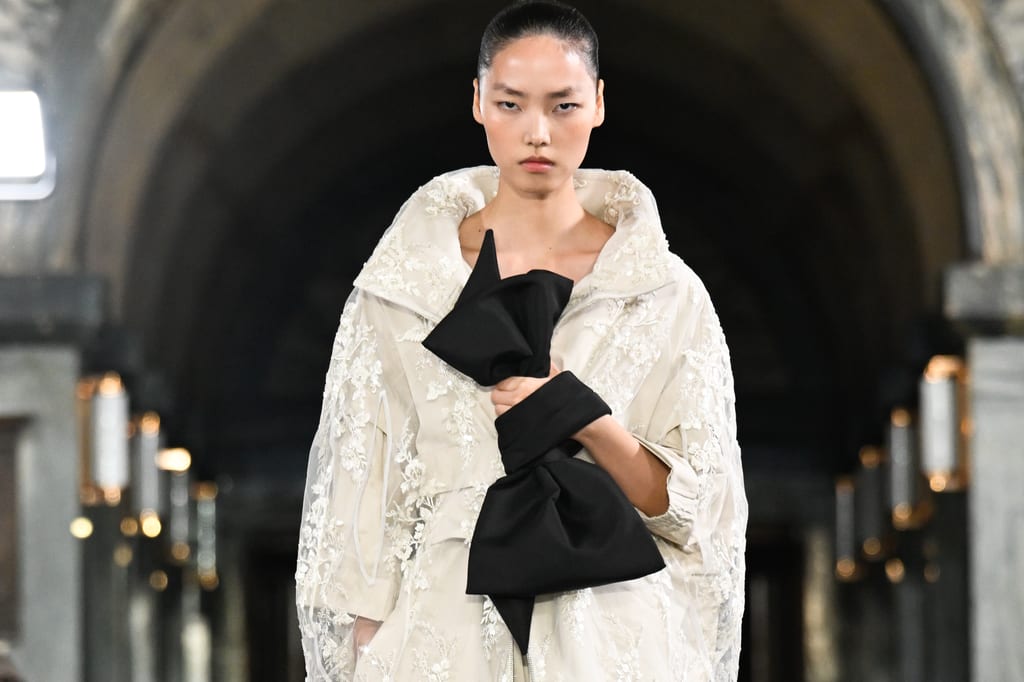
For Spring/Summer 2027, Simone Rocha returned to the Old Bailey, London’s Central Criminal Court, for the third time.
Following her standalone menswear show at Pitti Uomo earlier this year, SS27 allowed Rocha to concentrate entirely on womenswear. She also deliberately stepped away from the dense narratives that often underpin her collections, instead focusing on the clothes and the characters wearing them
The collection began with an unlikely art-world story. Rocha had been looking at Caravaggio’s "The Taking of Christ," a painting that disappeared for centuries before eventually being rediscovered in 1990, hanging inside a Jesuit residence in Dublin where nobody realised they had a lost masterpiece sitting in the dining room.
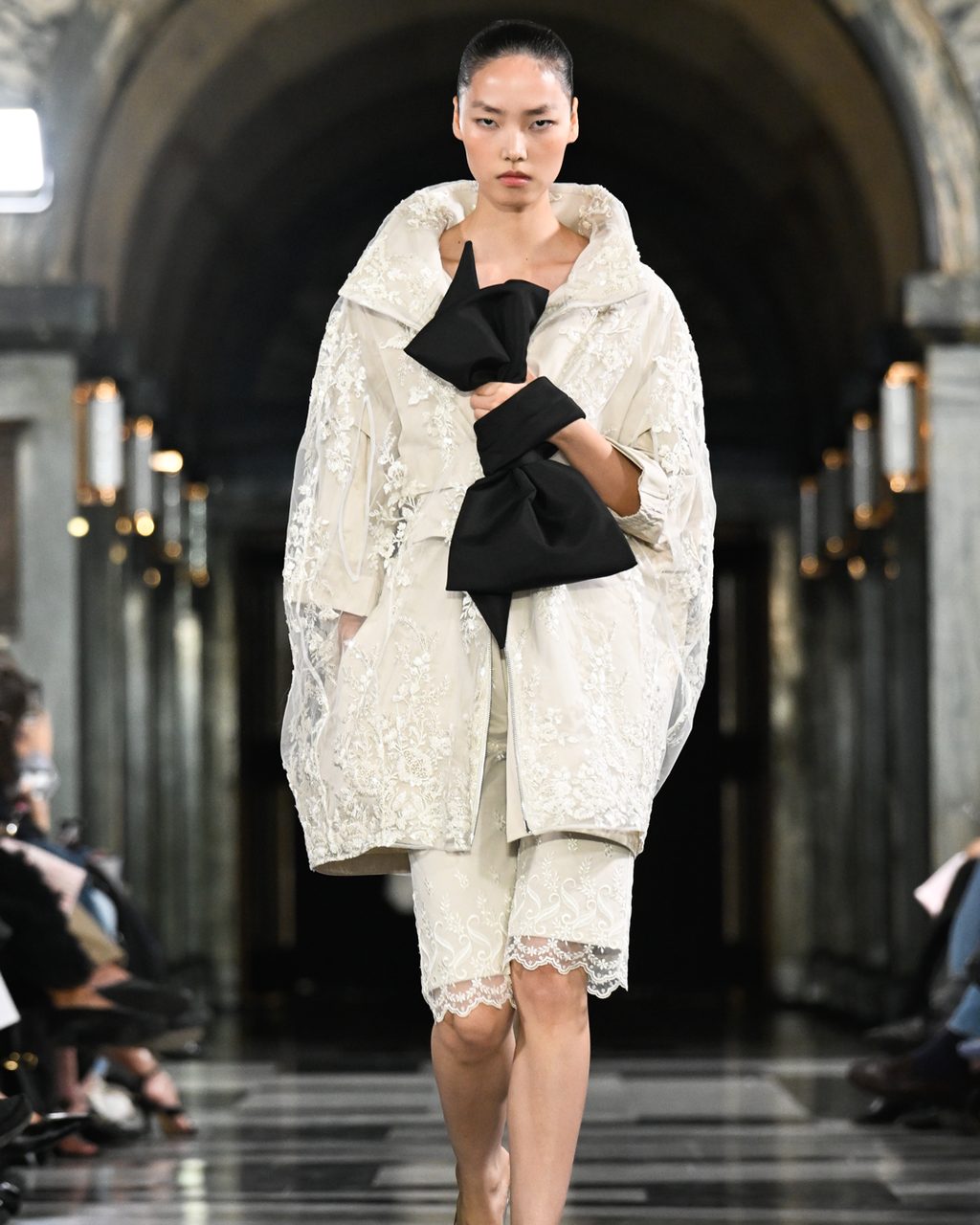
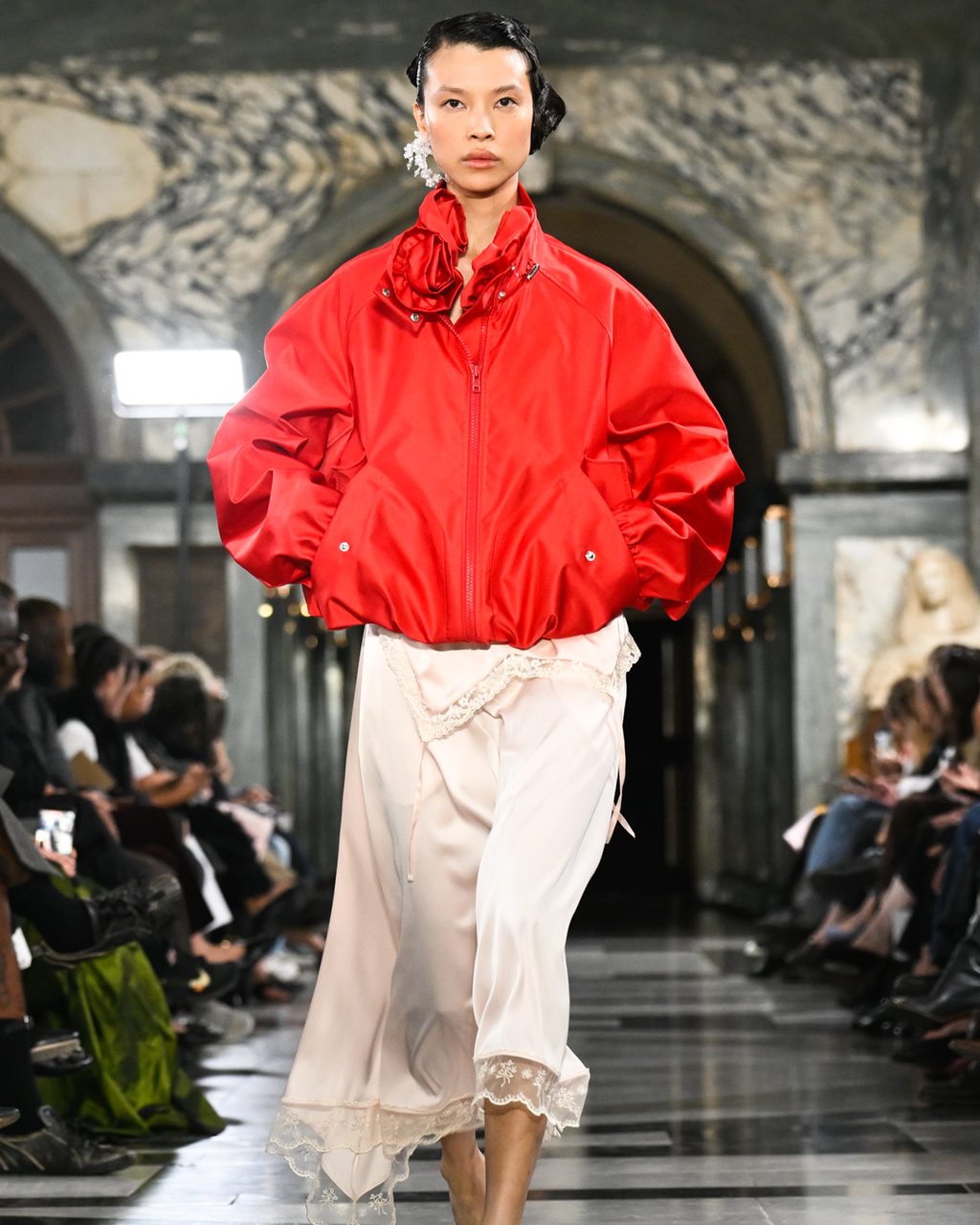
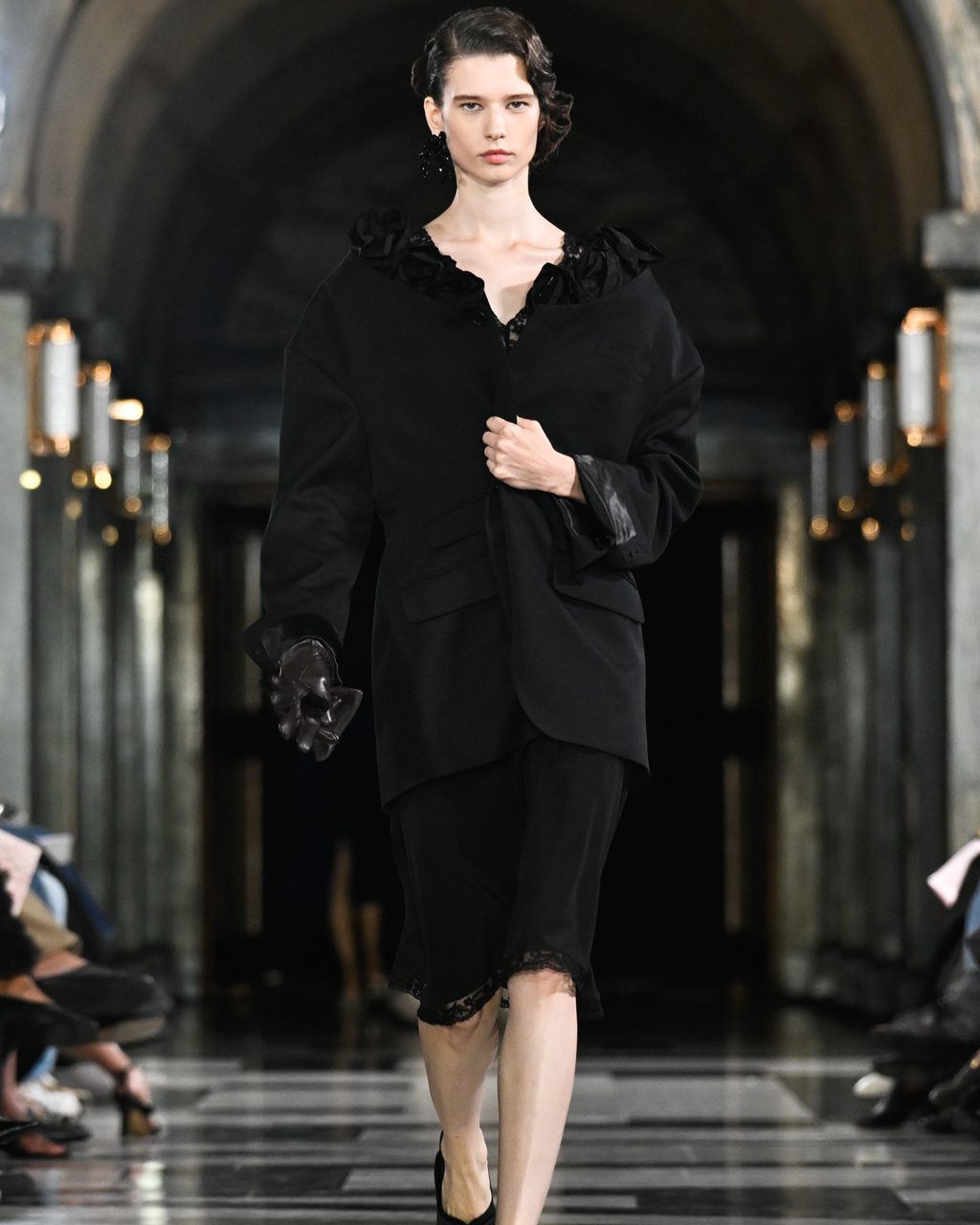
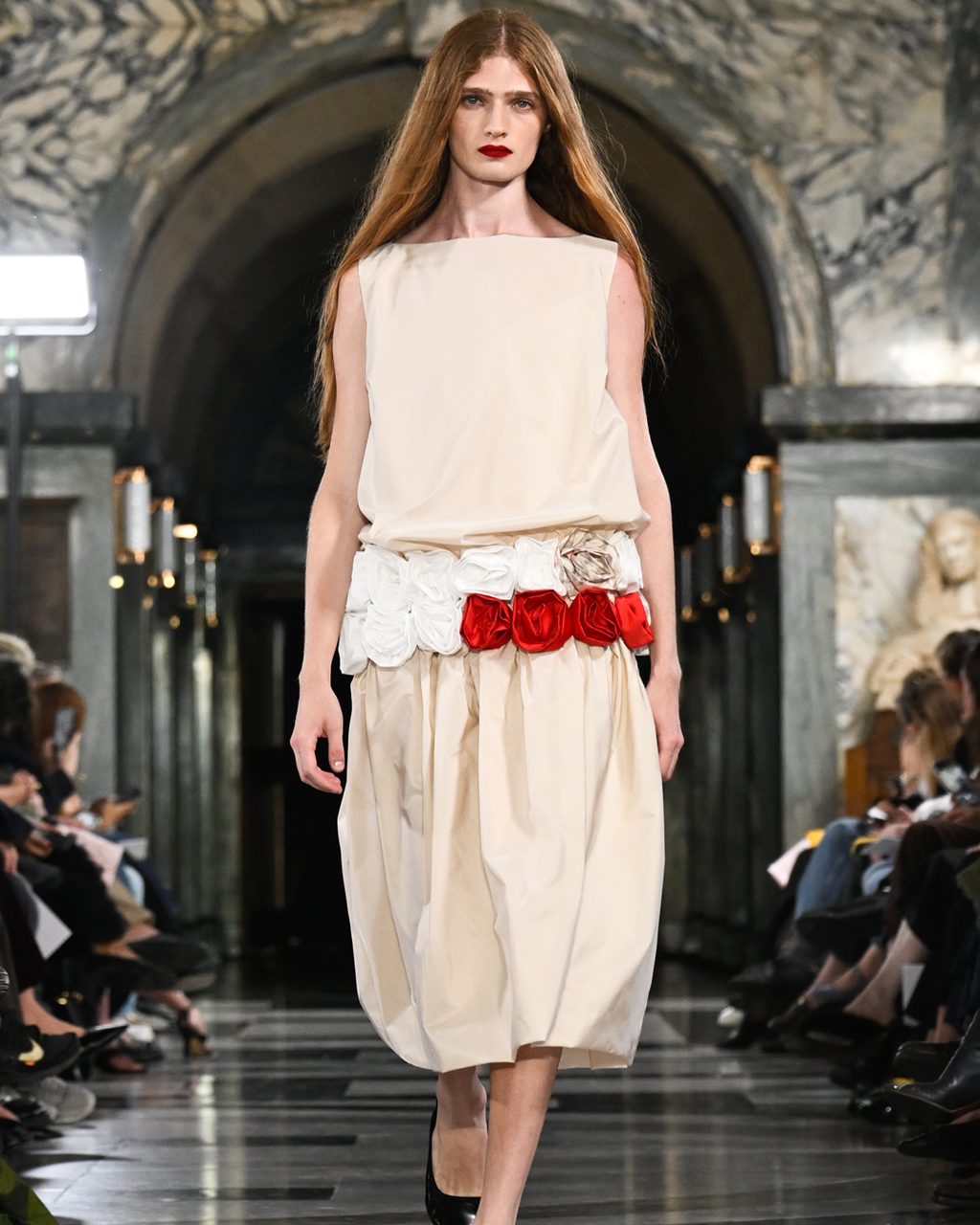
Lavish hand-worked roses curled around necklines, appearing on everything from deep blue velvet to leather outerwear. A bright red Harrington jacket was given the same floral treatment, while practical-looking anoraks arrived with adjustable Velcro panels decorated with pins. Everyday clothes were elevated, while pieces that looked precious were deliberately knocked slightly out of shape.
Silk organza slips hung awkwardly from the body, looking as though they had been pulled, twisted or caught halfway through getting dressed. Rocha described wanting everything to appear “touched,” and that human intervention was visible throughout. Nothing looked too perfect, either. For example, dresses slipped, fabric folded unexpectedly and silhouettes appeared to have been pushed into shape.
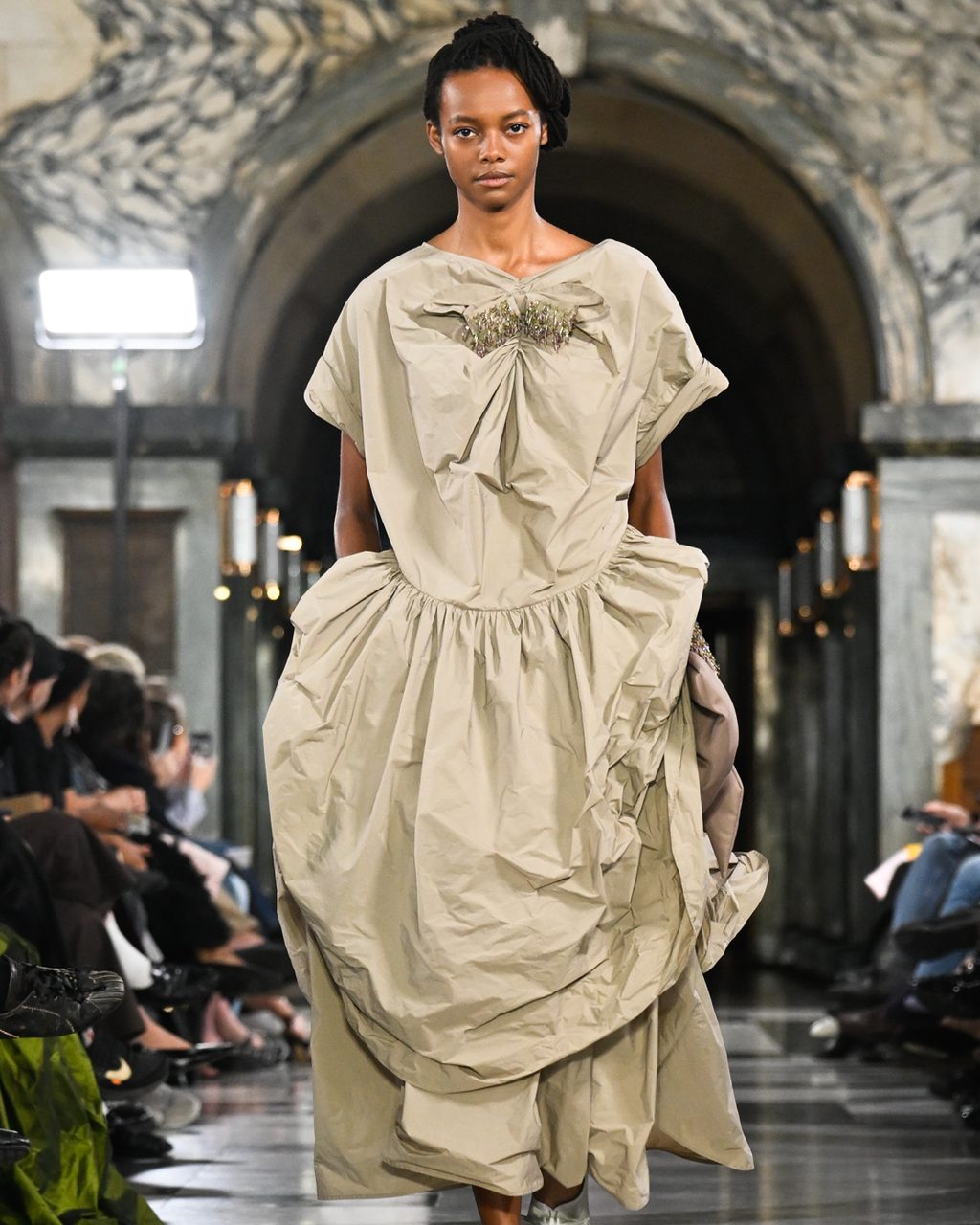
Cocooning taffeta structures swallowed the head and shoulders before extending down the body, sitting somewhere between a religious habit and protective shell. Elsewhere, full taffeta dresses in khaki, lilac and black were woven with extremely fine metallic thread, allowing the wearer to physically bend and manipulate their shape.
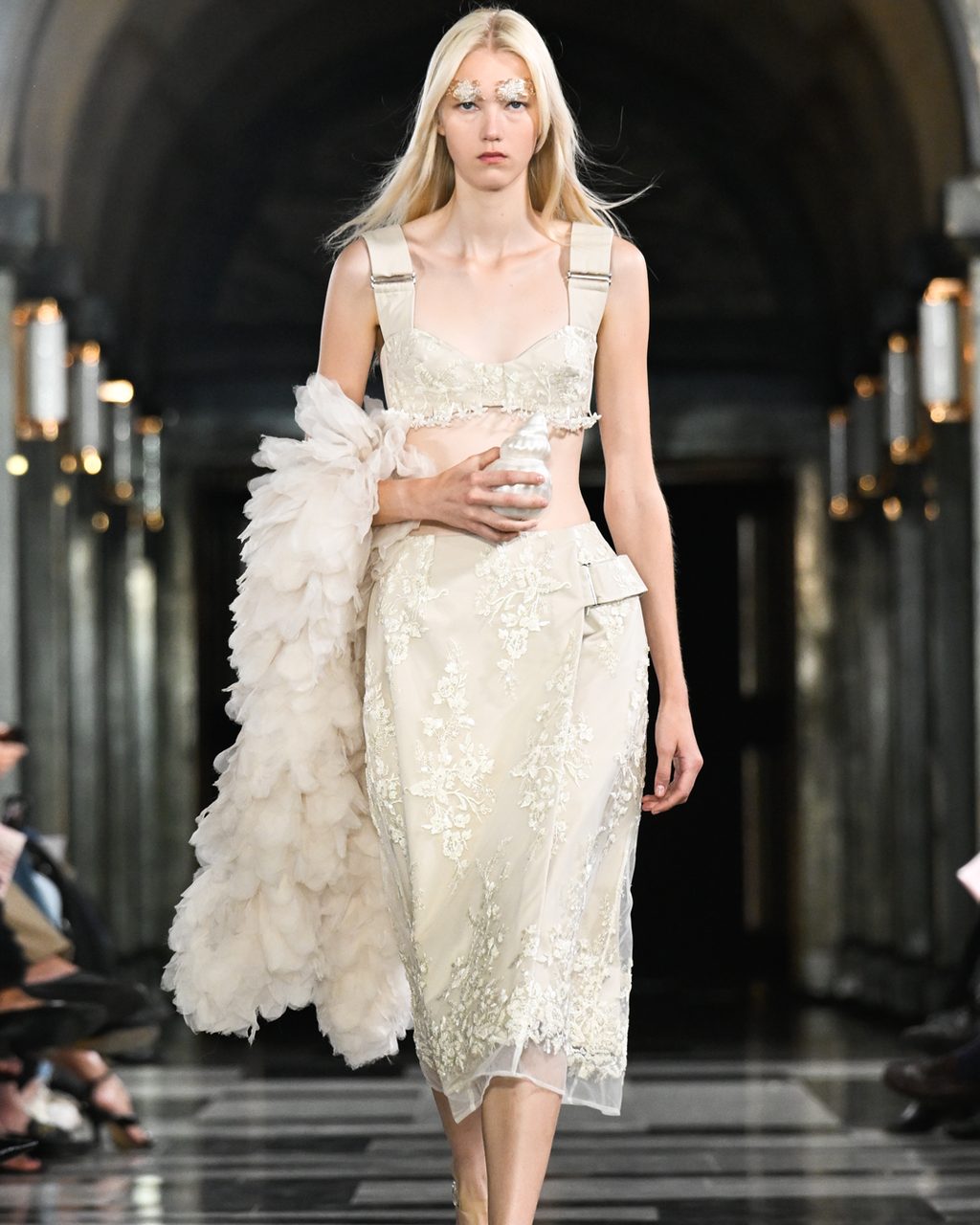
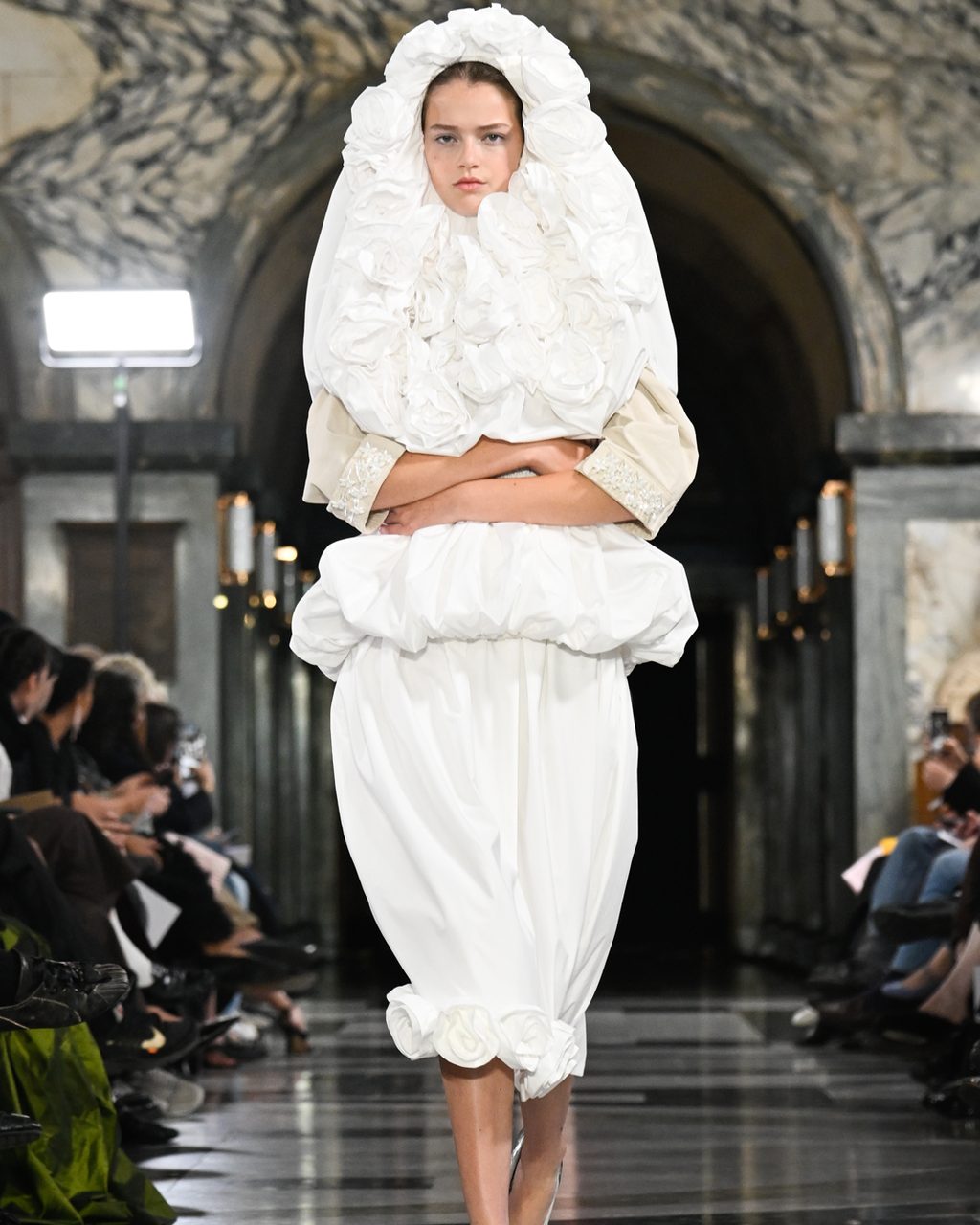
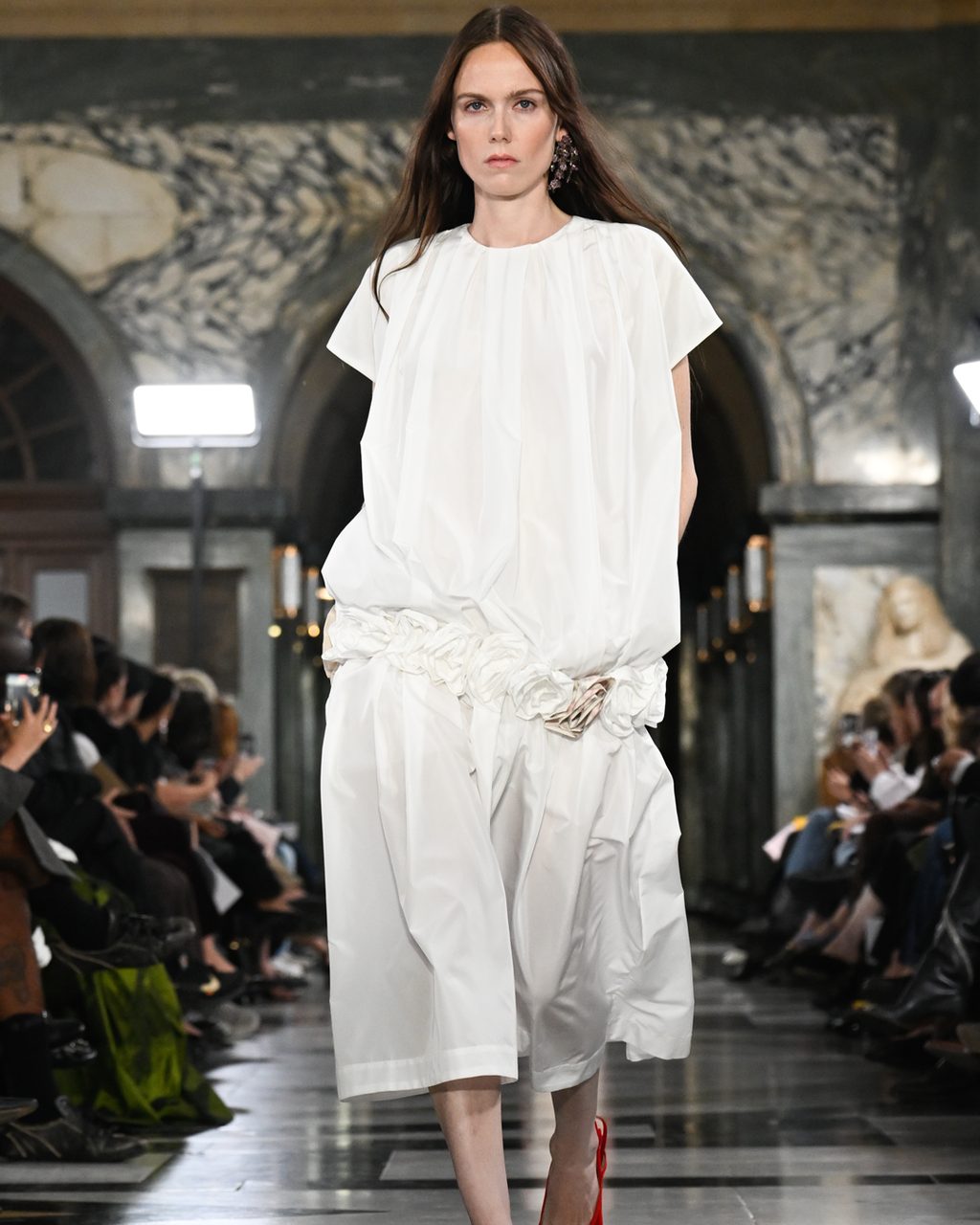
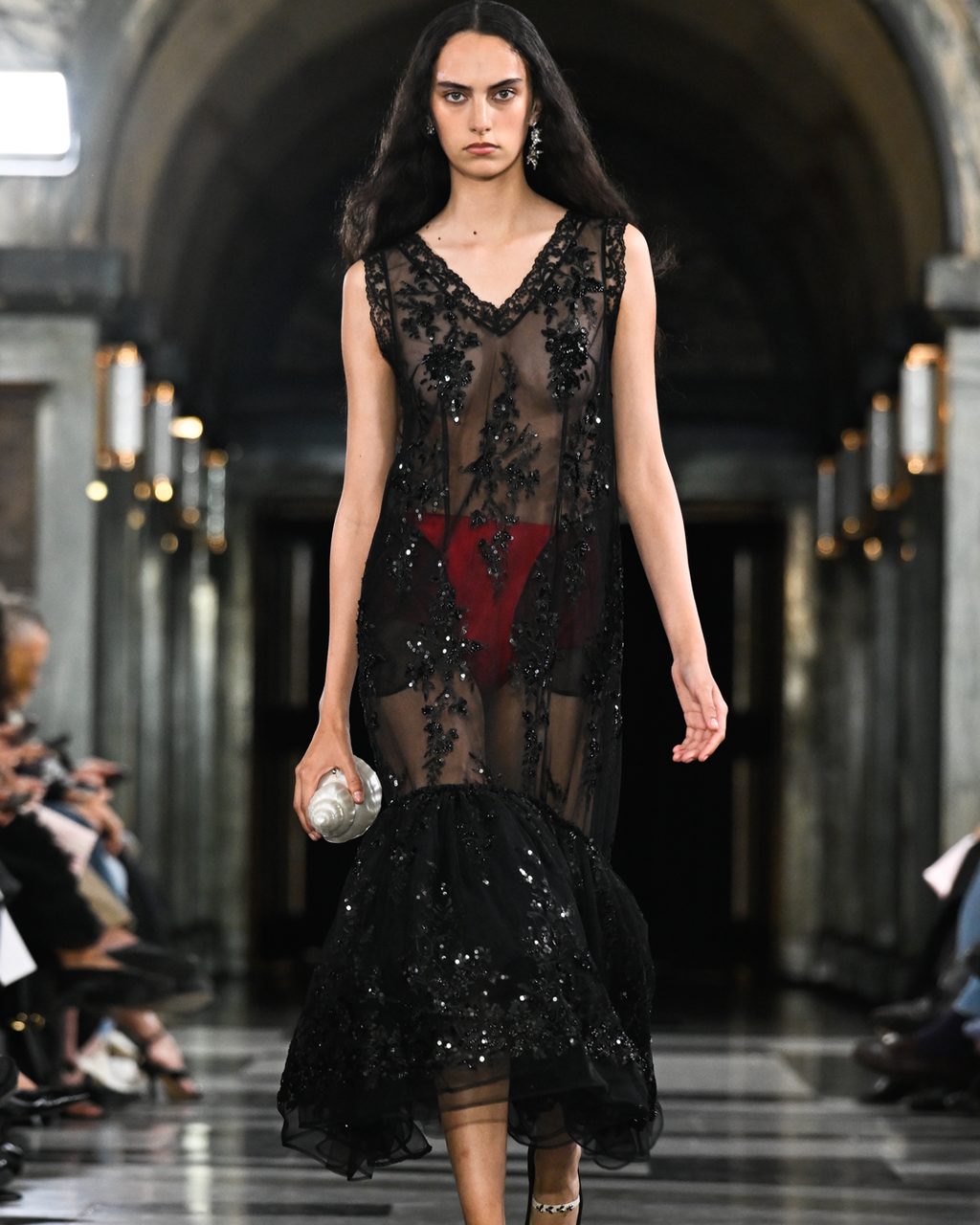
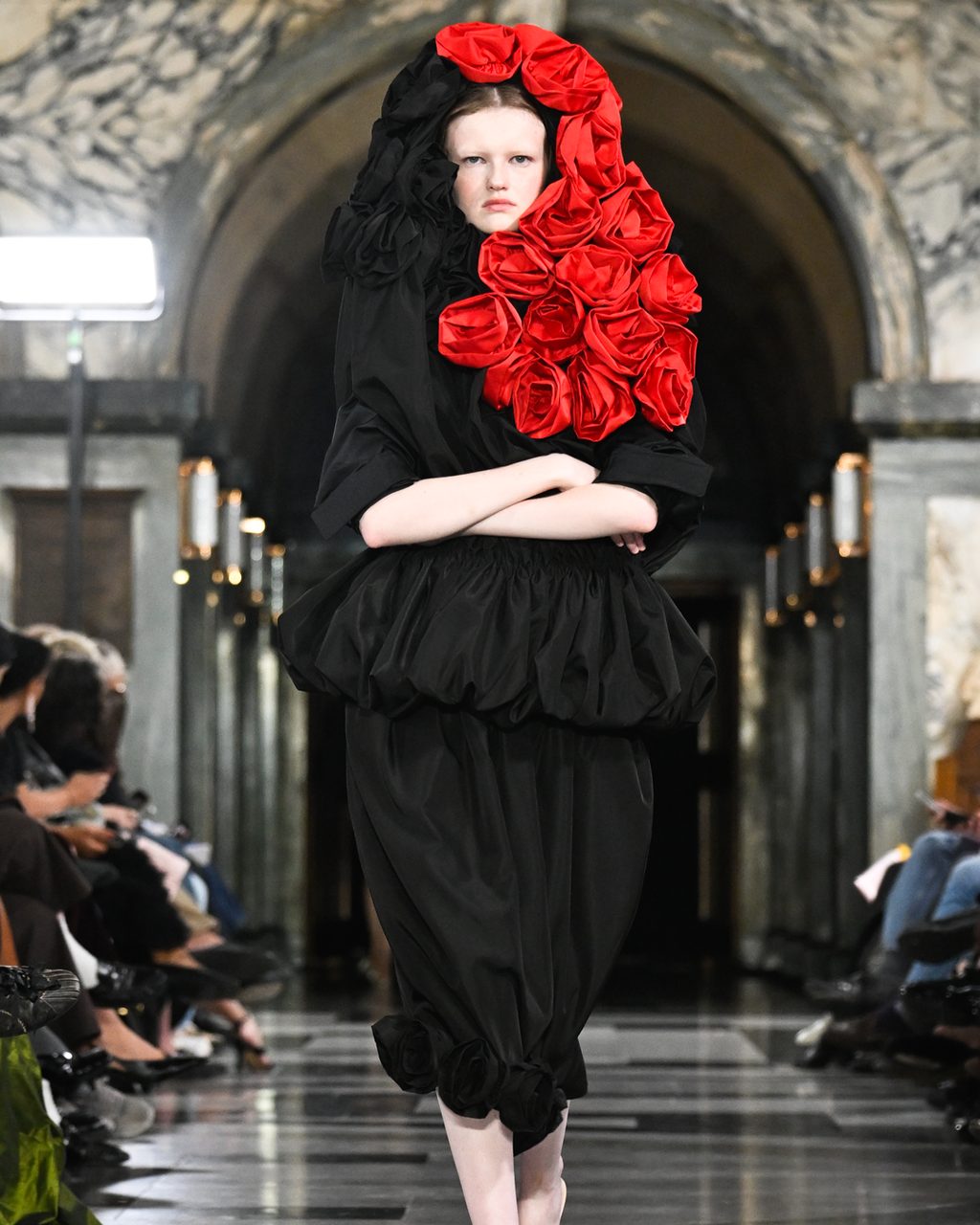
Even some of Rocha’s most recognisable signatures were treated with restraint. The pearls, bows, florals and romantic excess that have built her aesthetic weren't abandoned, but they no longer needed to appear all at once. Instead, a rose-covered neckline or flash of embellishment could do the heavy lifting.
There was still plenty of Rocha’s familiar tension between beauty and awkwardness, innocence and severity, but it wasn't buried beneath layers of references. The designer has reached a point where a black leather coat, a strangely positioned flower or an organza dress hanging slightly wrong can communicate her world without needing much explanation.
After more than 15 years building one of London fashion’s most distinctive identities, Rocha doesn't need to constantly prove what a Simone Rocha collection looks like... It appears that everyone already knows.