
Lacoste returned to where it all began for Spring/Summer 2027, taking over Roland-Garros to reconsider the rules that have shaped tennis dressing for generations.
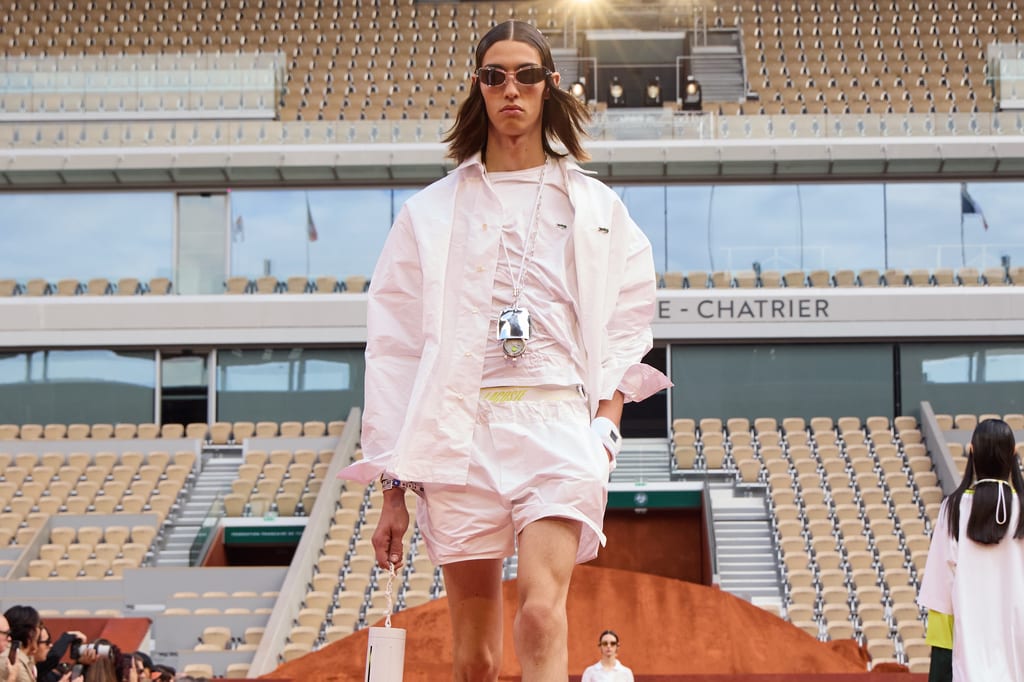
Presented on Court Philippe-Chatrier, Creative Director Pelagia Kolotouros titled the collection "Dress Code: No White Required," setting the tone for a show that took one of tennis’ most recognisable traditions and gradually pulled it apart. Instead of operating completely on the nose of tennis culture, Kolotouros looked towards the players who had previously challenged what could and couldn’t be worn on court.
In the 1920s, René Lacoste began cutting the sleeves from his tennis shirts in search of greater freedom of movement, while Suzanne Lenglen famously pushed against the restrictive expectations placed on female players, swapping corsets and cumbersome clothing for shorter skirts and lighter silhouettes. For SS27, Kolotouros channelled that same attitude into what the house describes as a form of “quiet rebellion." In short, it means breaking the rules without abandoning the game entirely.
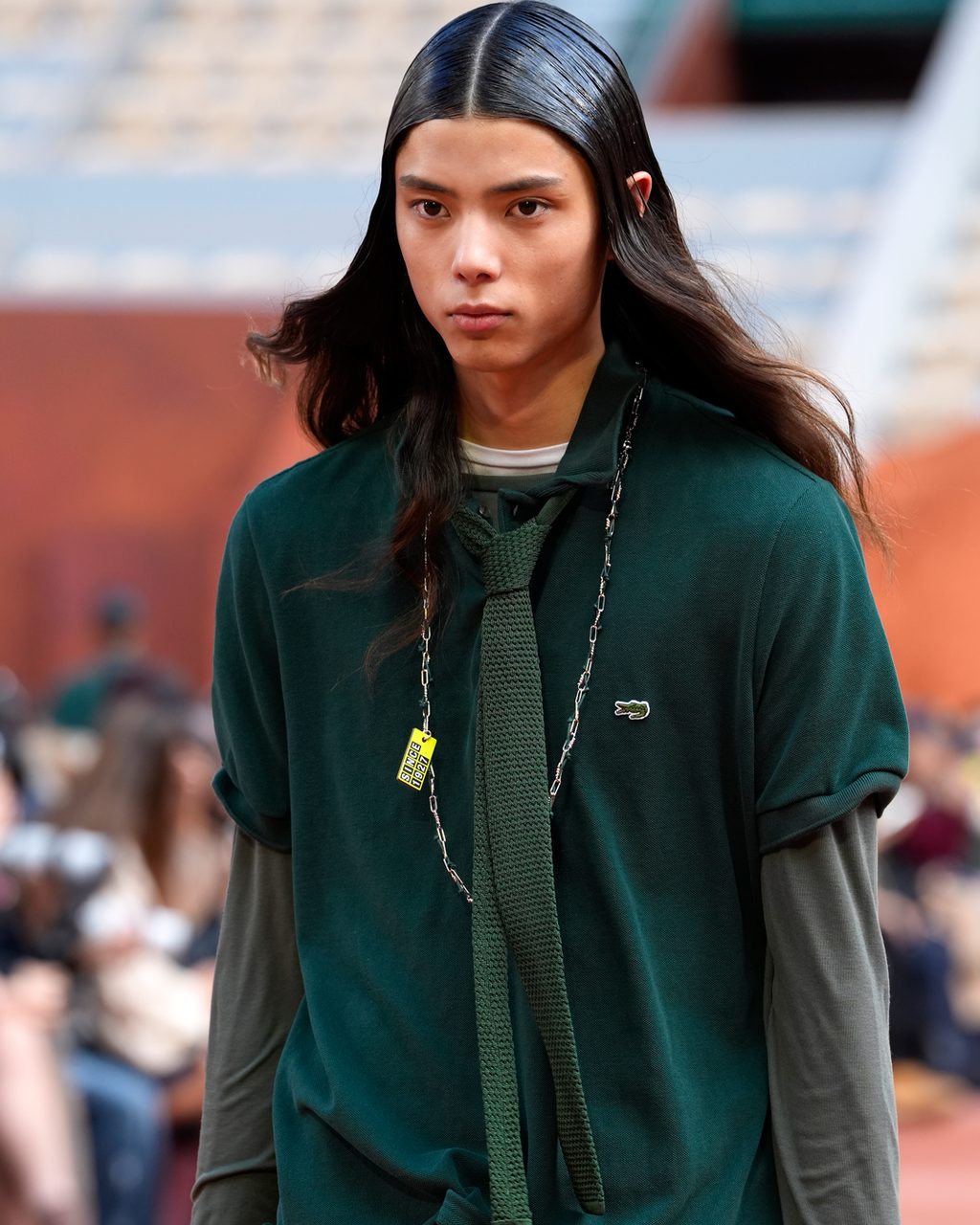
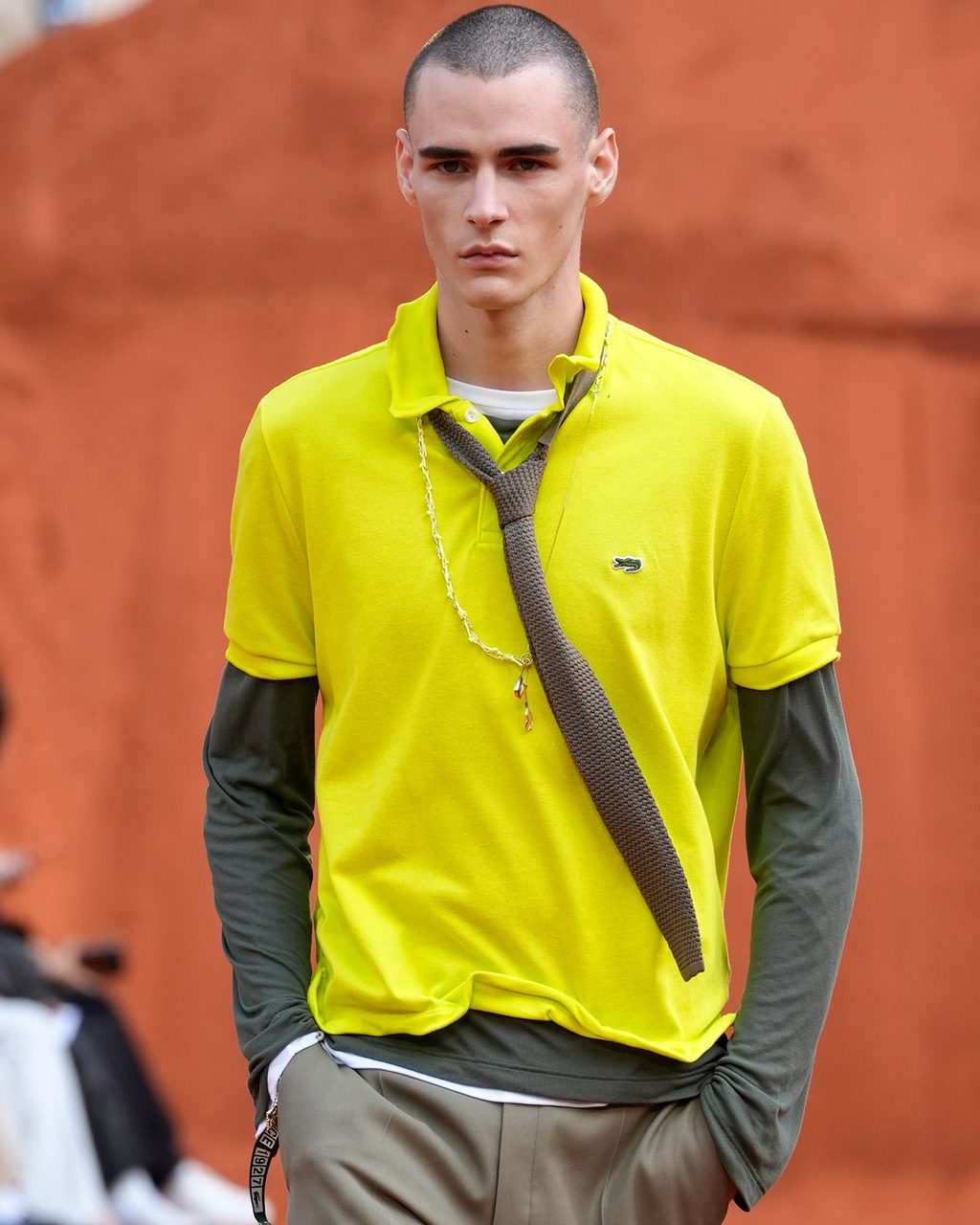
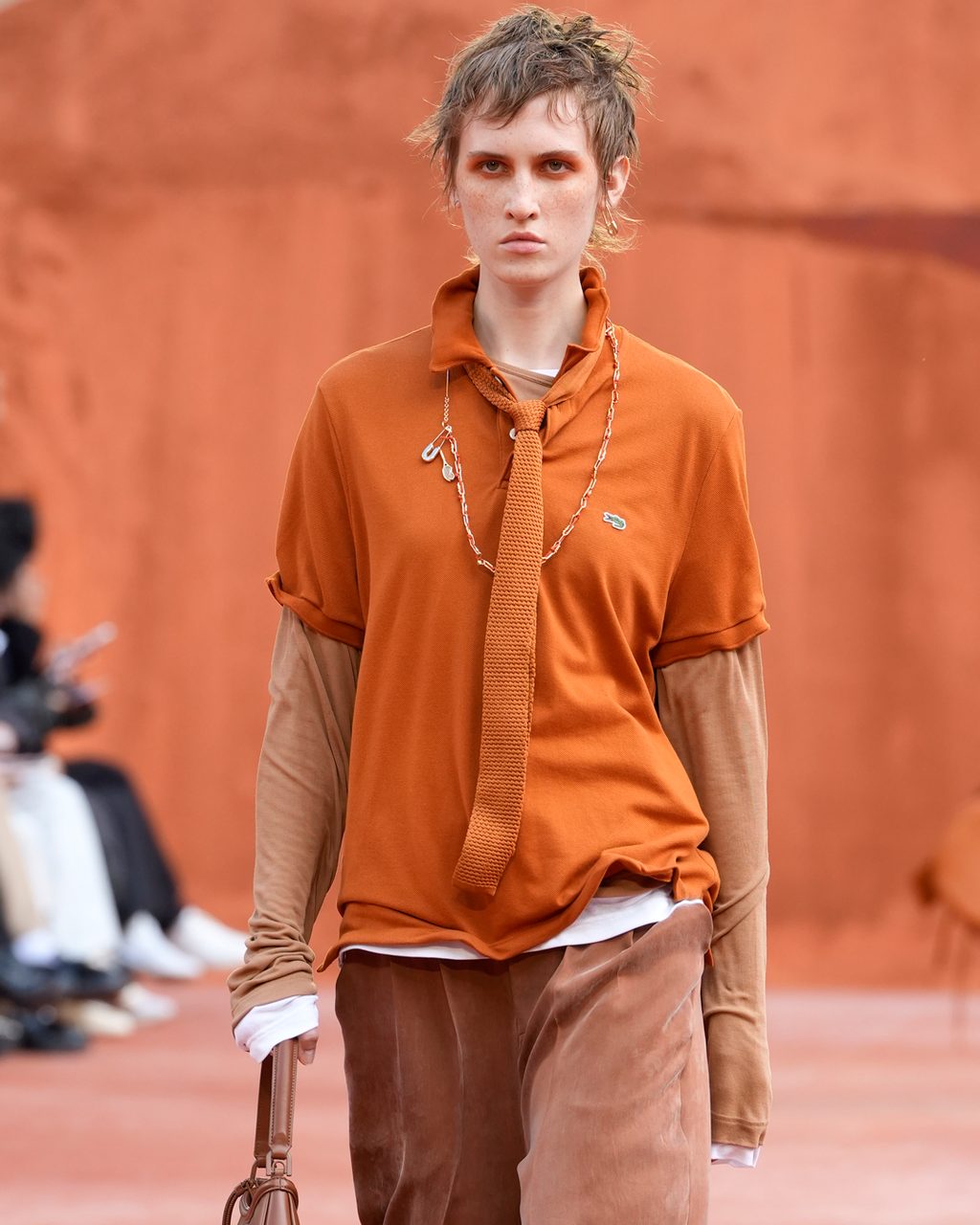

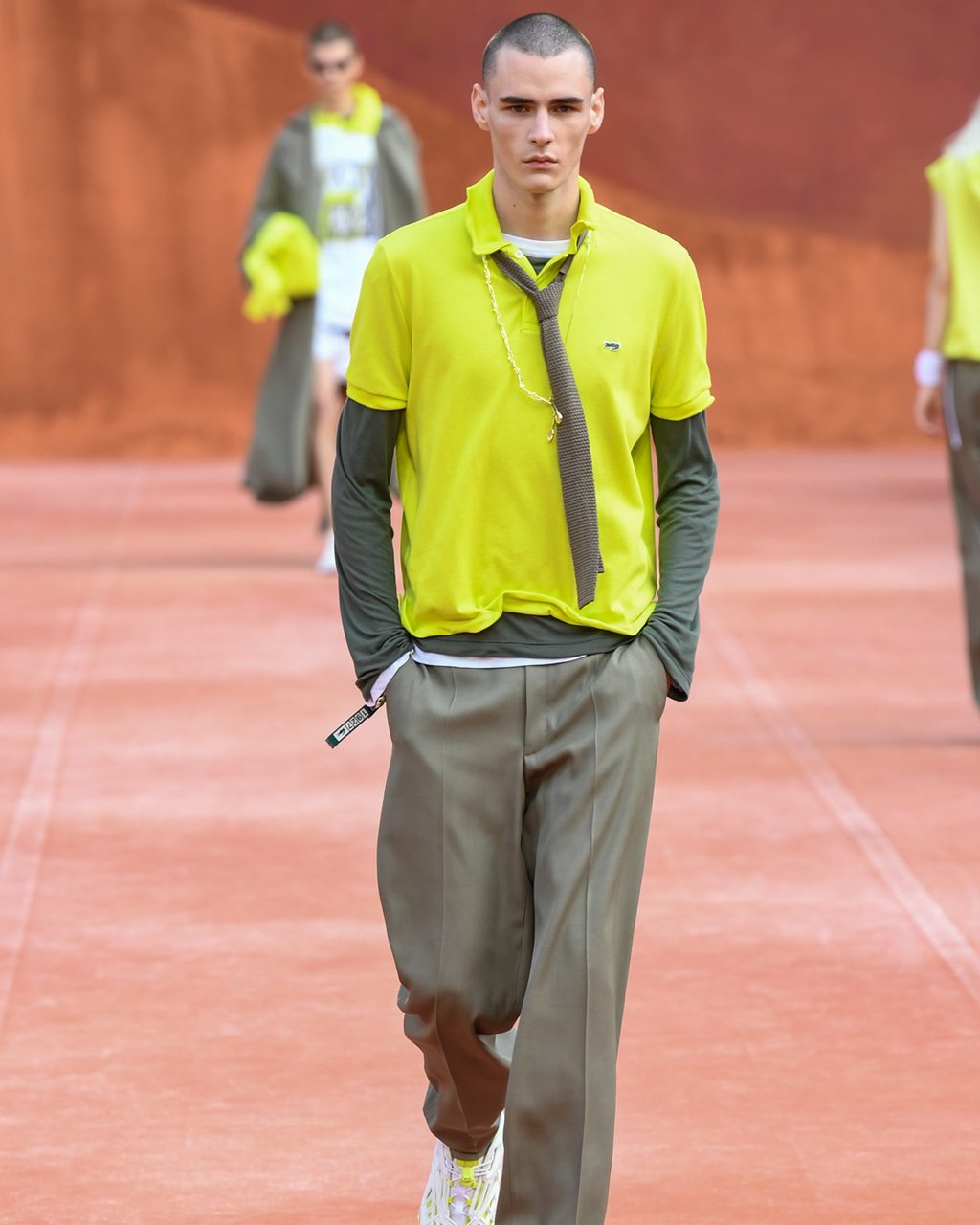
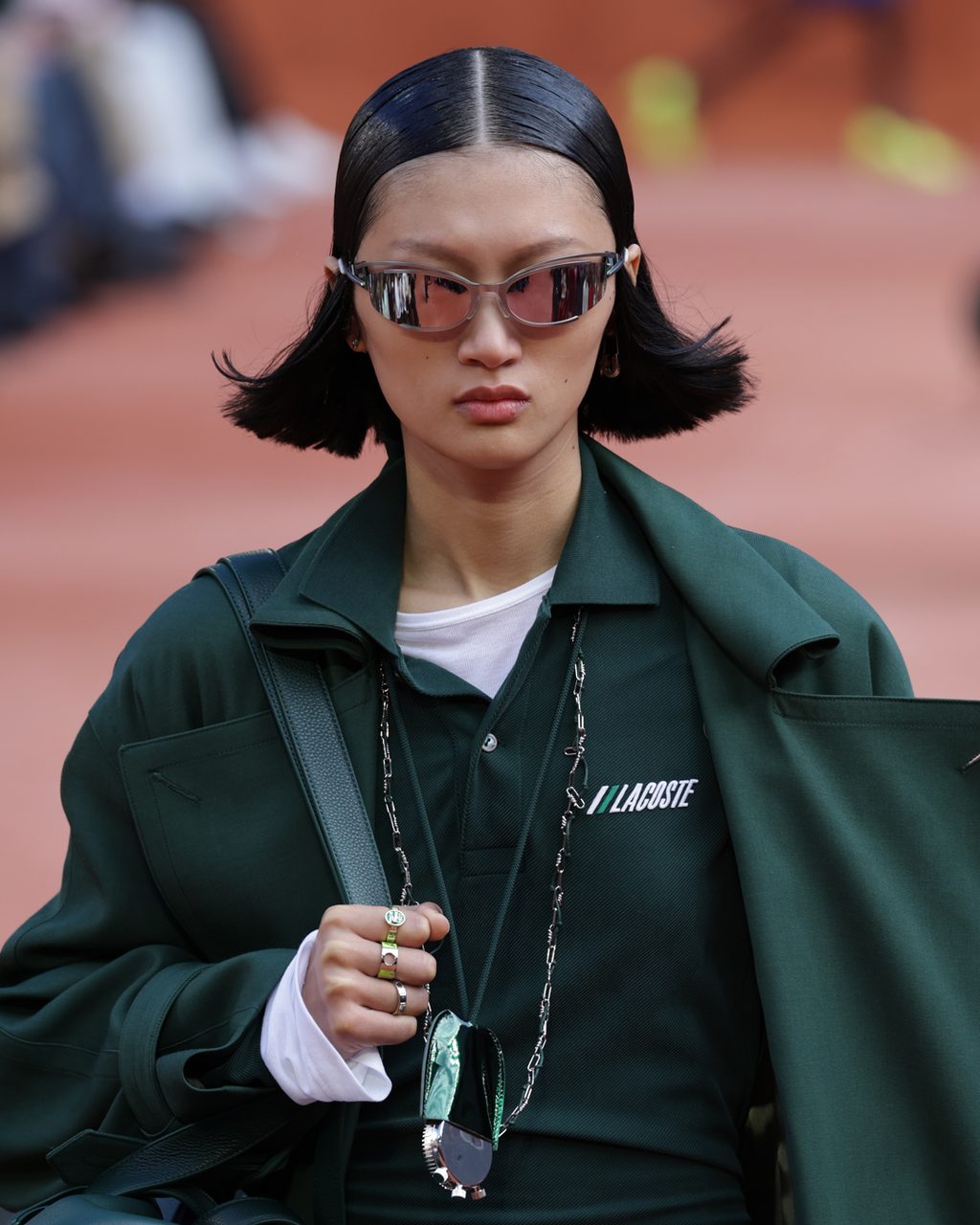
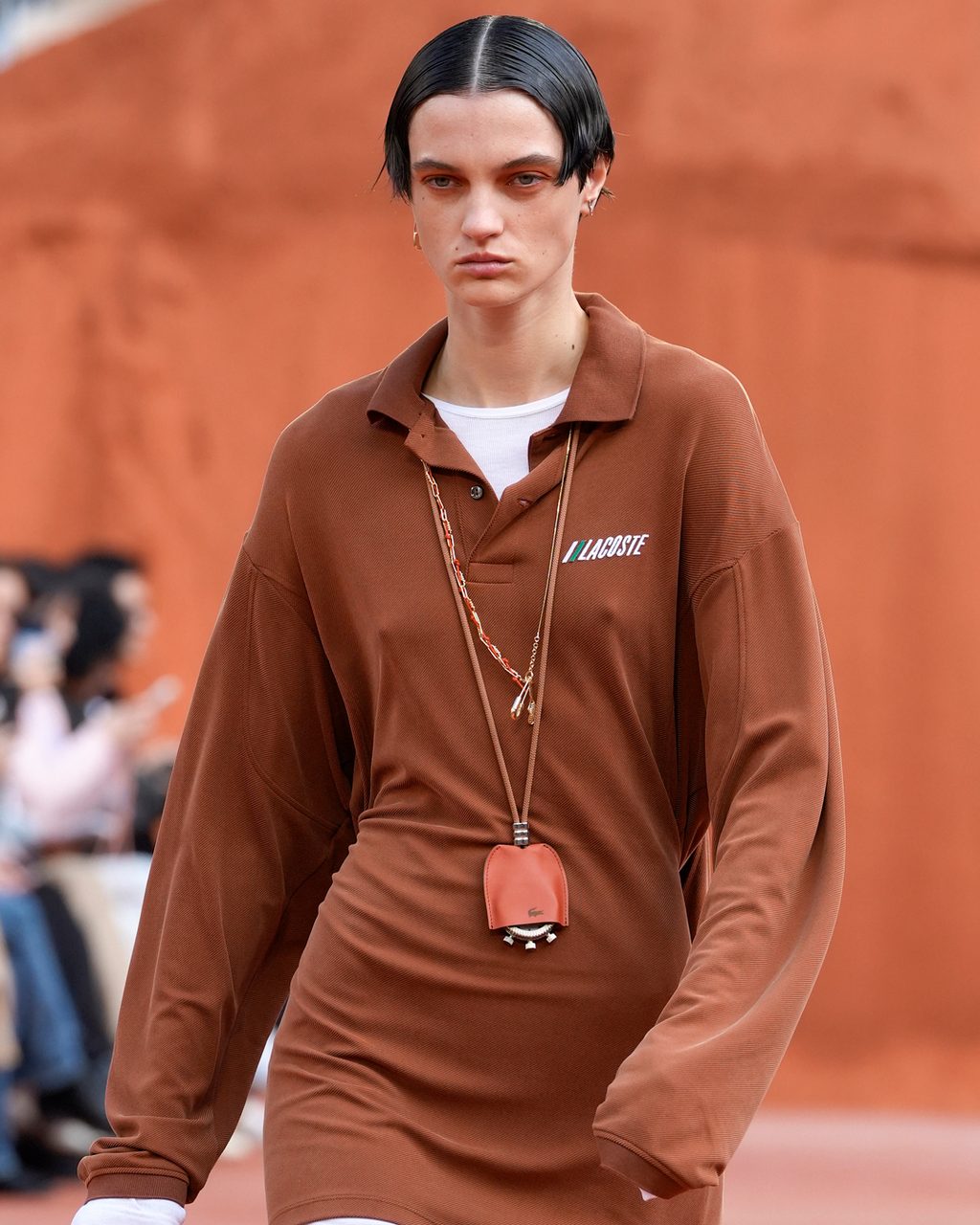
Huge mounds of ochre-coloured clay transformed the stadium, bringing the surface of the French Open directly into the collection. That familiar burnt orange travelled through the clothes alongside earthy browns, tobacco, taupe and olive, punctuated by brighter flashes of violet and tennis-ball yellow.
Polos, shorts and recognisable pieces of tennis kit remained, but were distorted through proportion, fabrication and styling. Relaxed tailoring sat alongside oversized outerwear and wide-legged trousers, while technical sportswear was pushed into territory that felt increasingly removed from anything designed solely for a match.
Clothes appeared creased, puckered and marked as though they had already survived a gruelling five-set match. Some polos became tighter and more distressed, while surfaces appeared mottled with sweat-like marks. To achieve the effect, layered materials were manipulated using heat and steam so that they contracted differently, while cotton and jersey pieces were treated to give them a more worn-in appearance.
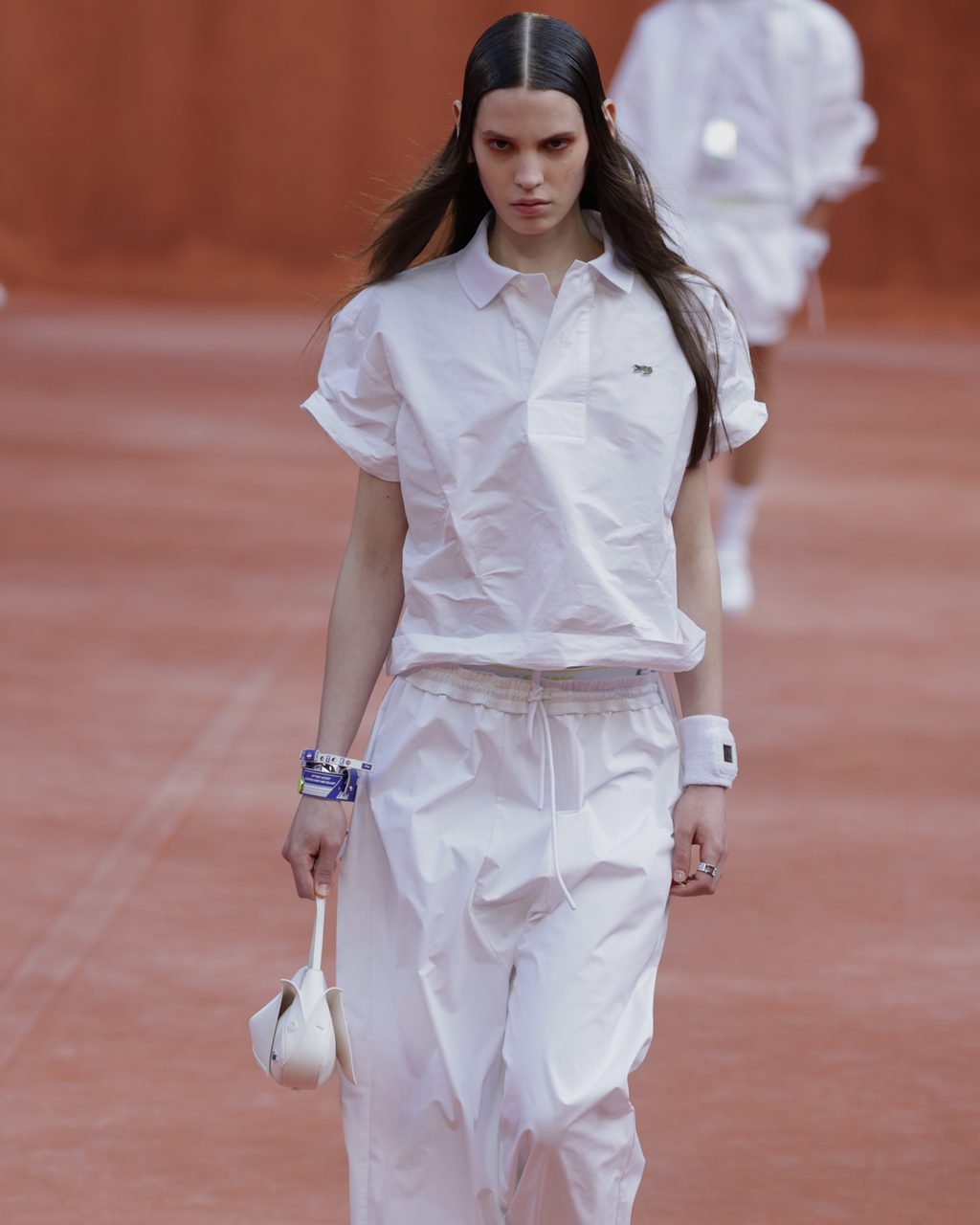
Eventually, the collection arrived back at tennis white, only to dirty it up completely. White jeans, polos, T-shirts, shorts and footwear were stained with ochre tones, giving the impression that models had slid, fallen and rolled their way across the Roland-Garros clay.
Footwear took the tennis references in an even more literal direction. For example, the ACE-T1 transformed the sport’s most recognisable object into part of the shoe itself, incorporating fuzzy tennis-ball forms into exaggerated soles and heels. Elsewhere, sneaker and pump constructions collided, with neon green, white and metallic finishes pushing traditional court footwear considerably further from its performance origins.
Tennis remains impossible to separate from Lacoste, but rather than treating that history as something to be endlessly reproduced, Kolotouros continues to use it as material to mess with. The polo can shrink, tailoring can loosen, whites can get dirty and a tennis ball can become a heel.