
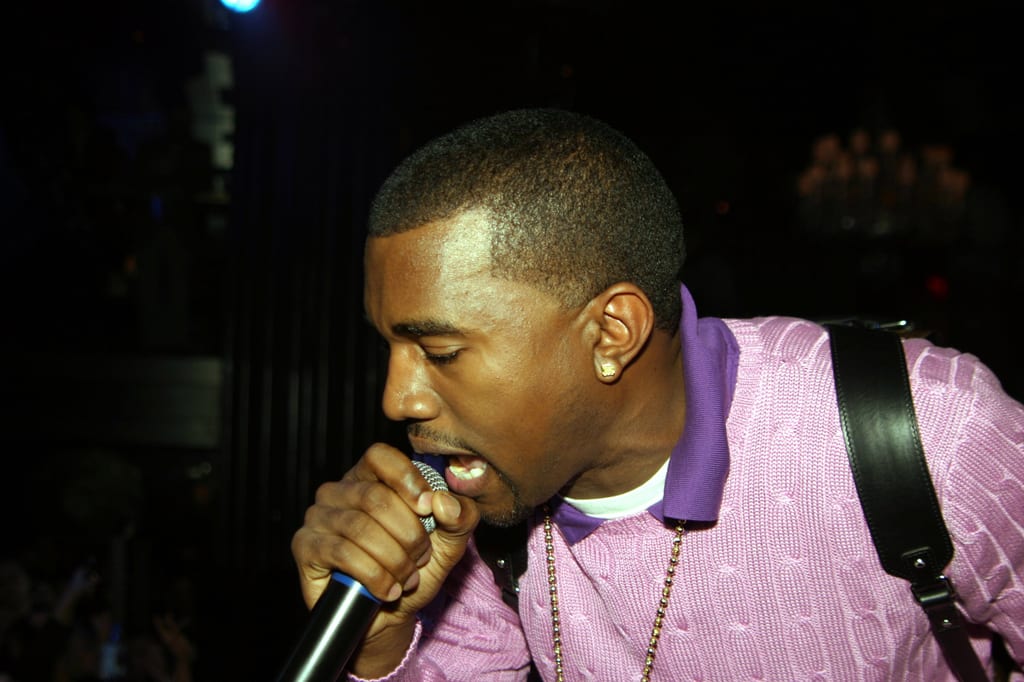
Ye (formerly known as Kanye West) may be the most hated man in the world right now. The rapper, who’s been “cancelled” more times than he’s hit number one, has possibly just just hammered the final nail into his proverbial coffin: days after he controversially appeared next to his near-naked wife Bianca Censori at the Grammys last Sunday, Ye took to X at about 6 p.m. LA time on Thursday for a (still ongoing) depraved rant.
Unfortunately, Ye spewing hate isn’t new. In the past, he claimed that slavery was a choice, issued anti-Semitic rhetoric, said that George Floyd died of a fentanyl overdose, not asphyxiation at the hands of the police, and wore a ‘white lives matter T-shirt,’ to name a mere fraction of examples. Yet the extent to which any of these actions actually left him ‘cancelled’ is dubious. Among most, the name Kanye West incites moans and eye rolls, among others, the justification that you can separate the art from the artist. “Kanye apologisers, meanwhile, ” explain away his outbursts as symptomatic of mental illness, while others are unbothered by—or worse, back—his deranged opinions. Meanwhile, the media continues to cover his antics, and with 21million followers on Instagram, 33 million on X, and 66.3 million monthly listeners on Spotify, Ye is still firmly raised on a platform of society’s making.
But this weekend’s Twitter rampage may have been the final straw. Kanye defended “his twin” P Diddy amid rape and paedophilia charges, claimed to have “dominion” over Bianca Censori, denied the allegations of #metoo victims, shared a T-shirt of his design brandishing a swastika, and once again praised Hitler.
The rant comes hot off the heels of a finer hour for Kanye. On Thursday, three days after his Grammys stunt, the musician shared an interview with friend and collaborator Justin Laboy for The Download. The interview left fans wondering if 2025 could be the year in which Kanye West is redeemed in the court of public opinion: he comes across more together than usual, softened by the presence of his daughter North; he admits to doing “crazy s**t” and steers clear of anything too problematic, putting his erratic behaviour down to a recent Autism diagnosis. He also admits to having come off his meds since he found out he isn’t bipolar, and for the sake of his creativity. Yet in clips with his posse, interspersed between the main—tameer—interview, he comes off delusional. Having regained his billionaire status, his god complex is firmly intact, and he now believes himself unimpeachable. “You ain’t got shit on me, I’m the king,” he rants to his posse.
The autism claim sparks similar questions that his 2016 bipolar diagnosis did: to what extent does a mental health condition explain your misdeeds? To what extent does it absolve you of them? (An interesting topic during a time of armchair diagnosis culture). In the interview, Kanye compares his experience to that of Rain Man. “Autism takes you to a Rain Man thing. ‘Oh man, I’ma wear this Trump hat because I like Trump in general.’ And then when people tell you to not do it, you just get on that one point. And that’s my problem.” Indeed, demand avoidance—a compulsion to go against outside instruction—is a common autistic trait. But although various mental health conditions can cause people to say offensive things—or impede the brain processes that would prevent them from saying them, as noted by The New York Times, they don’t “make you espouse anti-Black ideologies and antisemitism.” Nor do they incite you to use women as pawns to stay relevant. Indeed, every time Kanye takes to X to gush abhorrent (capitalized for emphasis) hate speech, his actions become harder for even his most loyal stans to chalk down to mental health.
So, with calls being made to have him removed from X, to have his music revoked from Spotify, and condemnation from the Anti-Defamation league, is this it for Kanye? It’s hard to say: Kanye’s public downfall has slow and non-linier, made up of a litany of controversies and subsequent successes as opposed to the narrative we generally assign to cancellation: a slip of the tongue resulting in public shame and the end to an illustrious career; a seminal artist’s work sullied for posterity. Yet cancel culture—despite the moral panic it incites—leads to less real-world harm than the discourse would have us believe. Most “cancelled” men in the public eye often do okay once the online flogging is concluded. Their name may be more divisive, but they continue to be greeted with awards, while their income often takes little more than a momentary hit. (Just look at Chris Brown, Kevin Spacey, Johnny Depp, and Kanye himself.)
Regardless, it’s tough to envision West making a comeback this time: he will undoubtedly maintain impunity among a diehard sect of his followers, while others will continue to blast Life of Pablo. But with even Trump steering clear this time around, and the infamously liberal when it comes to hate-speech Musk shielding his posts behind warnings of abuse (users can still opt to click on them), West may be destined to forever haunt the margins, scrambling for relevance through hate speech and problematic stunts. Having said that, with the world moving further to the right with each passing day, it’s hard to say where history will land on the world’s most incendiary rapper. We'll have to see what the stats of his upcoming album (ironically titled) Bully are saying, to know for sure.
Image via Getty
More on Culted
See: The 2025 Met Gala might not be tailored for you specifically