
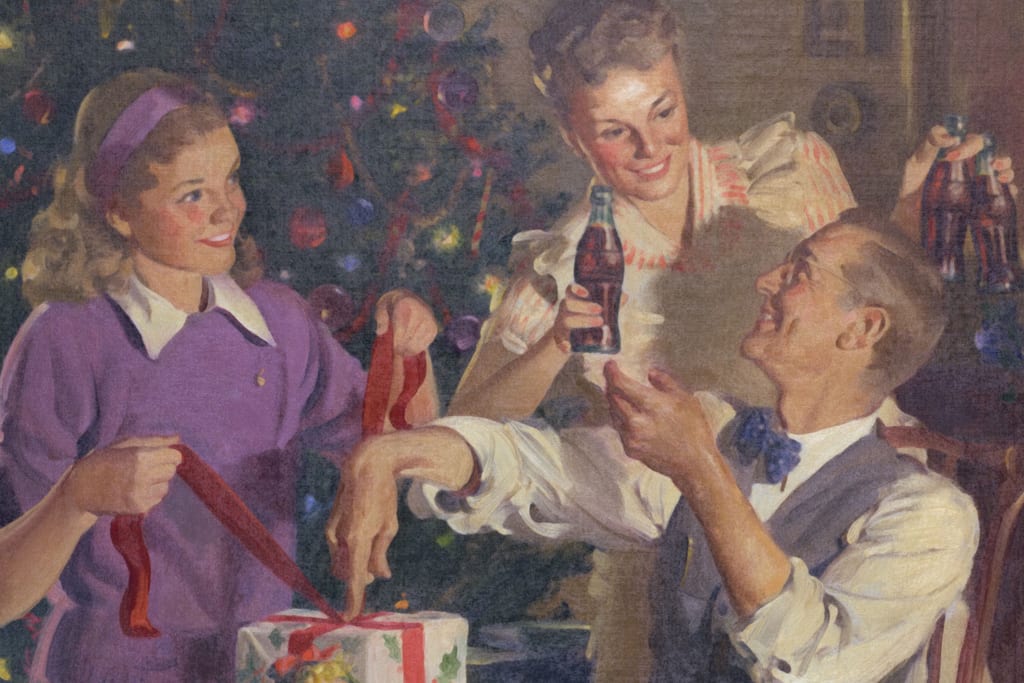
Few brands have shaped the visual identity of Christmas quite like Coca-Cola. From its iconic red-suited Santa Claus to the illuminated Christmas trucks and nostalgic advertising campaigns, the brand has spent decades creating imagery that has become inseparable from the festive season. But behind these familiar traditions lies an extensive archive of artwork, photographs and cultural artefacts documenting how Coca-Cola's relationship with Christmas has evolved over generations.
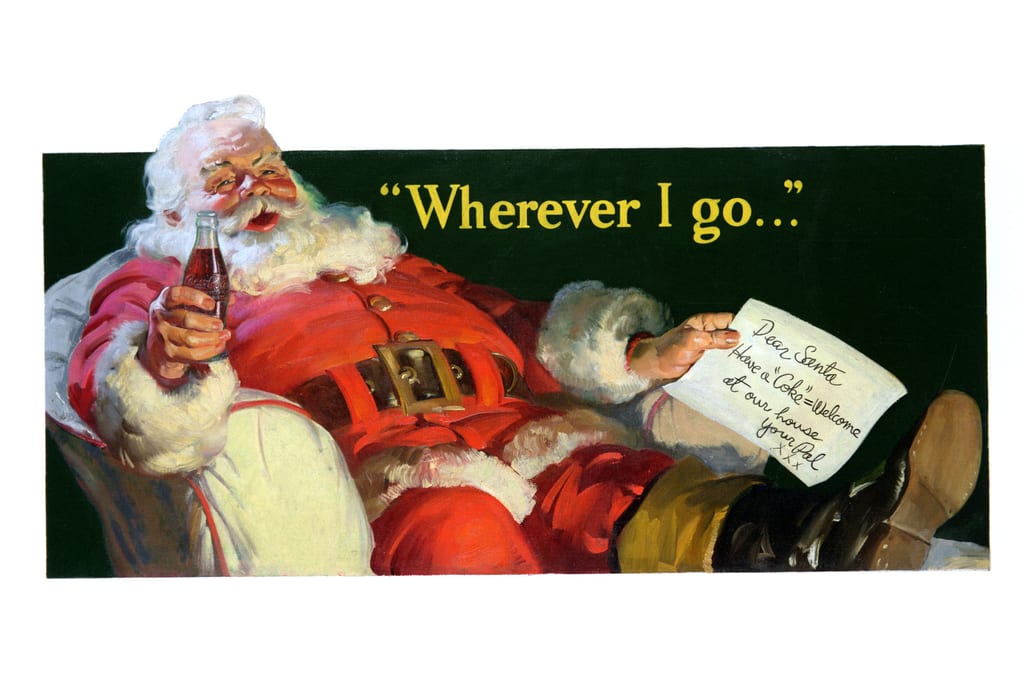
To explore that history, CULTED travelled to Atlanta, Georgia, for "A Very Coca-Cola Christmas," an exclusive look inside the brand's global headquarters and archives. Home to 140 years of history, the collection includes everything from original advertising materials and early bottle designs to Haddon Sundblom's celebrated Santa Claus paintings, first commissioned in 1931. Together, these objects offer a fascinating insight into how creativity, storytelling and design have helped shape one of the world's most recognisable brands.
During our visit, we sat down with Sarah Rice, Senior Director of Archives at The Coca-Cola Company, to discuss the stories behind its most iconic imagery, the enduring power of nostalgia and the importance of preserving creative history. From debunking the myth that Coca-Cola invented Santa Claus to explaining why even the most ordinary objects can hold extraordinary stories, Rice offers a rare look at the past, present and future of the brand's cultural legacy.
CULTED: Can you introduce yourself and explain your role at Coca-Cola?
I'm Sarah Rice, Senior Director of Archives at The Coca-Cola Company.
What would surprise people most about a working day inside the Coca-Cola archives?
No two days are ever the same. People often ask what a typical day looks like, but there really isn't one. We respond to whatever the business needs, whenever it needs it.
Every Monday, we have a team meeting where everyone outlines their plans for the week. By lunchtime, those plans have usually changed completely. That's part of what makes the job exciting.
How do you make nostalgia resonate with people who weren't around to experience the original moment?
The archives are the home of Coca-Cola's authentic voice. They're a place where people can connect with the brand's identity, whether they experienced those moments firsthand or not.
Coca-Cola has been part of family celebrations, birthdays and traditions for generations. Even if something happened before your time, there's often a connection through your parents or grandparents.
For example, the iconic "Hilltop" advertisement predates my generation, but I still get goosebumps watching it. I experience that same feeling when I see the polar bear commercials from my own childhood. That's the power of nostalgia. It can transcend generations.
Coca-Cola's iconic Santa Claus illustrations helped shape the visual identity of Christmas. How did that relationship develop?
Santa Claus existed in many different forms before Coca-Cola began working with his image. What we did was help establish a consistent, recognisable interpretation.
We've had a relationship with Santa for over 100 years, and he's always been a natural fit for Coca-Cola. He's warm, joyful and embodies the spirit of togetherness that we associate with the holidays.
What makes someone a good archivist or researcher?
Curiosity and the ability to connect things that weren't necessarily intended to be connected. When we collect materials from different departments, we have to consider how they might be useful to people in the future, including those who might interpret them in completely unexpected ways.
Something as simple as an old bottling plant schematic can reveal information about engineering, employment, production and the way people worked at the time. I also love finding stories in objects that initially appear ordinary. Sometimes the most unremarkable item becomes fascinating once you understand its history. Context can completely change how someone sees something.
What's one misconception about Coca-Cola's relationship with Christmas that you'd like to correct?
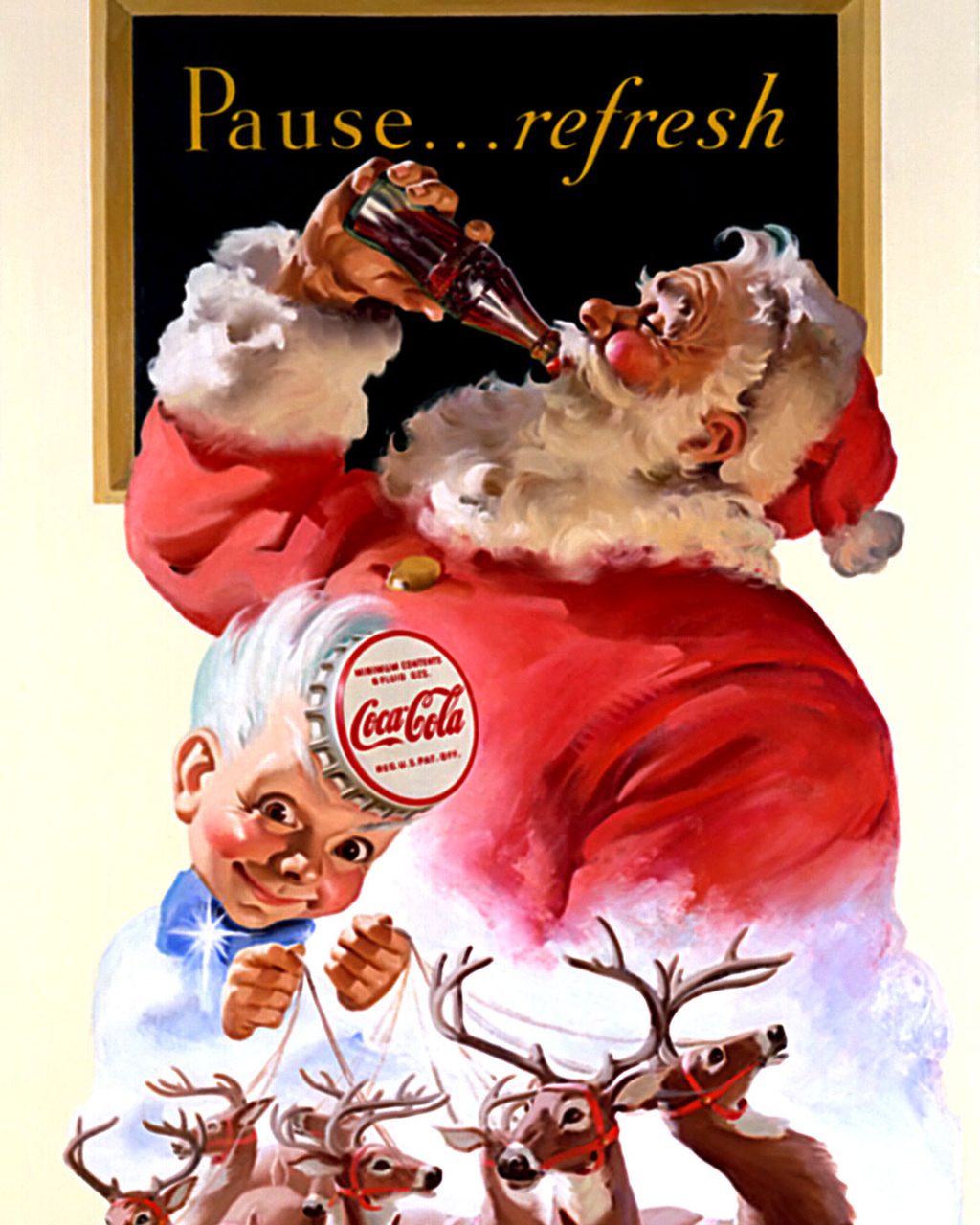
We did not invent Santa Claus. We've been associated with him for over a century, but we didn't create him. We embraced the qualities that already made him special.
It's similar to how Coca-Cola approaches different communities around the world. We don't try to change those communities to fit the brand. We look at how Coca-Cola can become part of their existing culture and traditions.
How has Coca-Cola's Christmas imagery continued to connect with different generations?
One of the things I love is how we've been able to bring historical artwork to new audiences. Some of our original Santa illustrations were created as static images, but over time we've adapted and animated them for television commercials and other formats.
Someone might remember seeing an illustration in a print advertisement decades ago, while a younger generation recognises that same image from an animated commercial. It's the same artwork, but each generation experiences it differently.
With so much of today's culture existing digitally, how do you decide what deserves a place in the archive?
It's a huge challenge because Coca-Cola has tens of thousands of employees creating things every day that could have historical significance.
We work with individual departments to identify the materials that best represent their work. We establish what absolutely needs to be preserved, then remain flexible enough to collect unexpected developments.
Some teams provide materials annually, while others, particularly communications and marketing, need to be reviewed quarterly. The goal is to build an accurate picture of what the company was doing at a particular moment, while recognising that the importance of certain materials might only become clear years later.
What does the archive reveal about how different generations have made Coca-Cola's Christmas traditions their own?
What's interesting is how much has remained consistent. There are certain visual elements associated with Coca-Cola that people recognise immediately, even without seeing the logo or the bottle.
Every generation brings its own interpretation, but there's an underlying identity that remains unmistakably Coca-Cola. That's part of the magic. The creative expression changes, but the feeling stays familiar.
What's your favourite object in the archive, and what's the story behind it?
One of my favourites is an early illustration of the Coca-Cola contour bottle.
It's an incredibly simple drawing, almost like something sketched on the back of an envelope. At first glance, you wouldn't necessarily think it was important. Yet that drawing eventually became one of the most valuable pieces of intellectual property in the world. I love the idea that something created so simply could become so culturally significant.
Another personal favourite is a salesman's calculator displayed in our archive. It's a mechanical device that helped salespeople calculate distances between different cities. Mine is calibrated to Asheville, North Carolina, where I'm from. When we were building the archive, everyone on the team was allowed to choose an object that represented something personal to them, and that was my choice.
What advice would you give to the next generation of archivists and creatives?
Don't just preserve the final product. Preserve the thinking behind it. It's easy to find the finished campaign, the press release or the final creative assets. What's often missing is the original brief, the intended audience, the research and the decisions that shaped the outcome.
I want to understand what we were trying to achieve, whether it worked and, importantly, which ideas we decided not to pursue. The paths we didn't take can be just as valuable as the ones we did.
We often describe the archives as the home of the second and third sentence. An object might not seem particularly interesting at first, but once you uncover the story behind it, that's when it becomes something worth talking about.