
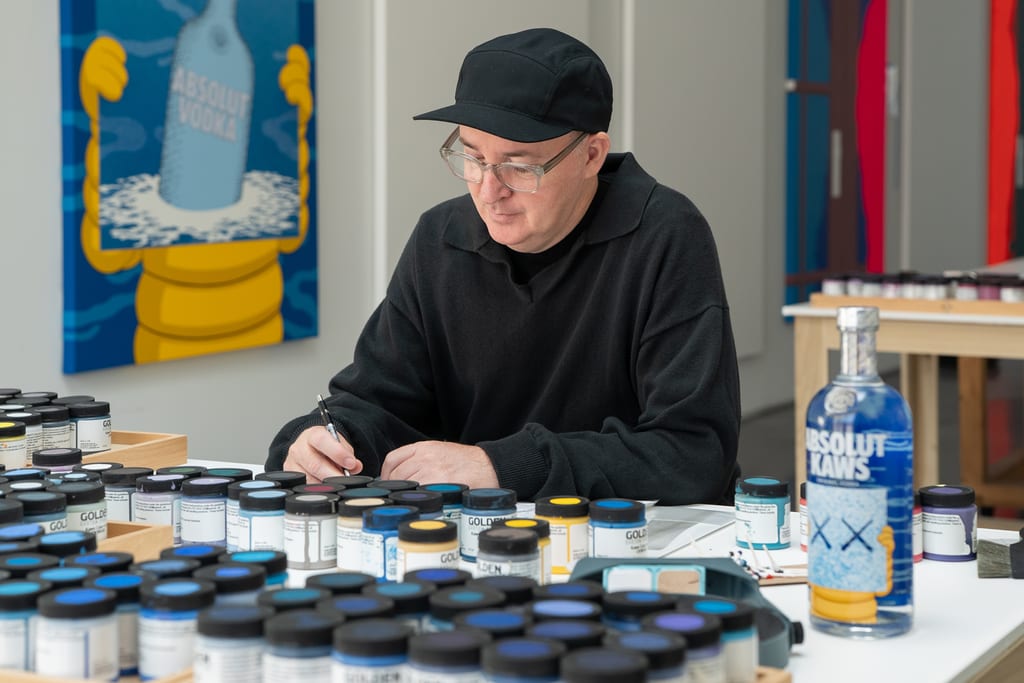
For more than three decades, Brian Donnelly, better known as KAWS, has built a career out of refusing to stay in one lane.
Starting his career with graffiti on the streets of New York in the 1990s, KAWS' work has grown into a practice that stretches s across painting, sculpture, design, fashion and popular culture, taking his work from city walls to museum spaces and some of the biggest brands in the world.
Along the way, the Brooklyn-based artist has developed an eye for his work that is almost impossible to mistake for anybody else’s. His crossed-out eyes, cartoon-inspired figures and instantly recognisable COMPANION character have appeared everywhere from monumental public sculptures to clothing, toys and canvases, while collaborations with the likes of Dior, Nike, Uniqlo and Supreme have helped dismantle the traditional boundaries between fine art and commercial culture.
Yet despite the familiarity of his work, KAWS doesn’t necessarily see his creative identity as something fixed. “Thankfully, I still feel like it’s trial and error,” he tells us. It is perhaps that restlessness that has allowed his practice to keep moving. Instead of placing painting, sculpture or commercial projects into separate boxes, he considers them part of the same ongoing conversation. “I try not to have a hierarchy of what I need to spend time on,” he says. “I’d rather just follow my interests and see where they go.”
His latest interest brings him together with Absolut, marking a new chapter in the vodka brand’s longstanding relationship with contemporary art. For KAWS, it is also a collaboration grounded in personal familiarity. “I feel like I grew up on Absolut ads,” he says, recalling the brand’s famously creative magazine campaigns. “They were always the cleverest advertisements on the back of magazines.”
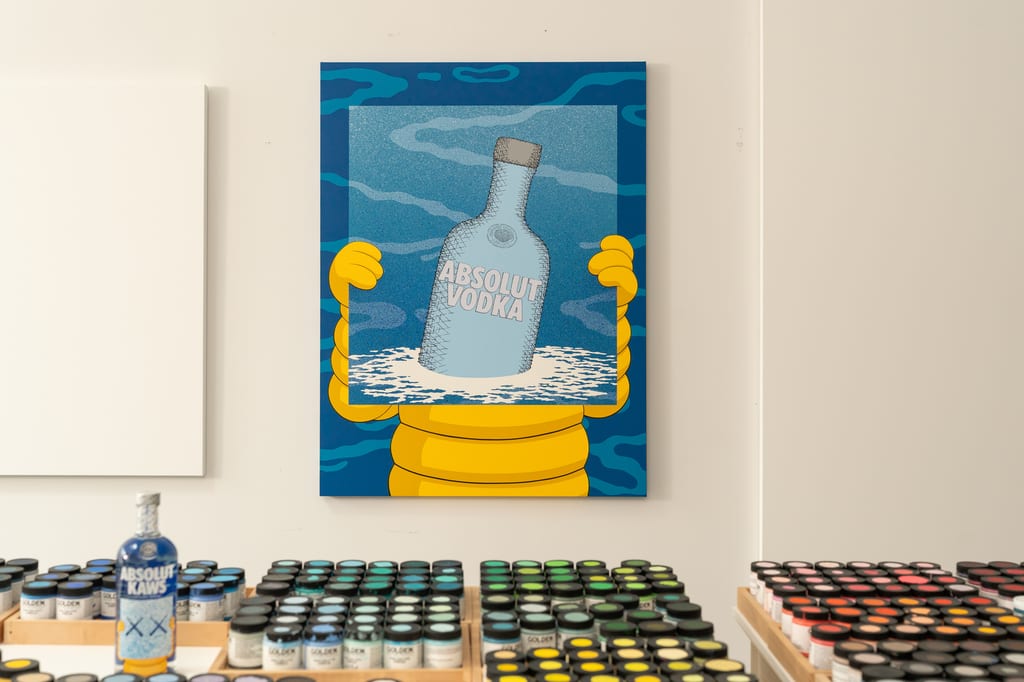
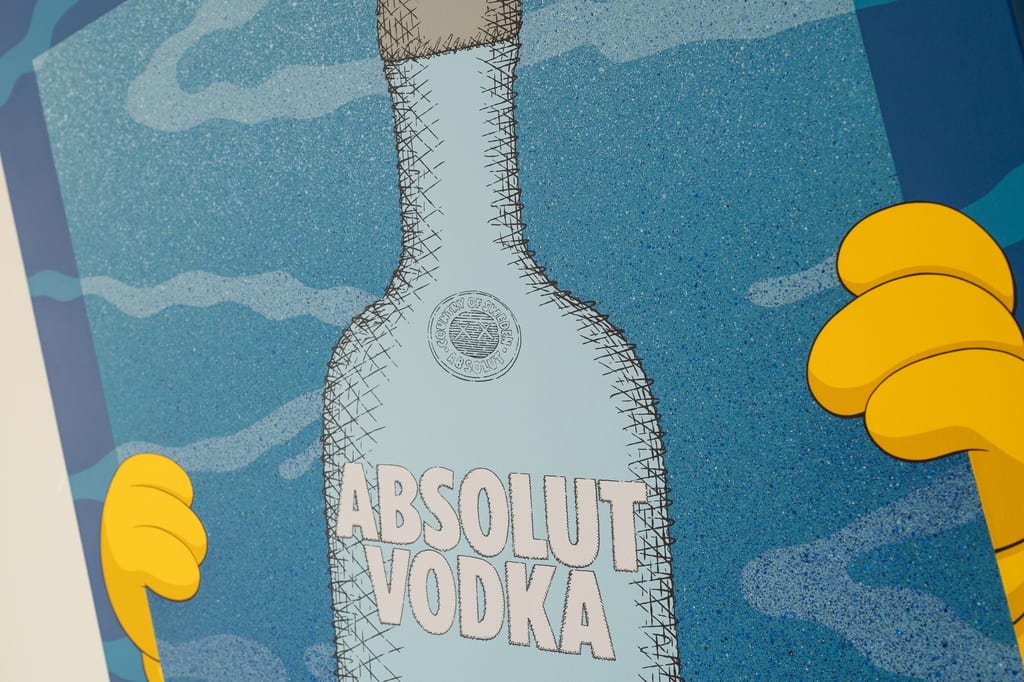
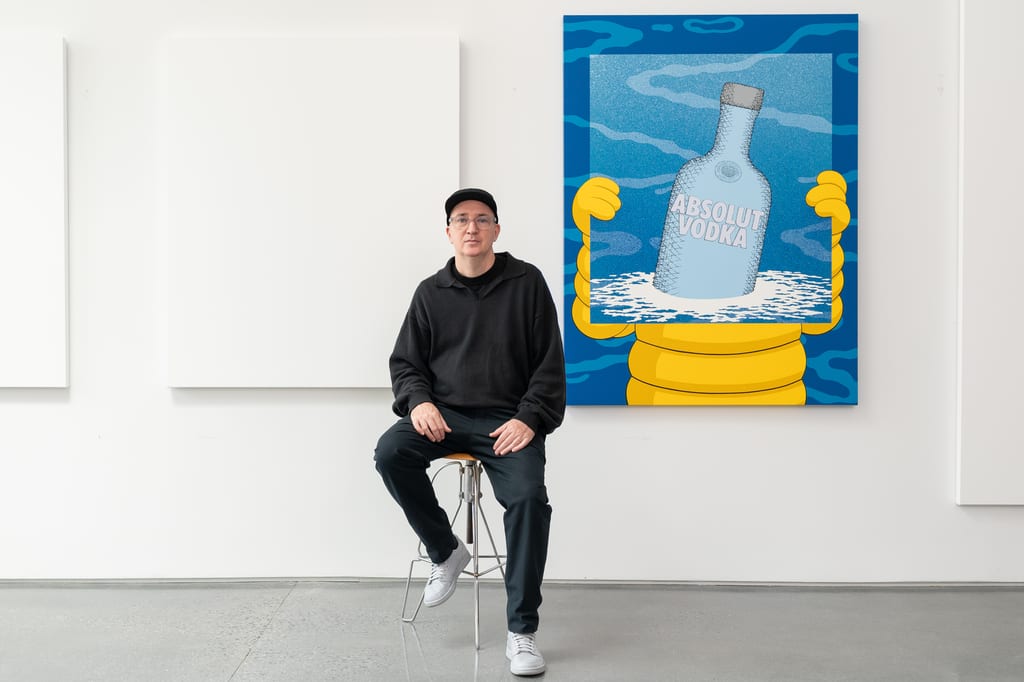
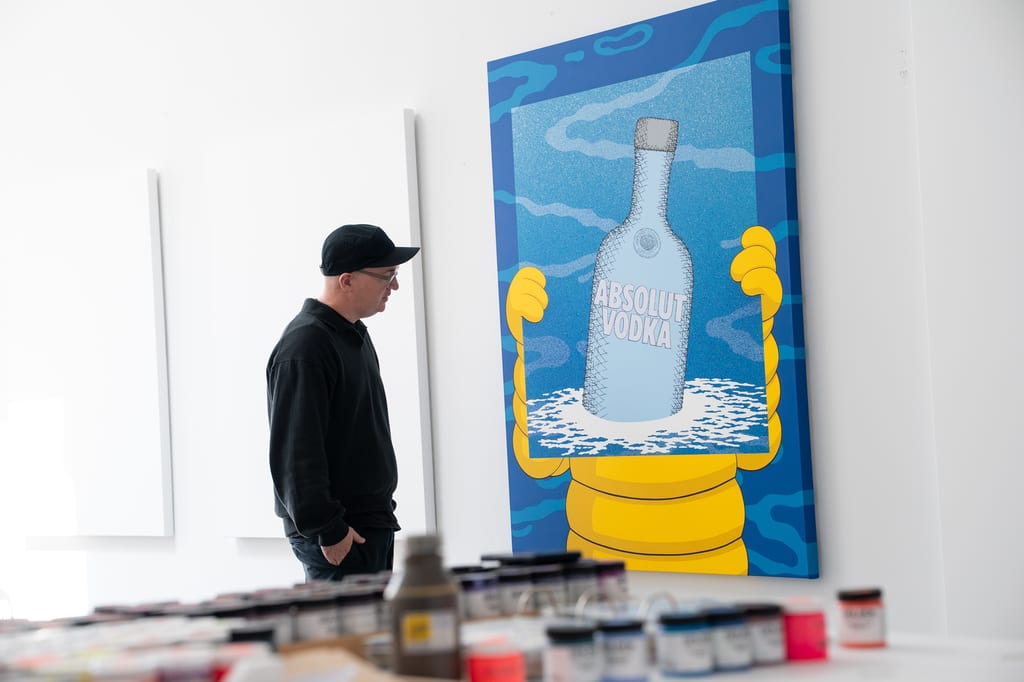
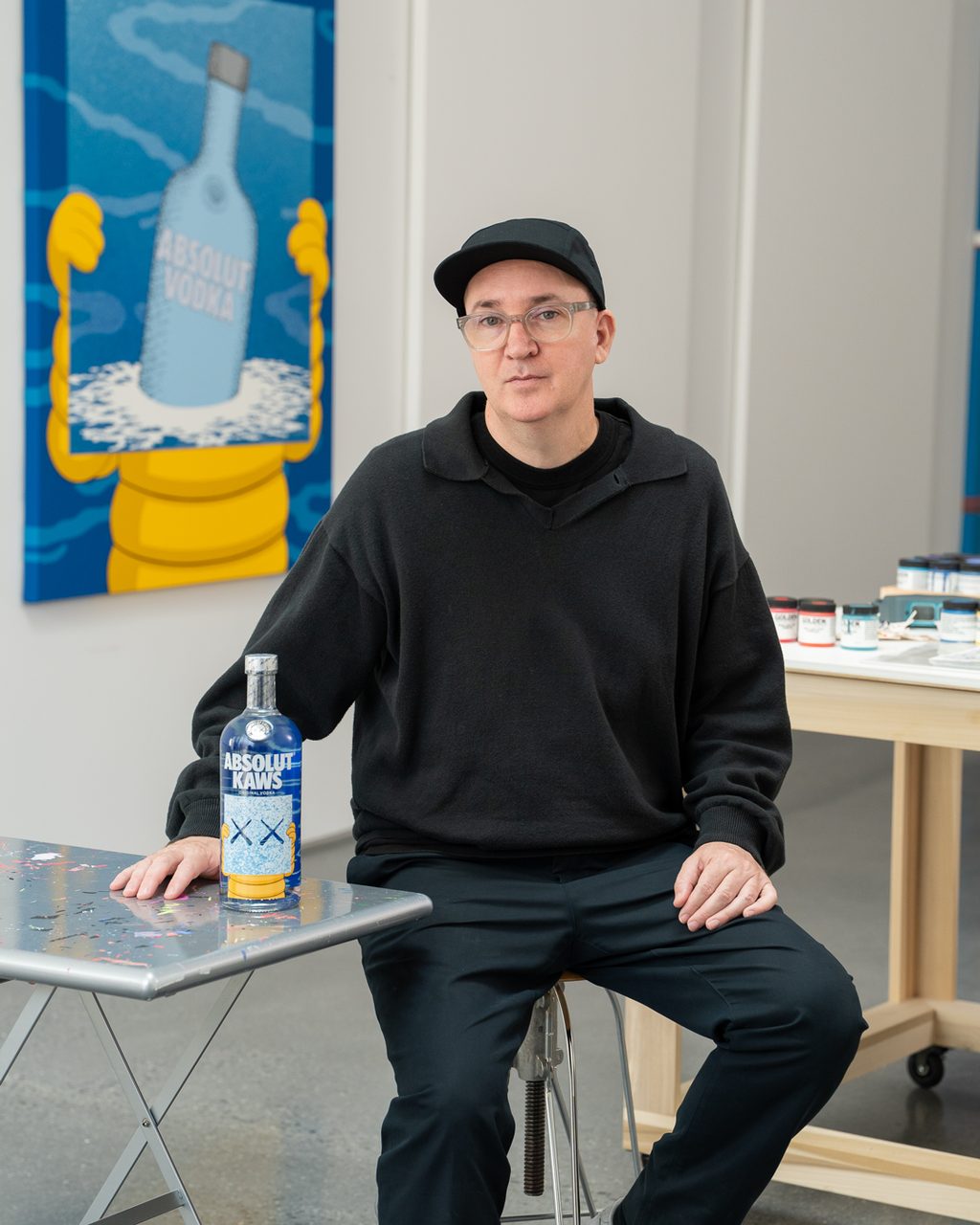
The partnership sees KAWS reimagine the unmistakable Absolut bottle while also unveiling a brand-new painting created around the project. But most importantly, the project for KAWS became an opportunity for him to consider how an artwork could live across different scales and environments, from the bottle itself to a global campaign and towering billboards. The painting plays with the idea of an image within an image, something KAWS describes as “almost like holding up the Absolut ad.”
It is a project that neatly reflects the way KAWS has approached much of his career: moving between worlds without treating one as more legitimate than another. Now, as KAWS and Absolut unveil their collaboration, CULTED speaks to the artist about three decades of making work, finding his visual language, choosing collaborators, the ideas behind his latest painting and the things he still wants to create.
After three decades of making art, what still excites you creatively?
I don’t really think about the amount of time I’ve spent making art. I’m just happy that I still wake up excited by it. I can’t really explain why. I’ve definitely had things in my life that I’ve been very into and then they’ve kind of slipped away from me, but art hasn’t been one of them.
Do you remember when you first felt like you’d developed your own visual language?
Thankfully, I still feel like it’s trial and error. I guess that’s one of the reasons you keep returning to making work. You have things you want to get to, but you never quite get there.
As far as developing an identifiable visual language, it’s hard to say. I felt like I always had it. When I was doing graffiti, I felt like I had it, but then you look back and you’re like, “Oh no, I don’t know. Was that it?”
Do you ever look back at how your work has evolved?
In recent years, I’ve been doing more survey exhibitions and catalogues spanning from the ’90s to the present, so that forces you to gather everything together and look at what you’ve done.
But I spend more time thinking about what I can do next. How can I get the things in my head done?
Your work exists in galleries, on clothing, as figures and in public spaces. Do you see it all as one body of work?
I do see it as one body of work, but I recognise there are a lot of different lanes you can operate in. I like having all these different ways of disseminating work.
There are things you can do in a gallery that don’t reach people in a certain way, and there are things you can do in a commercial setting that exist in their own language. That’s quite different from standing in front of a painting or sculpture.
By working in these different places, hopefully you invite people in to take the time to explore what you do in all realms.
You’ve collaborated with everyone from Nike to Supreme. What makes you say yes to a collaboration now?
I’ve always picked and chosen what I collaborate on. I take it a little bit personally.
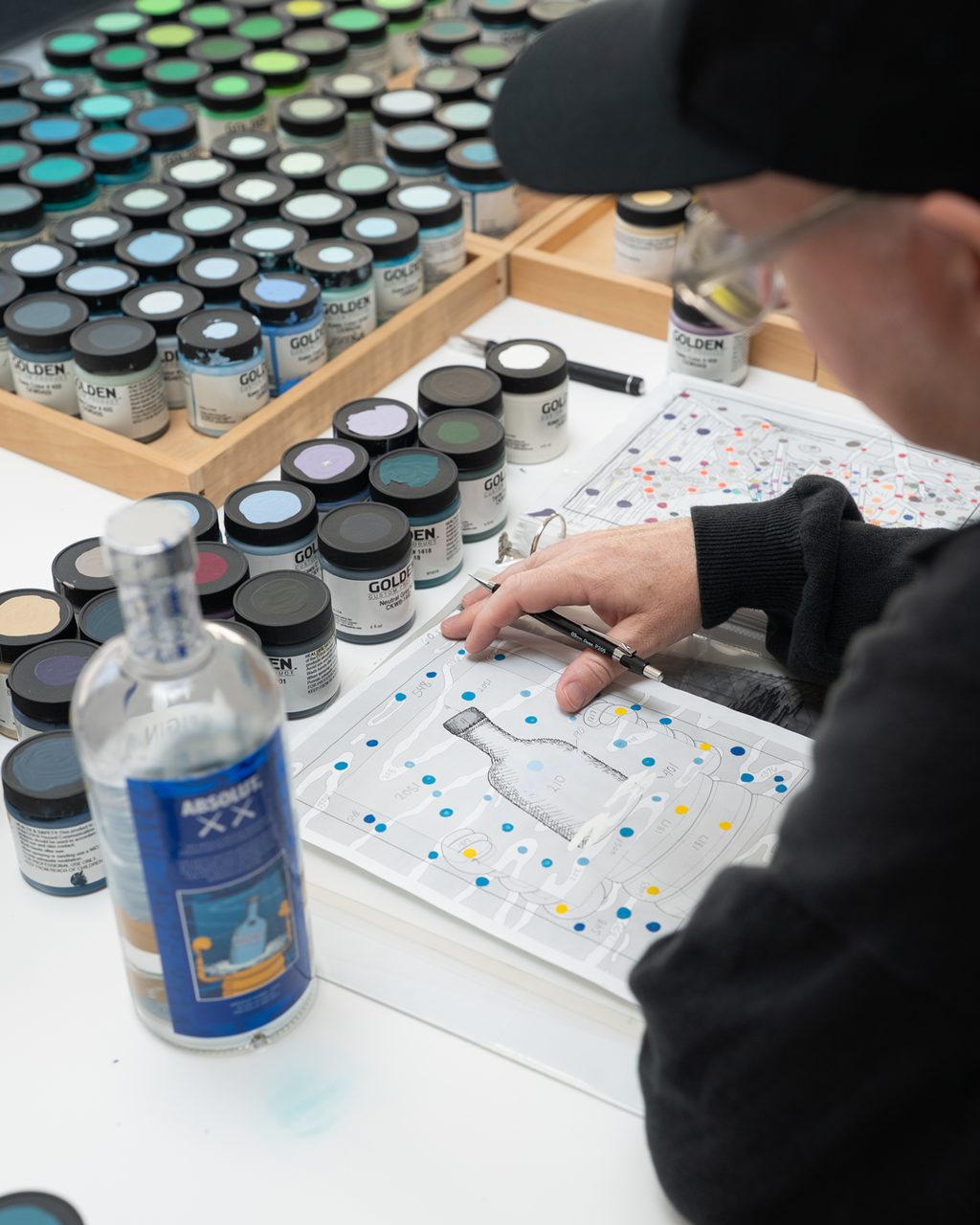
I think about categories I’ve already worked in and categories I haven’t but have an interest in and want to learn about. A lot of times when I work with companies, I get real insight into what they do, how they operate and how they roll out a project. I try to take all those learning bits and apply them going forward.
Sometimes it’s fascinating. It’s like working with a foundry when you’re making a sculpture. With the last watch company I worked with, I got to work with their artisans and see how they do what they do. It’s not that different from a foundry making larger sculptures, but it’s on such a micro, perfectionist level. It makes you want to apply that to everything.
What made Absolut an interesting canvas for you?
I feel like I grew up on Absolut ads. They were always the cleverest advertisements on the back of magazines.
There’s such a great artist lineage within the brand that I was excited to work with them. And I got to do more than just a poster. I got to do a bottle and a real global campaign.
I think about how a brand exists over the years because, when you work with somebody, you are kind of co-signing them. I think Absolut is just such a great brand.
How do you balance something as recognisable as the Absolut bottle with your own visual identity?
It’s hard to explain how you find that balance, but I try not to overthink it.
We’re here at this moment, so the work I make is going to reflect what I’m doing in the studio and what I’m interested in producing. Had we worked together in 1996 instead of 2026, it would have a completely different feel.
Most of the projects I do are a document of the time that I’m in.
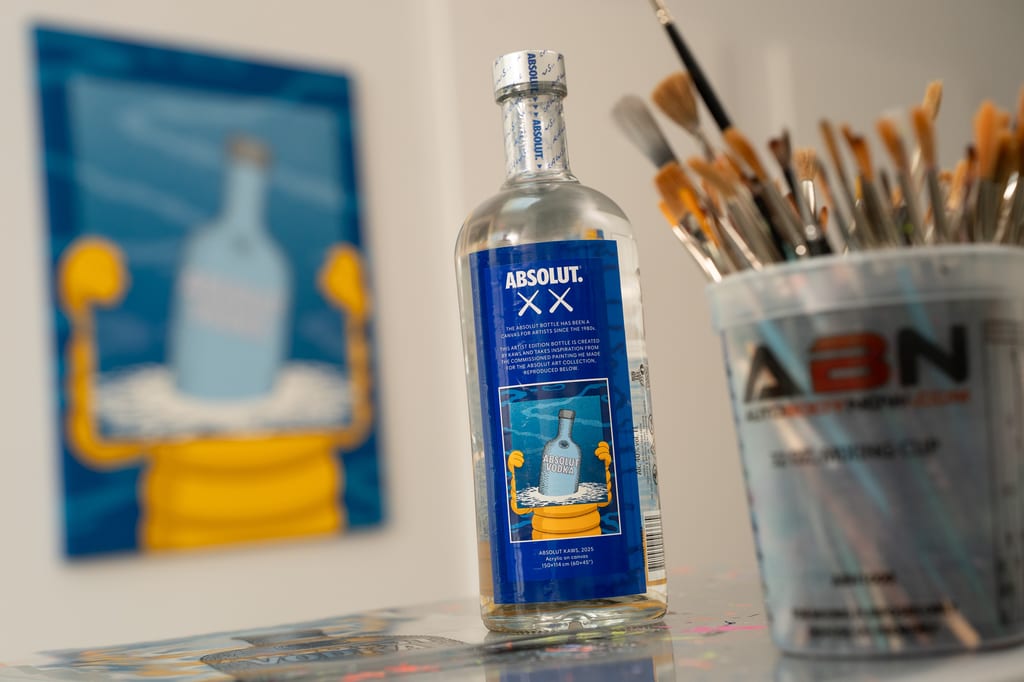
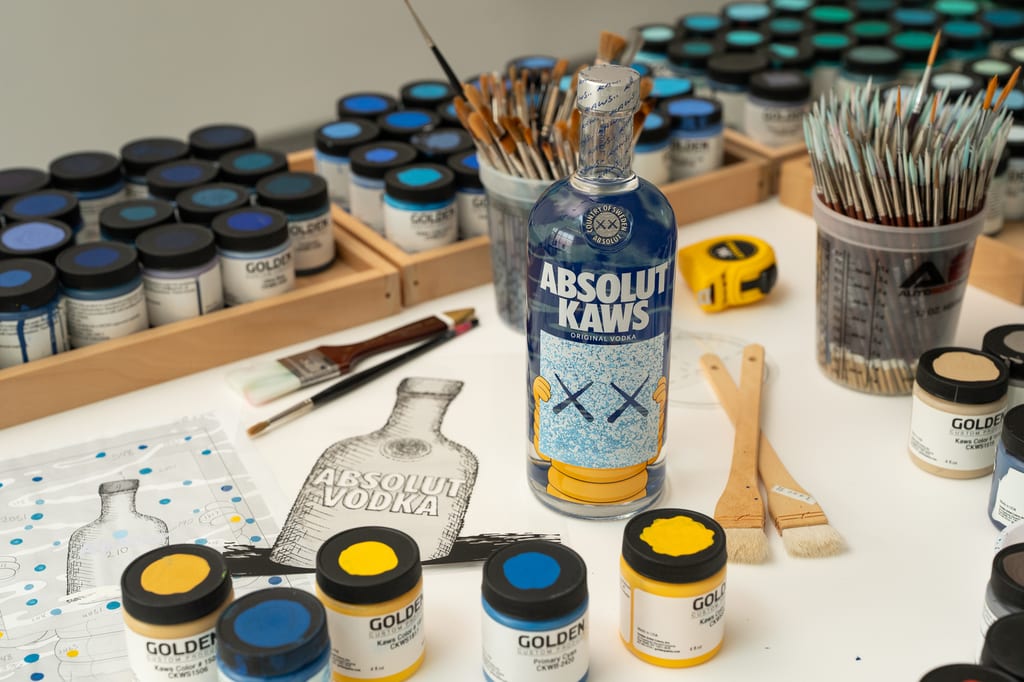
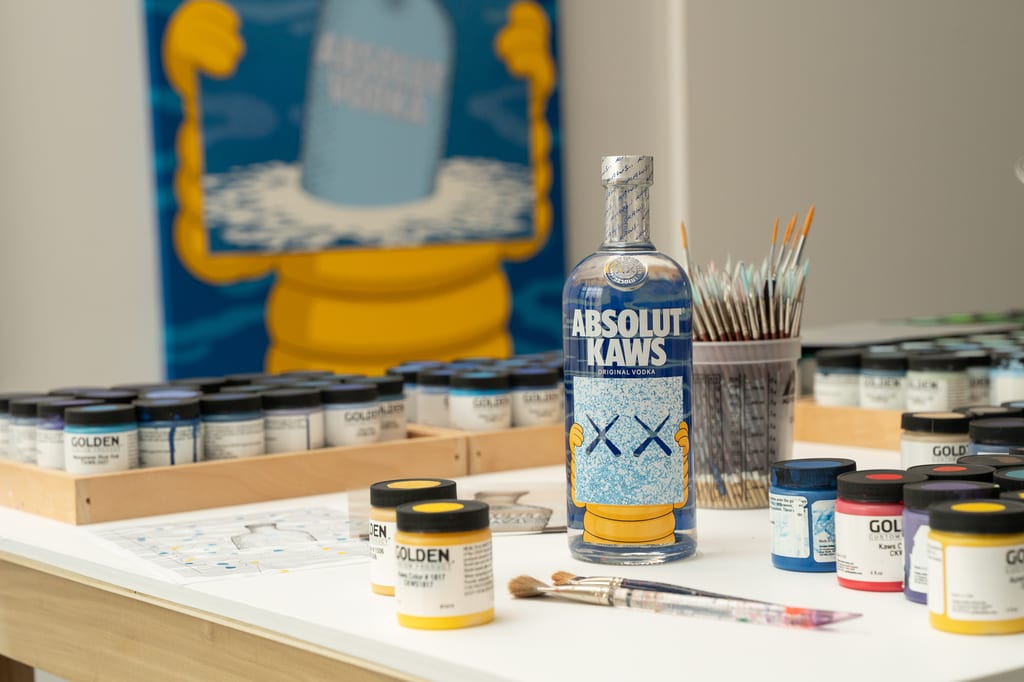
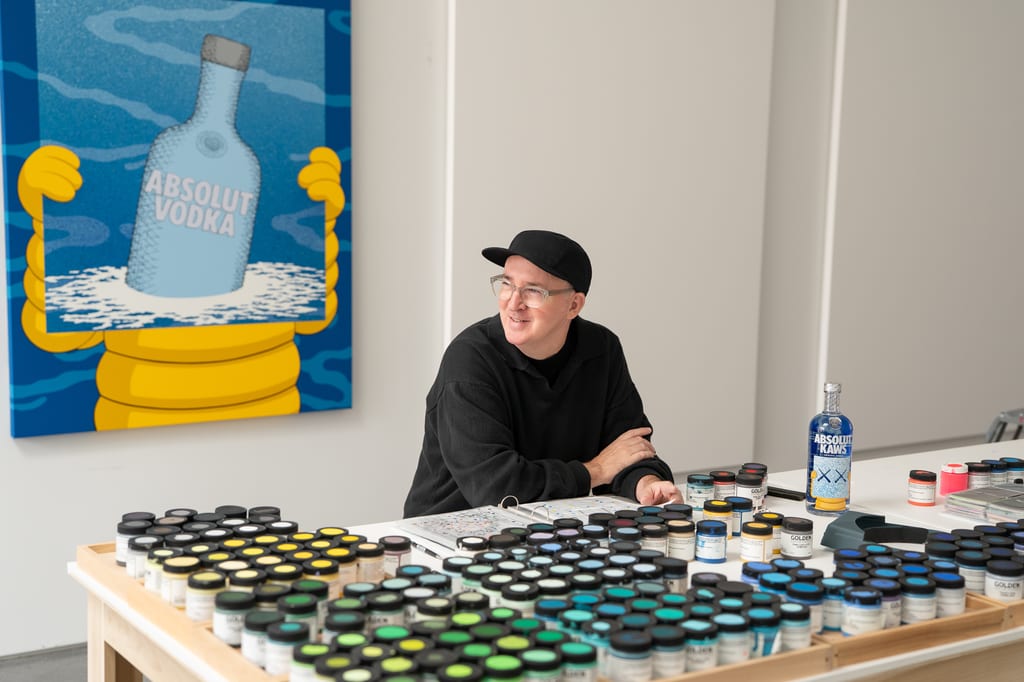
The campaign introduces a new painting. Where did that work come from?
When I was approached to do the project, I was working on a series of paintings that was quite similar. I was thinking about a picture within a picture.
I started thinking about Absolut, how it would work as a campaign and how the advertisements would exist. So it became this painting within a painting, almost like holding up the Absolut ad.
I thought it would be a strong mark that could read really small and really large on billboards. When I do a project like this, I think about all the different forms people are going to discover it in. That guided the simplicity of the image.
Is there anything you still haven’t made that you’d love to?
There are lots of things. I’d love to do a giant architectural project. I’d say that’s top of my list.
I’ve never really worked with cars either. I just learned to drive, so maybe it’s a good time.
You move between painting, sculpture, fashion and commercial projects. What keeps you working across so many different worlds?
I think it’s just what comes naturally. I’m very open-minded and curious about so many things.
Working in different mediums and formats, whether it’s commercial, painting, sculpture or whatever, they all occupy different points of interest for me.
I try not to have a hierarchy of what I need to spend time on. I’d rather just follow my interests and see where they go.