

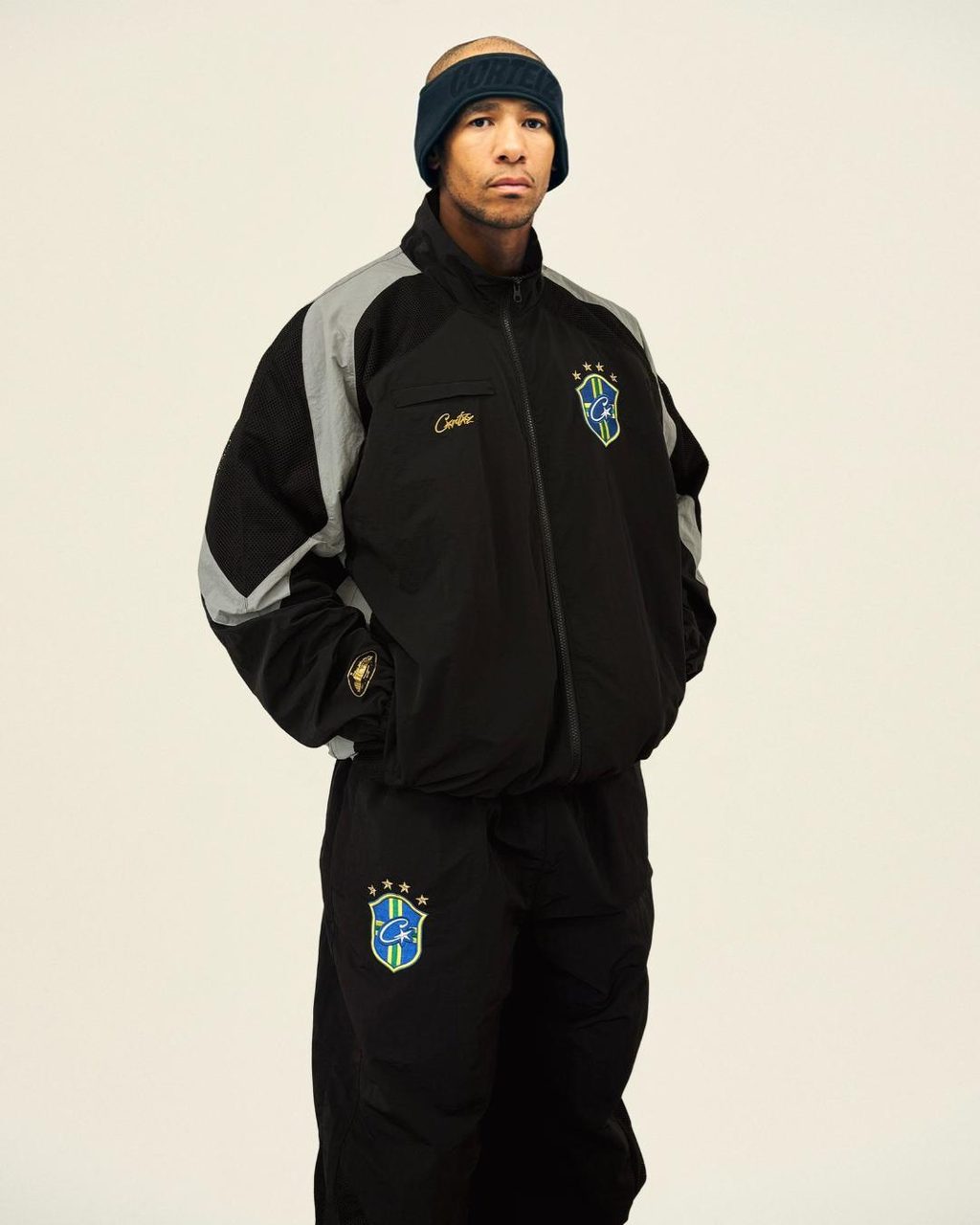
When Palace unveiled its new tracksuit drop last week, inspired by the 2002 Brazilian National Team kit that won Brazil the World Cup, Corteiz’s founder Clint 419 didn’t take it nicely. The Palace drop closely resembled Corteiz’s “Brasil Olympic Shuku” release from earlier this year, and Clint started feuding on socials, deciding to re-release his own collection on the same day.
It’s not the first time that the Joga Bonito-aesthetic Nike design worn by the most GOATed football team has been copied – the iconic kit has been bootlegged across the world for decades – but it might be the first time that a streetwear brand is beefing with another streetwear brand for copying what they copied first.
Clint 419 went to X to repost the Palace trackies with the comment “Gringo Safado” (which translates to “dirty foreigner”) and Brazilian people were quick to clap back in the comments – because how are you calling out Palace for cultural appropriation when you’ve produced the same tracksuit?
But, why is this cultural appropriation? It’s just a football kit. Well, it’s not. In the 1950 World Cup, Brazil lost at the finals against Uruguay, which led to a national mourning. The Brazilian team took this L as an opportunity for a makeover, and the now-iconic Brazilian kit in the yellow, green and blue colourway was introduced in 1953. With this new design Brazil went on to win the World Cup five times, the first being 1958.
The Brazilian football jersey had been a symbol of patriotism, unity and pride up until the 2010s. In 2014, Brazil hosted the World Cup, causing mass protests across the country as the government put money on hosting the Cup instead of funding healthcare, education and public services – leading to many arrests, multiple people injured (protesters and journalists), and a general bitterness towards football. In 2015, millions of Brazilians took to the streets demanding the then-president Dilma Rousseff’s impeachment wearing the jersey. And in 2018, far-right president Jair Bolsonaro used the Brazilian football jersey to charm voters and win the presidential campaign, building the yellow-and-green jersey to be a far-right symbol. So much so, that if you wore the jersey out, you were considered a far-righter. Football players and fans have been trying to de-politicise the jersey, including a Nike ad campaign that strived for unity before the Qatar Cup. But it’s all a work in progress.
Outside of Brazil however, it’s a completely different story. Ever since y2k style and blokecore bolted in the zeitgeist, Brazil-core has been popping off. Influencers wear Brazil shirts in Europe, Emily Ratajkowski’s Inamorata swimwear line collabed with Mirror Palais for a Brazil-themed capsule collection last year, Havaiianas were the it-shoe of the summer, both Corteiz and Palace have released Brazil-inspired tracksuits.
Ultimately, repping the country’s flag and jersey without its political connotations is what Brazilians are fighting for, but watching two Brit streetwear brands beef over a design that carries so much political weight is distasteful. Yeah, it might have all come from love and appreciation of the football culture out there – Clint often expresses his love for Brazil, and even went out there to promote his drop – but ignorance towards the community and the political background of a garment isn’t cultural appreciation.
Featured image Palace©
More on Culted
See: Grailed staples: the best black hoodies out there
See: Martine Rose chats about Clarks and drops advice for young creatives: “It doesn’t happen overnight”