
Yesterday’s Met Gala theme was “Superfine: Tailoring Black Style,” and its accompanying exhibit based on writer and academic Monica L. Miller's book, "Slaves to Fashion: Black Dandyism and the Styling of Black Diasporic Identity." Upon the annoucement, fashion fanatics were elated. At long last, Black culture and it’s astronomical—but all too often overlooked — sartorial influence would be celebrated, and on fashion’s biggest stage.
Aesthetically, the Gala didn’t disappoint: celebrities came dripped out in sharply tailored fits that playfully interpreted Black dandyism, calling to mind the famous George C. Wolfe quote: “God created Black people, and Black people created style.” Meanwhile, the event raised $31 million, and was the first time it’s ever passed the $30 million fundraising mark, far eclipsing last year’s $26 million.
But in a fashion industry where only 11% of executive roles are held by people of colour, and at a time when only one of the nine major creative director debuts lined up for 2025 is a person of colour (and none are Black), the Gala shouldered responsibility.
It was a chance for celebrities not only to pay homage to how Black culture transformed the fashion landscape (think Colman Domingo’s nod to André Leon Talley), but also an opportunity to spotlight emerging designers, for whom dressing someone for the Met could alter the trajectory of their careers.
Although a lot of designers opted for the legacy (often white-led) brands that dominate the Met year after year (AKA Lana Del Rey in Valentino, Rihanna in Marc Jacobs, and a whole host of celebrities in Thom Browne), a lot of guests came correct, championing the Black designers the theme was, arguably, tailored for.
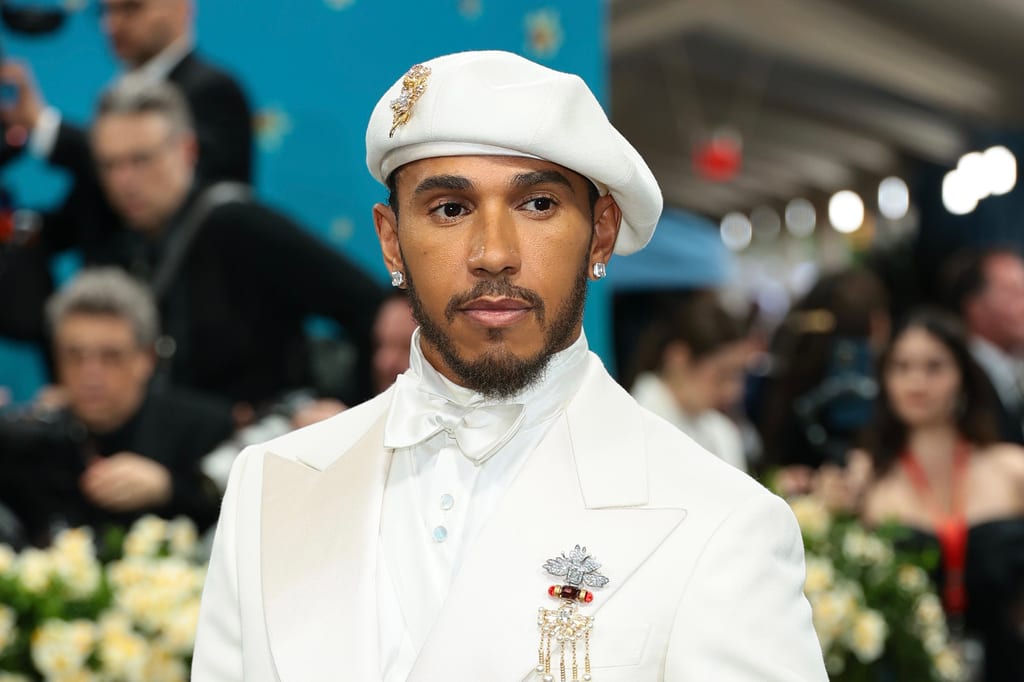
In an interview last night, AŞAP Rocky explained that Anna Wintour suggested he wear a Black designer to the Gala, “so I wore myself,” in custom AWGE. Gala co-host Lewis Hamilton wore a custom Wales Bonner ivory suit, embellished with cowries and freshwater pearls. Seminal Black British tailor Oswald Boeting was also an obvious choice, kitting out Burna Boy and Jaden Smith. Meanwhile, Patrick Schwarzenegger wore Balmain by Met veteran Olivier Rousteing. Doechii wore Louis Vuitton (the Met Gala’s sponsor) by creative director Pharrell.
But the Black designers showcased weren’t all well-established. Many guests opted for up-and-coming creatives, still finding their footing in the famously exclusionary industry. Diana Ross, for instance, wore a gown by 33-year-old Nigerian designer Ugo Mozie, co-designed by her son. Meanwhile, unlike her sisters Kim and Kylie, who opted for Chrome Hearts and Ferragamo, respectively, Kendall Jenner wore emerging designer Torishéju Dumi, who hails from Harlseden in London. White Lotus’s Amy Lou Wood (who, it seems, can do no wrong) wore a tailored ensemble by young British-Nigerian-Indian designer Ahluwalia.
But it was at the gala’s corresponding exhibition that Black fashion (and Black designers) really got their due. The exhibit, which was curated by Miller, chronicled Black style and identity, including clothes worn by former slaves to denote freedom and those worn by famous abolitionists. It also focused exclusively on the work of Black designers, like Brooklyn-based Togolese designer Jacques Agbobly, who has only been in the industry for five years. At the exhibit, Agobly's bright-colored ensemble based on the hues of bags that West African migrants carried can be found, alongside an embellished suit inspired by the braiding salons he attended as a child.
Of course, the Met is still run—and for the most part controlled by—Condé Nast and Vogue’s editor-in-chief Anna Wintour. People have argued that as long as that’s the case, the Met truly be revolutionary. “Are any of these looks able to center Black expression above and beyond the elite Western institutions that created them?” posed critic and content creator Nikesh Pandya-Gudka. Panya-Gudka also noted that key figures in the space, like Nigerian model Wisdom Kaye, whose style many believe is emblematic of contemporary Black identity, weren’t invited, which he compared to “not inviting your mother to your own graduation.”
Either way, the night was a needed reminder that although Black people are underrepresented in the fashion industry’s senior positions, their influence is seminal. It’s also important to note that although there may have been holes in the Gala’s execution, many, including the Black designers whose work was showcased, felt empowered by the theme. As Law Roach hollering "they done fucked up and made the Met Gala Black”. and Whoopi Goldberg remarking “they see us,” powerfully proved.
More on Culted